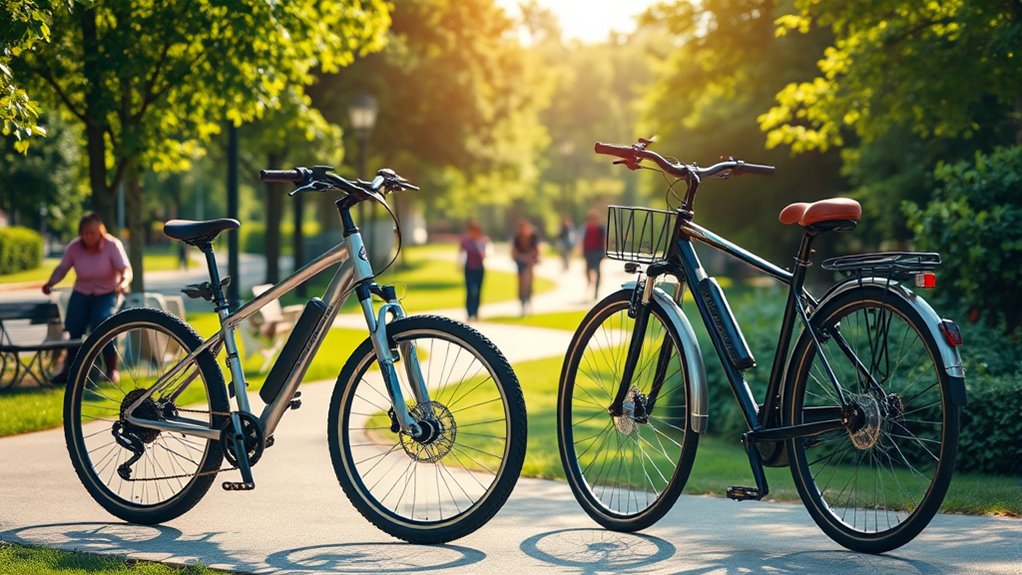

When choosing between e-bikes and traditional bikes, consider your riding style and needs. E-bikes provide advanced technology, faster speeds, and less physical effort, making them great for longer trips and challenging terrains. They do come with higher costs and maintenance due to their complex components. Traditional bikes are simpler and more affordable but may not match the performance of e-bikes. There’s a lot more to explore about each type, so stick around for a deeper look.

Get sports gear delivered free — and shop member deals
- Fast, free delivery on millions of items
- Access to Prime Big Deal Days deals on October 6–7
- Prime Video, Amazon Music and more included
Key Takeaways
- E-bikes offer higher speeds (up to 28 mph) and greater efficiency, making them ideal for commuting and long-distance rides compared to traditional bikes.
- E-bikes have advanced features like electric assistance and customizable elements, enhancing usability for a wider range of riders.
- Initial costs for e-bikes are higher (starting around $999), but they can save money over time compared to cars or public transport.
- Maintenance for e-bikes may be more expensive due to their complex components, while traditional bikes incur ongoing costs from wear and tear.
- E-bikes produce zero tailpipe emissions, contributing to reduced carbon footprints and promoting sustainable transportation compared to conventional bikes.
electric bike with lithium-ion battery
As an affiliate, we earn on qualifying purchases.
As an affiliate, we earn on qualifying purchases.
Understanding Power Sources and Technology

When you consider the differences between e-bikes and traditional bikes, understanding the power sources and technology behind them is essential.
E-bikes primarily use lithium-ion batteries, known for their high power density and efficiency, operating within a voltage range of 36 V to 54 V. A Battery Management System (BMS) optimizes battery health and lifespan, enhancing energy efficiency.
E-bikes leverage high-density lithium-ion batteries, ensuring efficient power management and enhanced battery lifespan through advanced systems.
Power conversion technologies, like DC/DC converters and Electronic Speed Controllers (ESCs), ensure smooth power delivery and support regenerative braking to recharge the battery.
E-bikes utilize robust brushless DC motors, providing high torque and speed, while advanced microcontrollers manage power distribution.
This blend of technology leads to a more efficient, enjoyable riding experience, setting e-bikes apart from traditional bikes.
Comparing Performance and Speed
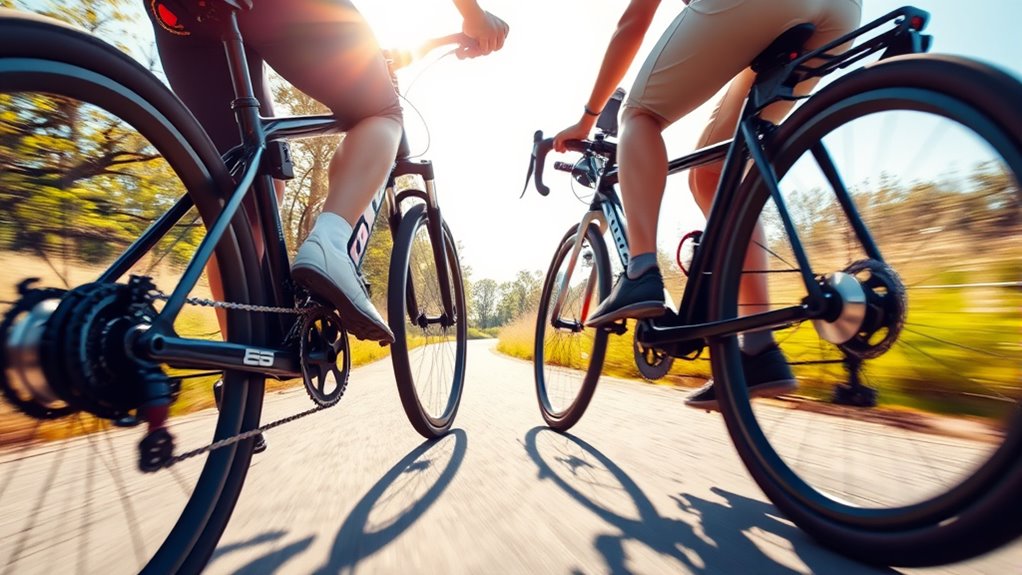
As you compare performance and speed between e-bikes and traditional bikes, it’s clear that e-bikes offer significant advantages.
They can reach speeds of up to 28 mph, while traditional bikes typically top out at 15-20 mph for seasoned cyclists. On flat terrain, e-bikes often cruise at 20-25 mph, allowing you to cover more distance in less time.
With electric assistance, e-bikes require less physical effort, making long rides feel easier. They also handle hills and challenging terrains more effectively.
Plus, e-bike riders can often travel up to 50 miles on a single charge, encouraging longer trips and more frequent rides.
Analyzing Cost and Maintenance
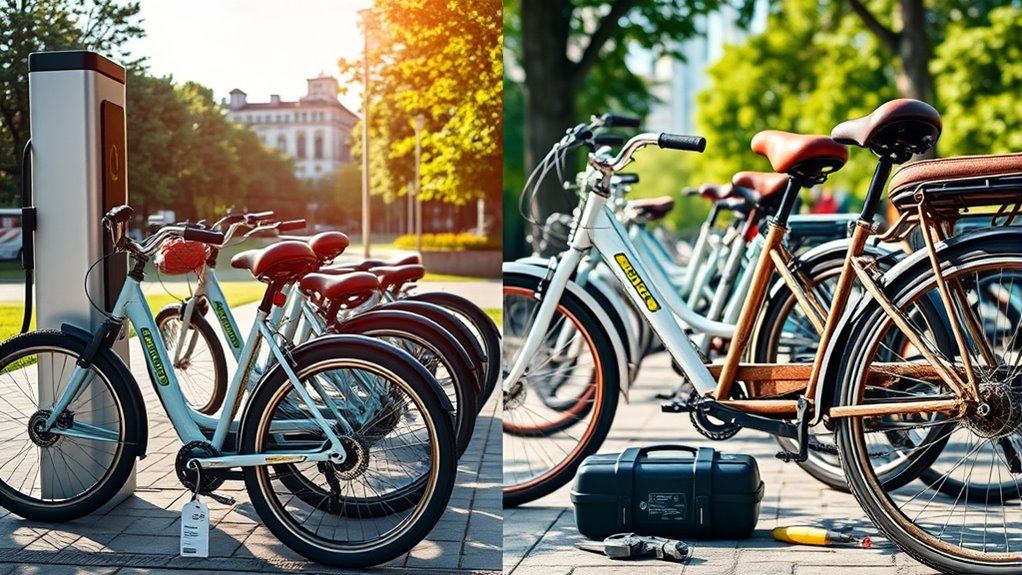
While e-bikes can initially seem like a hefty investment, understanding their cost and maintenance can help clarify their value. E-bikes typically start around $999 and can go up to $8,000, while traditional bikes offer more budget-friendly options.
Maintenance for e-bikes can be pricier due to their mechanical and electronic components, including battery replacements every 500 to 1,000 charges costing between $200 and $800. In contrast, traditional bikes may incur ongoing costs from wear on parts, especially with frequent use.
Over time, e-bikes can save you money compared to cars or public transport, and their durability allows for decent resale value. Ultimately, your choice should reflect your budget and intended use.
Evaluating Environmental Impact

E-bikes offer a compelling alternative to traditional transportation methods, especially when you consider their environmental impact. They produce zero tailpipe emissions during operation, significantly improving urban air quality.
Compared to conventional cars, e-bikes can reduce carbon emissions by up to 90%. They use less energy than electric cars, consuming less than 1 kWh per 100 km. Plus, you can charge them using renewable energy sources, further lowering their carbon footprint.
Although e-bike battery production has some environmental effects, it’s still less than that of electric vehicles. Overall, e-bikes promote sustainable transportation, alleviate traffic congestion, and require fewer resources in manufacturing, making them a greener choice for your daily commute.
Assessing Usability and Accessibility
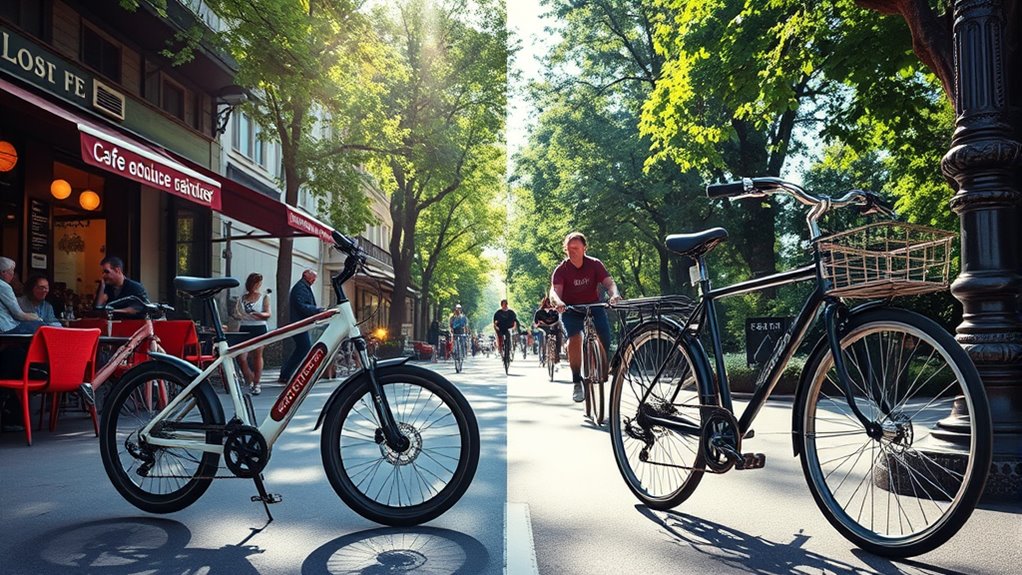
When considering usability and accessibility, e-bikes stand out for their ability to accommodate a wider range of riders. They offer enhanced speed and efficiency, making them perfect for longer commutes and navigating city traffic.
E-bikes provide a smoother ride on varied terrains, reducing fatigue, which is particularly beneficial for those with physical limitations. In contrast, traditional bikes suit shorter commutes where you might want to exert yourself.
E-bikes often feature ergonomic designs and adaptive elements like step-through frames for easier mounting. They can also be customized with adjustable seats and handlebars to fit your needs.
While traditional bikes are simpler and require less maintenance, they lack the advanced accessibility features that make e-bikes a more versatile option for many riders. Additionally, e-bikes can be equipped with high refresh rates that enhance the overall riding experience, similar to how they improve gaming visuals.
Exploring Health and Fitness Benefits
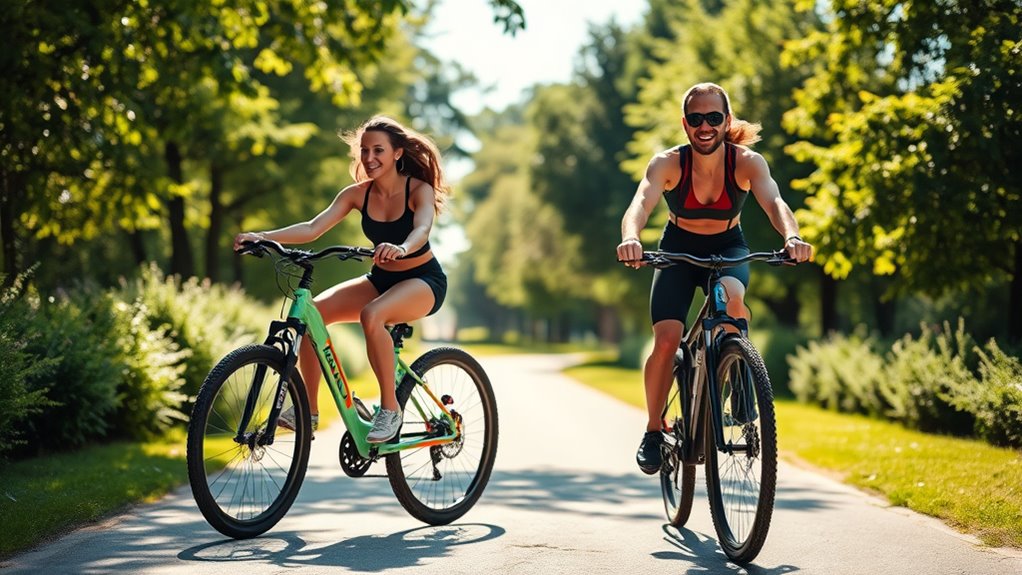
Cycling offers numerous health and fitness benefits, whether you choose an e-bike or a traditional bike. E-bike riders expend more energy overall, covering greater distances and tackling tough terrains with ease. This encourages increased physical activity, making it a low-impact option suitable for various fitness levels.
While traditional bikes provide a more intense workout that engages multiple muscle groups, e-bikes reduce physical strain, making long rides or commutes enjoyable. Both types improve cardiovascular health and contribute to weight management.
Additionally, cycling helps reduce stress and boosts mental well-being. E-bikes can enhance your cycling experience by promoting consistency and accessibility, ensuring you stay active and connected with others on your journey.
Frequently Asked Questions
How Long Do E-Bike Batteries Typically Last Before Needing Replacement?
E-bike batteries typically last between 3 to 5 years with regular use and proper maintenance.
You’ll find that most batteries are rated for 500 to 1,000 charge cycles before their capacity drops to about 80%.
To extend their lifespan, keep your battery charged between 20% and 80%, and avoid full discharges.
Environmental factors like temperature also play a role, so store your battery in a cool, dry place for optimal performance.
Can Traditional Bikes Be Converted Into E-Bikes?
Yes, you can convert traditional bikes into e-bikes with the right conversion kit.
Most bikes are compatible, but you’ll need to consider factors like wheel size and brake type. Various kits are available, including hub motors and crank-driven systems.
Installation typically involves swapping the wheel and connecting electronic components.
This conversion not only saves you money but also lets you enjoy the benefits of electric biking while keeping your original bike.
What Types of Terrains Are Best for E-Bikes?
When considering terrains for e-bikes, you’ll find paved roads perfect for commuting and smooth rides.
Gravel trails offer a blend of adventure and stability, while mountain trails challenge your skills on steep inclines.
Hills and inclines are great for testing the electric assist.
Just avoid heavy mud, sand, extreme terrain, deep water, and steep cliffs, as they can compromise your ride.
Always match your e-bike’s features to the terrain for the best experience.
Are There Legal Restrictions on E-Bike Usage in Certain Areas?
Yes, there are legal restrictions on e-bike usage in certain areas.
You’ll need to check local regulations, as some counties impose specific rules about where you can ride, including bike lanes and multi-use trails.
Helmet requirements vary too, especially for younger riders.
Always stay updated on local ordinances, as they can change, and ensure your e-bike complies with safety standards to avoid any legal issues while riding.
How Do E-Bikes Perform in Cold Weather Conditions?
E-bikes can struggle in cold weather conditions.
You’ll notice a significant reduction in battery capacity, which might decrease your range by up to 40%.
Riding in the cold often demands more power, especially if you’re navigating snow or ice.
To improve performance, keep your battery warm and plan flatter routes.
Dressing in layers will help you stay warm, reducing your reliance on battery power.
Regular maintenance is also key to ensuring optimal performance during winter rides.
Conclusion
In the end, choosing between an e-bike and a traditional bike really depends on your lifestyle and needs. If you value ease and speed for commuting, an e-bike might be your best bet. However, if you enjoy a more hands-on experience and want a solid workout, a traditional bike could be the way to go. Consider your budget and the environmental impact, and you’ll be well on your way to making the right choice for you!
NFL season / tailgating Picks
team gear
As an affiliate, we earn on qualifying purchases.