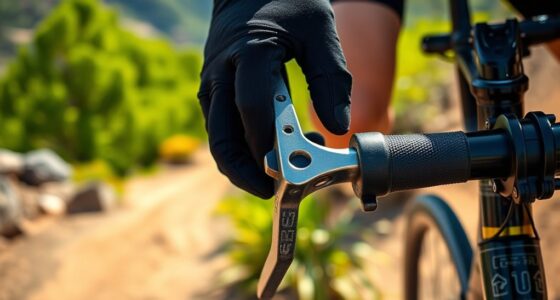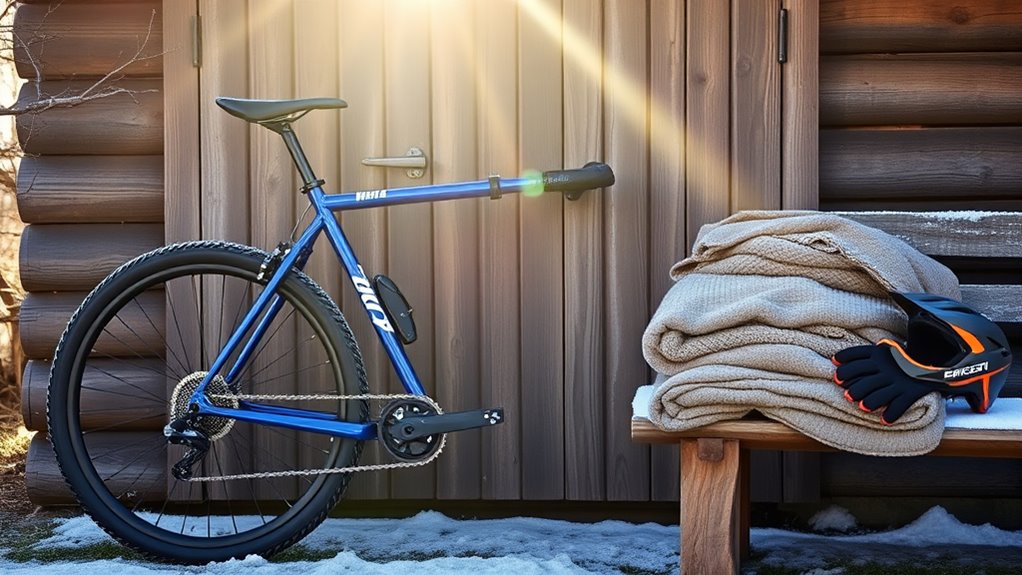

To prep your bike for winter storage, start by thoroughly cleaning it to remove dirt and salt that cause rust. Check and inflate your tires to the recommended pressure, then inspect for damage and replace if needed. Fully charge the battery, disconnect it, and store it in a cool, dry place. Lubricate the chain and moving parts to prevent corrosion. Store your bike in a dry, sheltered spot, covered properly. Continue exploring for detailed tips to keep your bike in excellent shape all winter.
Key Takeaways
- Clean and thoroughly wash the bike to remove dirt, salt, and grime before storage.
- Check and inflate tires to recommended pressure, inspecting for damage or wear.
- Fully charge and disconnect the battery, storing it in a cool, dry place; use a trickle charger if needed.
- Store the bike in a sheltered, dry location away from direct sunlight and moisture; cover with a breathable cover.
- Lubricate moving parts, especially the chain, to prevent rust and ensure smooth operation when riding again.
As winter approaches and temperatures drop, it is vital to prepare your belongings for the cold months ahead. Your bike, especially, needs proper care to guarantee it stays in top shape and ready for spring riding. Start by focusing on tire maintenance. Cold weather can cause tires to lose pressure more quickly, so check your tire pressure regularly and inflate them to the recommended levels. Properly inflated tires not only improve safety but also prevent flats and uneven wear. If you notice any cracks, cuts, or significant wear on your tires, it’s a good idea to replace them before storing your bike. This way, you won’t have to worry about compromised tires when you’re ready to ride again. Additionally, consider inspecting your tire tips for any signs of damage that could affect performance later.
Battery care is equally important during winter storage. Batteries tend to drain faster in cold temperatures, which can lead to reduced performance or complete failure if left unchecked. Before storing your bike, fully charge the battery and then disconnect it. Store the battery in a cool, dry place, ideally at room temperature, to prevent it from freezing or degrading. If your bike has a lead-acid battery, consider using a trickle charger or maintaining a regular charge to keep it healthy over the winter months. For lithium-ion batteries, simply storing them in a cool, dry environment is usually sufficient. Remember, a well-maintained battery will save you hassle and expense when spring arrives.
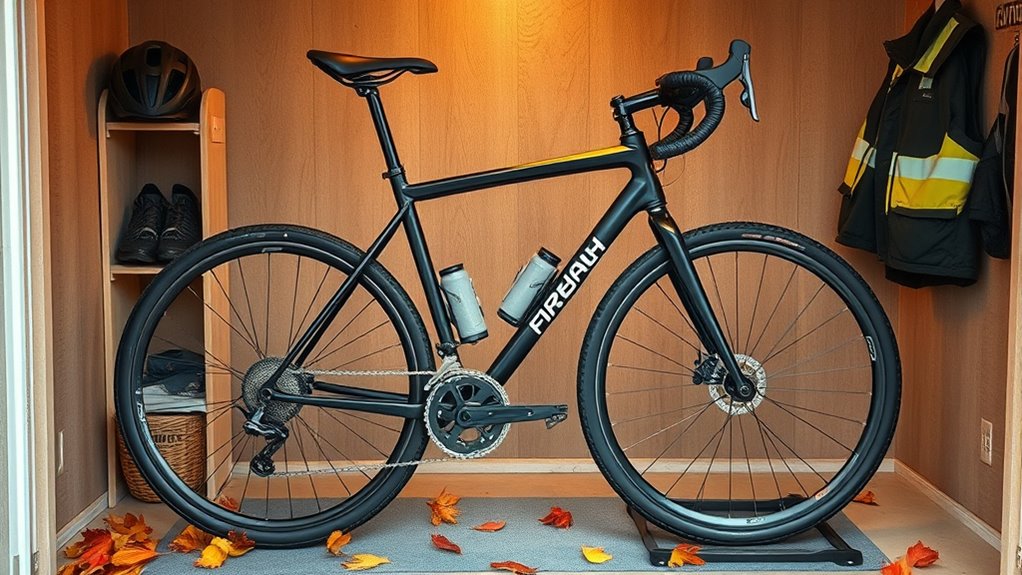
While these focus points are essential, don’t forget other maintenance tasks. Clean your bike thoroughly, removing dirt, grime, and any corrosive road salt that can cause rust or damage. Lubricate the chain and moving parts to prevent rust and ensure smooth operation when you take your bike out of storage. Store your bike in a sheltered, dry location—like a garage or shed—away from direct sunlight and moisture. Cover it with a breathable cover to protect it from dust and pests, but avoid plastic covers that can trap moisture and promote rust. Regularly check and maintain your airless paint sprayer if you use one, as cold weather can affect its components and performance over time.
Frequently Asked Questions
Should I Remove the Battery Before Winter Storage?
Yes, you should remove the battery before winter storage. Proper battery maintenance involves disconnecting it and storing it in a cool, dry location to prevent discharge and corrosion. Keep the battery on a trickle charger or fully charged during storage to maintain its health. Choose a storage location away from extreme temperatures and humidity, and check on it periodically to verify it stays in good condition for when you’re ready to ride again.
How Often Should I Check on My Bike During Winter?
You should check on your bike at least once every month during winter. During your check, guarantee the tire pressure stays consistent to prevent flat spots, and apply lubricant to the chain and moving parts to prevent rust and corrosion. Also, look for any signs of moisture or corrosion. Regular check-ins help keep your bike in good condition and ready to ride when spring arrives.
Is It Better to Store the Bike Indoors or Outdoors?
Storing your bike indoors is better because it provides consistent indoor storage and better outdoor protection from elements like snow and rain. An indoor space keeps your bike safe from extreme temperatures and humidity, reducing rust and corrosion. If indoor storage isn’t an option, guarantee outdoor protection by using a high-quality cover and storing it in a sheltered area. This way, your bike stays protected and in good condition during winter.
What Type of Cover Provides the Best Protection?
A weather-resistant cover made from breathable material is your best bet. It keeps moisture out while allowing air to circulate, preventing mold and rust. Think of it as giving your bike a shield that breathes, so it stays dry and well-ventilated. This way, you protect your bike from harsh winter elements and condensation, ensuring it stays in top shape until spring rolls around.
How Do I Prevent Rust During Winter Storage?
To prevent rust during winter storage, you should regularly clean and dry your bike to remove moisture that causes corrosion. Apply a rust prevention spray or lubricant to metal surfaces for added corrosion control. Store your bike in a dry, sheltered area, and consider using a breathable cover that allows air circulation while protecting against humidity. These steps help keep rust at bay and maintain your bike’s condition over the winter.
Conclusion
As you tuck your bike away for winter, remember it’s not just about storage — it’s about respecting your ride’s needs. Think of it like planting a seed: proper care now guarantees it’ll bloom again in spring. I once left my bike uncovered during a storm, and it took weeks to recover. Taking these small steps now safeguards your bike’s future, so come spring, you’re ready to hit the road, renewed and confident.