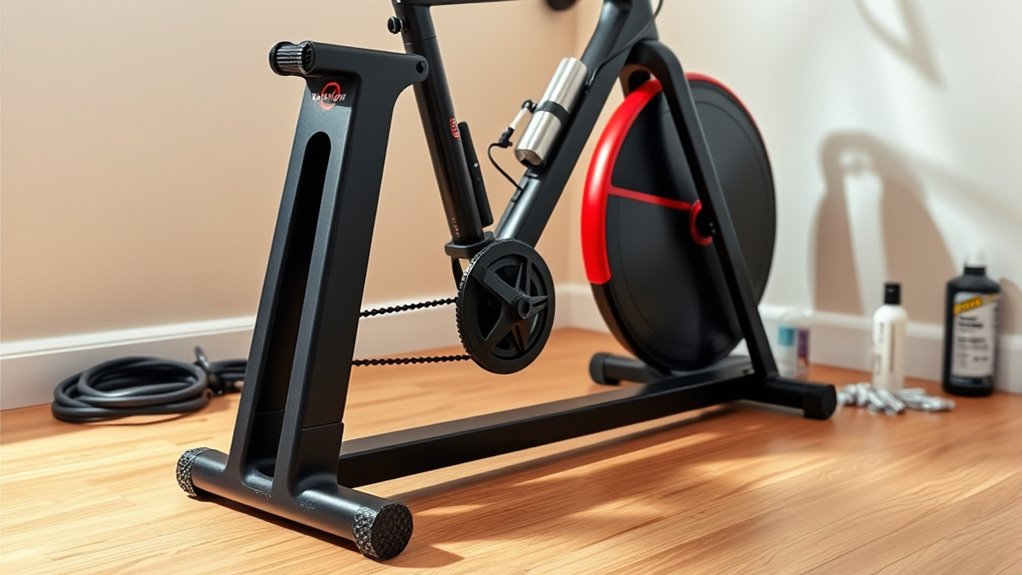

To set up your indoor trainer correctly, make certain it’s on a stable, level surface and securely assembled, then calibrate the resistance for tailored workouts. Regularly check for wear and tighten any loose parts, cleaning the surface with a damp cloth after each use. Store it in a dry, cool spot, possibly covering it to prevent dust. Proper care and adjustments prolong your trainer’s lifespan and keep your workouts safe and effective—more tips lie ahead to help you optimize your experience.

Get sports gear delivered free with Prime
- Fast, free delivery on millions of items
- Prime Video, Amazon Music and more included
- Member-only deals all year
Key Takeaways
- Ensure proper setup for stability, correct resistance calibration, and safety before each workout.
- Adjust resistance smoothly to simulate terrains and enhance training effectiveness.
- Store in a dry, cool place with dust covers and remove accessories to prevent damage.
- Regularly clean, inspect, lubricate, and calibrate parts for optimal performance and longevity.
- Proper maintenance prolongs trainer lifespan, maintains responsiveness, and ensures safe, effective workouts.
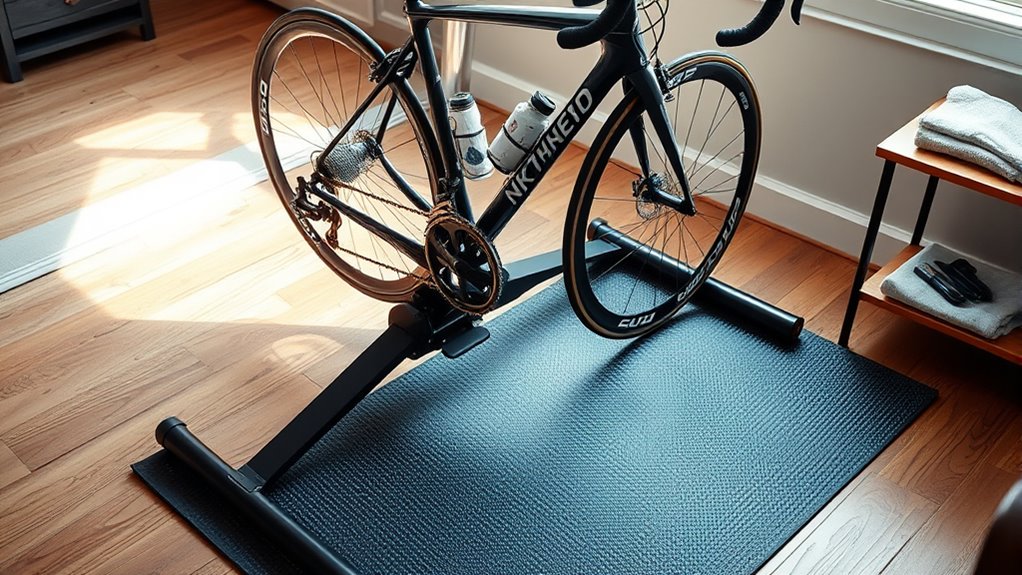
Have you ever contemplated how to stay fit and maintain your cycling routine during bad weather or busy schedules? An indoor trainer makes it possible, but setting it up correctly and caring for it guarantees you get the most out of your workouts. When you first set up your trainer, pay attention to resistance adjustments. Most trainers allow you to change resistance levels to simulate different terrains, so get familiar with how to adjust them smoothly. This helps you tailor your workouts to your fitness goals, whether you’re doing a high-intensity interval session or a steady endurance ride. Make sure your resistance is responsive and easy to control; this enhances your training experience and keeps you motivated. Proper resistance adjustments also help prevent injury by allowing you to stay within safe exertion levels, especially when you’re pushing yourself during intense sessions.
Once you’ve got your trainer set up and resistance dialed in, you need to contemplate proper storage. Taking good care of your indoor trainer prolongs its lifespan and ensures consistent performance. When you’re done riding, clean the trainer surface with a damp cloth to remove sweat, dust, and debris that can cause corrosion or wear. If your trainer has moving parts or rollers, check for any signs of wear or looseness and tighten or lubricate as needed, following the manufacturer’s instructions. Proper storage means keeping your trainer in a dry, cool place—away from direct sunlight or moisture, which can damage components over time. If you live in a humid area, consider using a dehumidifier or silica gel packs nearby to prevent rust or corrosion.
Additionally, if you have to store your trainer for an extended period, consider covering it with a cloth or a dedicated cover to prevent dust accumulation. Remove any accessories or attachments that might be prone to damage and store them separately. When you’re ready to ride again, inspect the trainer thoroughly, reassemble if needed, and verify resistance settings before hopping back on. Proper storage and maintenance not only keep your trainer in top shape but also save you money in the long run, avoiding costly replacements or repairs. Remember, a little effort in resistance adjustments during your workouts and proper storage afterward ensures you stay safe, comfortable, and motivated to keep riding indoors, no matter the weather or your busy schedule.
indoor bike trainer resistance calibration
As an affiliate, we earn on qualifying purchases.
As an affiliate, we earn on qualifying purchases.
Frequently Asked Questions
How Do I Choose the Right Indoor Trainer for My Bike?
To choose the right indoor trainer, consider your bike compatibility first—check if it fits your bike type and size. Then, decide on resistance types, like magnetic, fluid, or direct drive, based on how realistic and quiet you want your workouts. Think about your training goals and budget. With the right combination of bike compatibility and resistance type, you’ll find a trainer that helps you stay motivated and perform at your best indoors.
What Safety Precautions Should I Take During Indoor Training?
During indoor training, you should prioritize ventilation safety by ensuring your space is well-ventilated to prevent overheating and maintain fresh air. Check equipment stability before riding to avoid accidents, making sure your trainer is securely positioned on a flat surface. Keep your area clear of clutter to prevent tripping hazards, and wear appropriate gear. Regularly inspect your bike and trainer for any wear or damage to stay safe throughout your workout.
How Often Should I Calibrate My Indoor Trainer?
You should calibrate your indoor trainer regularly to maintain ideal trainer accuracy. Ideally, do this every 2 to 4 weeks, or after any significant change in temperature or if you notice inconsistent data. Regular calibration ensures your trainer provides precise measurements, helping you track progress accurately and avoid overtraining. Consistent calibration keeps your training data reliable, making your workouts more effective and enjoyable.
Can I Use a Fan or Cooling System With My Trainer?
You can definitely use a fan cooling system with your trainer, turning your setup into a breeze-filled oasis. Fan cooling helps prevent overheating and keeps you comfortable during intense rides. Proper trainer ventilation is essential; it acts like a breath of fresh air, maintaining ideal temperature and reducing sweat buildup. Just make certain the fan is positioned to avoid interference with your bike or trainer, so you stay cool without disruptions.
What Are Common Troubleshooting Tips for Indoor Trainers?
If your indoor trainer isn’t working smoothly, start by checking trainer compatibility with your bike and app. Confirm the resistance unit is properly calibrated and all connections are secure. To reduce noise, lubricate moving parts and tighten any loose bolts. If noise persists, consider using a mat to dampen vibrations. Regularly inspecting your trainer helps prevent issues and keeps your workouts quiet and effective.
Conclusion
So, as you set up and care for your indoor trainer, you’ll find it becomes more than just equipment—it’s your reliable partner in staying active. Coincidentally, the more attention you give it, the smoother and more enjoyable your rides become. It’s funny how small care routines make a big difference, almost like they’re working in your favor. Keep up with maintenance, and your trainer will reward you with consistent performance, turning indoor workouts into a seamless part of your routine.
NFL season / tailgating Picks
team gear
As an affiliate, we earn on qualifying purchases.