
To travel with your bike via airline, invest in a sturdy, airline-approved bike case or box, and disassemble parts like the pedals, derailleur, and handlebars, securing them with padding to prevent damage. Check the airline’s size and weight limits beforehand, and label your box clearly with fragile stickers. Conduct maintenance such as inflating tires, lubricating the drivetrain, and tightening bolts. For more tips on smooth travel and proper packing, keep exploring for expert advice.
Key Takeaways
- Use a sturdy, airline-approved bike case or box, and label it as fragile.
- Disassemble parts like pedals and handlebars, and secure all components tightly.
- Check airline size and weight restrictions beforehand to avoid extra fees or delays.
- Conduct thorough bike maintenance: check tire pressure, brakes, gears, and lubricate as needed.
- Pack essential repair tools and spare parts to handle minor issues during travel.
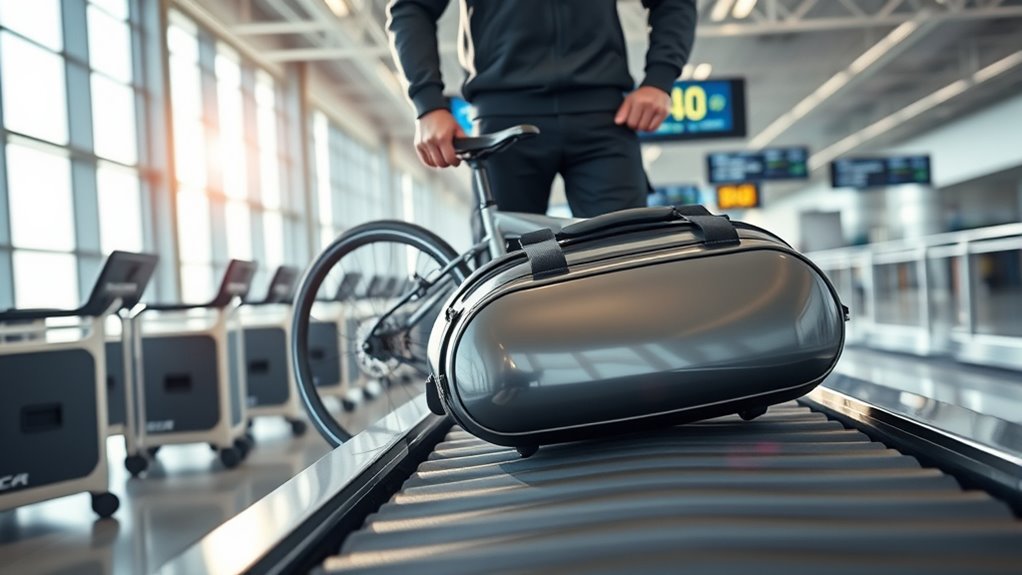
Have you ever wondered how to make traveling with your bike hassle-free? If you’re planning a trip that involves flying, a little prep work can go a long way. The key is to master the art of bike packing and bike maintenance before you even reach the airport. Properly packing your bike ensures it arrives intact, while good bike maintenance minimizes the risk of mechanical issues during your journey. Taking these steps not only saves you frustration but also keeps your trip smooth from start to finish.
Start with bike packing. Invest in a sturdy bike box or a high-quality bike case designed specifically for airline travel. When packing, remove the pedals, derailleur, and any loose accessories, and secure them separately. Deflate the tires slightly to prevent overexpansion during transit, and wrap delicate parts with bubble wrap or foam padding. Disassemble the handlebars if necessary and secure all parts tightly. Label your box clearly with your contact information, and consider adding fragile stickers to alert handlers. Proper bike packing is essential because it protects your bike from damage and makes handling easier for baggage staff. Remember, some airlines have size and weight restrictions for bike shipments, so double-check those before heading to the airport. Additionally, understanding the top projector features can help you better prepare if you plan to document your journey or set up a portable viewing station during your trip.
Invest in a sturdy bike case, remove parts, wrap delicate components, and label clearly for safe airline travel.
Alongside packing, bike maintenance before your trip is vital. Give your bike a thorough inspection, checking tire pressure, brake function, and gear shifting. Ensure that the drivetrain is clean and lubricated to avoid issues en route. Tighten any loose bolts or screws, especially on the handlebars, seat post, and wheels. If you notice any worn-out parts, replace them ahead of time to prevent breakdowns or safety hazards during your travels. Carry a small toolkit with essential items like a multi-tool, spare tube, tire levers, and a pump. This way, if something does go wrong, you can address minor repairs on the go. Also, familiarize yourself with your bike’s components and how to perform basic maintenance. Doing so boosts your confidence and helps you handle small problems without needing to find a bike shop abroad.
Flying with a bike doesn’t have to be stressful if you plan ahead. Proper bike packing minimizes the risk of damage, while routine bike maintenance ensures your bike is in top shape for the trip. When you prepare your bike carefully, it becomes a seamless extension of your travel experience. Remember, the more you invest in packing and maintenance, the more you’ll enjoy exploring new places on your bike without worrying about issues or damage. With a little effort upfront, you can turn a potentially complicated process into an enjoyable part of your adventure.

VEVOR Bike Travel Case, Bicycle Travel Bag with EVA Hard Shell, Quick-Release Buckle, Dual Zipper, TSA Lock and Wheels, Black Bicycle Case for Airplane, Easy Transportation Bag for 700C Road Bike
- Bike Compatibility: Fits 700C road bikes with removable parts
- All-Around Protection: Rigid EVA shell with protective components
- Wheel and Chain Bags: Includes two wheel bags and chain tool bag
As an affiliate, we earn on qualifying purchases.
As an affiliate, we earn on qualifying purchases.
Frequently Asked Questions
Are There Specific Bike Models That Airlines Prefer for Transport?
Airlines don’t usually prefer specific bike models but do recommend using sturdy bike cases to guarantee safe transport. Opt for well-known, reliable bike brands like Trek, Specialized, or Giant, which often have models that fit easily into standard bike cases. Check your airline’s bike case recommendations before packing, and consider disassembling your bike for extra protection. Proper packaging and durable cases help prevent damage and streamline your travel experience.
How Early Should I Arrive at the Airport With My Bike?
You should arrive at the airport at least 2 to 3 hours before your flight to give yourself enough time for checking baggage policies and preparing for delays. Arriving early helps you handle your bike’s special arrangements smoothly, ensuring it’s properly packed and documented. This extra time also allows for potential delays in security or baggage handling, giving you peace of mind and avoiding last-minute stress.
What Are the Insurance Options for Damaged Bikes During Air Travel?
You should consider bike damage coverage options before your flight. Many airlines offer limited protection, so purchasing dedicated travel insurance or adding bike coverage to your existing policy is prudent. If your bike gets damaged, you’ll need to follow the insurance claim process, providing photos and receipts. This ensures you’re financially protected, and you can quickly get your bike repaired or replaced without extra hassle.
Can I Pack My Bike in a Regular Suitcase or Do I Need Special Packaging?
You can’t pack your bike in a regular suitcase due to airline regulations. Instead, you need proper bike packing, like a hard-shell case or a padded bike bag, to safeguard your bike during travel. Make sure to check airline regulations beforehand, as they often specify size, weight, and packaging requirements. Proper bike packing ensures your bike arrives safely and complies with airline policies, avoiding extra fees or delays.
Are There Restrictions on Transporting Electric Bikes on Airplanes?
Yes, you can transport electric bikes on airplanes, but there are restrictions. Airlines typically limit battery watt-hours, often to 300Wh or less, due to safety concerns. You’ll need to remove the battery and follow size limitations for packaging. Make sure to check your airline’s specific battery restrictions and packaging requirements before flying, as failure to comply can result in delays or denied boarding. Always notify your airline in advance.
Conclusion
Traveling with your bike is like riding through new territory—you’ll face some bumps, but with the right preparation, you’ll navigate smoothly. Remember, your bike is more than just gear; it’s a trusted companion on your adventures. By following these tips, you’ll turn any travel challenge into a simple ride. Embrace the journey, knowing that with each trip, you’re expanding your world—one pedal stroke at a time. Happy travels!