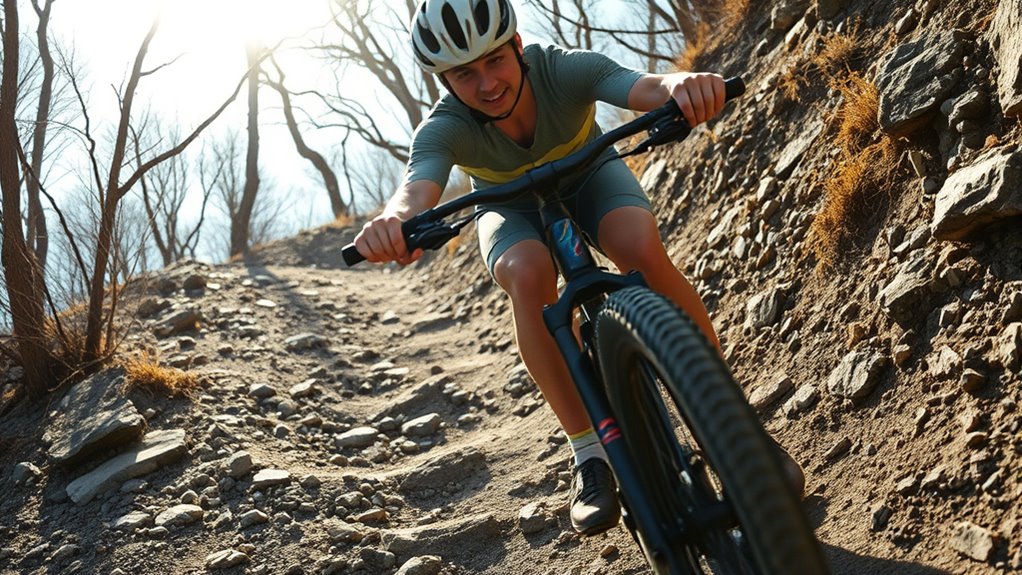

When climbing steep grades, you should choose a lower gear to pedal smoothly without overexerting yourself and plan gear changes ahead of time to maintain momentum. Keep a steady, moderate pace that conserves energy and focus on a consistent cadence. Avoid surges or sprinting, and adjust effort based on how your body feels. Mastering these techniques helps you climb more efficiently and comfortably—keep going to discover how to refine your strategy even further.
Key Takeaways
- Shift to lower gears early before steep inclines to maintain a smooth, steady cadence.
- Start at a moderate pace, avoiding sprinting to conserve energy for the climb.
- Anticipate steep sections and adjust effort to prevent fatigue and maintain momentum.
- Keep upper body relaxed and focus on smooth pedal strokes for efficiency.
- Develop consistent pacing and gear-shifting habits through practice for safer, more enjoyable climbs.

Climbing steep grades can be challenging, but understanding how to approach them safely makes all the difference. The right gear selection is essential to maintain momentum and conserve energy. When tackling steep inclines, you want to choose a gear that allows you to pedal smoothly without exerting excessive force. Often, this means shifting to a lower gear well before you reach the steepest part of the climb. By doing so, you avoid the need for sudden, strenuous pushes that can tire you out quickly. Smooth, consistent pedaling in an appropriate gear helps you stay in control and maintain a steady rhythm. Take the time to get familiar with your gear range, and plan your shifts in advance to prevent losing momentum midway through the climb. Additionally, understanding your personal goal tracking can help you develop a consistent approach and celebrate small victories along the way.
Along with gear selection, pacing strategies serve as your best tools for conquering steep grades. It’s tempting to push hard at the start, but a sustainable pace is more effective in the long run. Begin the climb at a moderate speed, focusing on keeping your cadence steady rather than sprinting up the hill. This approach helps prevent early fatigue and keeps your muscles from burning out. As you ascend, adjust your effort based on how your body feels and the grade of the road. If you find yourself getting out of breath or your legs burning, ease off slightly and settle into a comfortable rhythm. Remember, conserving energy early on allows you to finish strong, rather than crashing before the top.
When combined, smart gear selection and pacing strategies give you a tactical advantage. Shift into an easier gear before the incline becomes relentless, and set a pace that you can sustain without sacrificing form or breathing. Keep your upper body relaxed, and focus on a smooth pedal stroke, which reduces fatigue and maintains efficiency. It’s also helpful to look ahead and anticipate the steep sections, so you can prepare mentally and physically. If you encounter a particularly tough part, don’t be tempted to surge; instead, stick with your planned effort and keep a steady rhythm. Over time, these techniques become second nature, and you’ll find yourself climbing with greater confidence, less fatigue, and more enjoyment.
Ultimately, climbing steep grades isn’t about brute strength alone—it’s about strategy. Good gear selection and pacing strategies keep you moving forward efficiently and safely. With practice, you’ll learn to listen to your body, shift gears proactively, and maintain a sustainable pace that carries you comfortably to the summit.
As an affiliate, we earn on qualifying purchases.
Frequently Asked Questions
How Do Weather Conditions Affect Climbing Steep Grades?
Weather conditions considerably impact your ability to climb steep grades. High temperatures can cause dehydration, fatigue, and overheating, making the climb more challenging. Conversely, cold weather increases the risk of hypothermia and reduces your muscle efficiency. Rain or snow can create slippery surfaces, reducing traction and safety. Always check the weather impact before your climb, dress appropriately, and adjust your pacing and gear to stay safe and maintain ideal performance.
What Safety Gear Is Essential for Steep Climbs?
You need essential safety gear for steep climbs, focusing on mountain safety and helmet importance. Always wear a well-fitted helmet to protect your head from falling debris and impacts. Carry sturdy climbing shoes for grip, a harness for secure attachment, and reliable ropes for safety. Using carabiners and quickdraws ensures secure connections. Stay prepared with an emergency whistle and a first aid kit, because safety gear assists you navigate steep terrains confidently and securely.
How Should I Train for Steep Grade Cycling?
To train for steep grade cycling, focus on cadence optimization by maintaining a steady, efficient pedal rate, usually around 70-90 RPM. Incorporate interval training to build strength and endurance, and practice climbing on varied terrains. Don’t forget nutrition strategies—fuel your rides with carbs and hydration to sustain energy levels. Regularly challenge yourself with steeper climbs, and analyze your pacing to improve efficiency over time.
What Are Common Mistakes Beginners Make on Steep Climbs?
You often make technique mistakes like pushing too hard or staying in too high a gear, which can tire you out quickly. Equipment misjudgments, such as choosing the wrong gear ratio or not adjusting your bike setup for steep climbs, can also slow you down. To improve, focus on maintaining a steady cadence, shift to lower gears early, and keep your body relaxed. These adjustments help you climb more efficiently and conserve energy.
How Do Different Terrains Influence Gear Selection?
Different terrains demand terrain adaptation and gear optimization. On loose or uneven surfaces, you should shift to lower gears for better control and traction. Smooth, paved climbs might allow higher gears for efficiency. By evaluating the terrain ahead, you can select the appropriate gear, reducing fatigue and enhancing safety. Always stay attentive to changing conditions, and adapt your gear choices accordingly to maintain a steady, manageable pace on any terrain.
Conclusion
Now that you’ve learned to pace yourself and choose the right gear, tackling steep grades becomes less intimidating. Imagine yourself as a mountain climber, carefully selecting each step to avoid slipping. Just like maintaining a steady rhythm keeps you steady on the ascent, your pacing and gear choices keep you moving smoothly uphill. With practice, those steep climbs will feel like a gentle slope, and you’ll reach the top with confidence, ready for the next challenge.