If your hands go numb while cycling, the cause might be hidden fit issues you’re missing. A too-high or too-low handlebar, uneven grip pressure, or poor riding posture can compress nerves over time. Small adjustments to your bike’s position, proper grip technique, and ergonomic handlebars can reduce pressure and improve comfort. Persistent numbness usually signals a need to fine-tune your fit—stick around to uncover the subtle fixes that make a difference.
Key Takeaways
- Proper handlebar height and reach ensure wrists and shoulders align naturally, preventing nerve compression.
- Ergonomic grips that match hand size distribute pressure evenly, reducing numbness and fatigue.
- Light grip tension and regular hand position shifts minimize nerve pressure during rides.
- Correct bike fit, including saddle height and handlebar position, supports natural posture and reduces nerve issues.
- Regular setup checks and small adjustments can prevent long-term nerve damage and improve riding comfort.
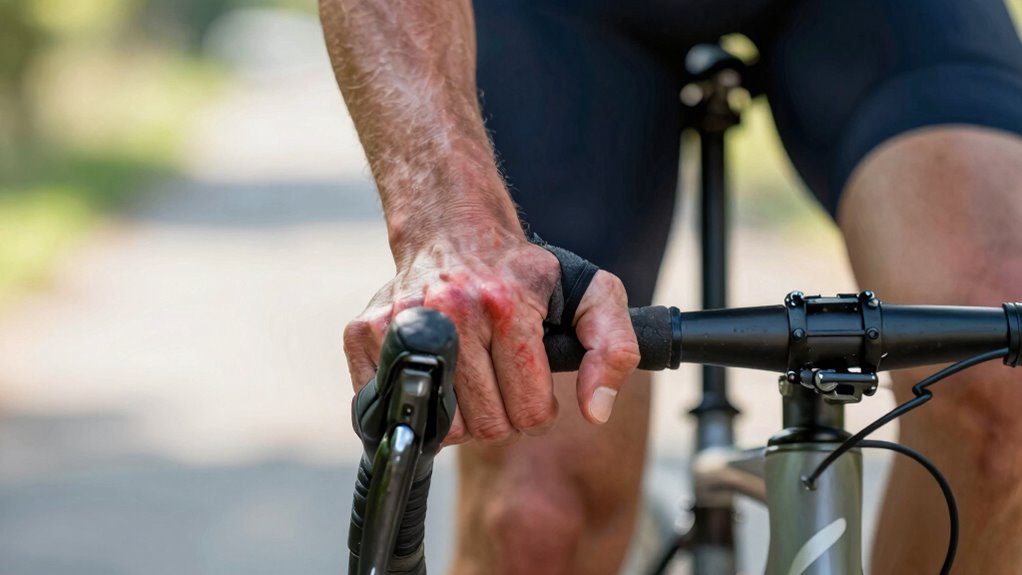
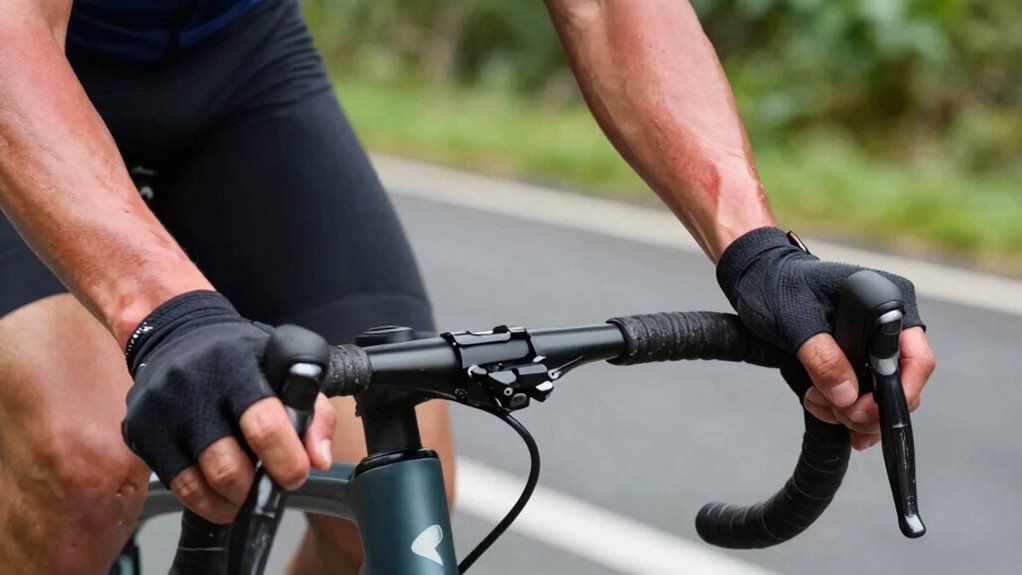
If you’ve been experiencing numbness or tingling in your hands during or after workouts, the cause might be hidden fit issues that you haven’t noticed. Many riders overlook the importance of proper handlebar positioning and grip ergonomics, yet these factors play a vital role in comfort and nerve health. Your handlebar positioning determines how your wrists and shoulders align during rides. If the handlebars are too high or too low, it forces your wrists into awkward angles, putting unnecessary pressure on the nerves and blood vessels running through your hands. Proper handlebar height allows your arms to be in a natural, relaxed position, reducing strain and preventing numbness. Ensuring your bike fit includes proper handlebar height can help prevent these issues from developing further. Grip ergonomics also matter more than you might think. An improper grip can cause your hands to bear uneven weight, leading to excessive pressure on certain nerves. If your grips are too narrow or too wide, or if they don’t match your hand size, you’ll likely find yourself gripping too tightly or awkwardly. This tight grip not only tires your hands faster but also compresses nerves, causing tingling sensations. Consider investing in ergonomic grips designed to fit the natural shape of your hands, which can alleviate pressure points. Additionally, adjusting your hand position on the handlebars can distribute pressure more evenly, avoiding prolonged strain on specific areas. Another common mistake is holding onto the handlebars with a death grip. When you squeeze too tightly, you increase tension throughout your arms and shoulders, which can cascade down to your hands, worsening numbness. Instead, try maintaining a light but firm hold, relaxing your fingers and wrists. Regularly shifting hand positions during your ride can help prevent sustained pressure on the same nerve pathways. Use your whole hand rather than gripping with just your fingers or palms. This variation helps distribute forces more evenly and reduces fatigue. Your riding posture also influences grip ergonomics. If your saddle height or reach isn’t correctly adjusted, you’ll unconsciously compensate by adjusting your grip or handlebar positioning, which can lead to nerve compression over time. Ensuring that your bike fit supports a natural riding posture can make a significant difference. Remember, small adjustments in handlebar height, reach, and grip can have a big impact on comfort and nerve health. Regularly check your setup and listen to your body—if numbness persists, it’s a sign that your handlebar positioning and grip ergonomics need fine-tuning. Proper fit isn’t just about performance; it’s about riding comfortably and avoiding long-term nerve issues.
Frequently Asked Questions
Can Hand Numbness Occur Even With a Proper Bike Fit?
Yes, hand numbness can still occur even with a proper bike fit. If your bike saddle isn’t positioned correctly or your arm positioning is off, you may experience pressure on nerves or blood flow, leading to numbness. Adjusting your saddle height, tilt, or handlebar position can help, but paying attention to how you hold your handlebars and ensuring your arm positioning is comfortable is essential for preventing numb hands.
How Often Should Bike Fit Assessments Be Performed?
Think of your bike fit as a garden that needs regular tending. You should perform bike fit maintenance every 6 to 12 months or whenever you notice changes in rider flexibility or comfort. Regular check-ins guarantee your setup adapts as your body evolves, preventing numb hands and discomfort. Keep your ride smooth and pain-free by staying proactive with fit assessments, just like tending a garden keeps it healthy and thriving.
Do Gloves Help Prevent Numb Hands During Rides?
Wearing gloves with padding can definitely help prevent numb hands during rides by absorbing vibrations and reducing pressure on your nerves. They also improve your grip strength, making it easier to hold onto handlebars comfortably, especially on longer rides. Choose gloves with adequate padding and a snug fit to make certain of maximum comfort. Remember, gloves are a simple yet effective way to protect your hands and maintain good control while cycling.
Can Posture Adjustments Reduce Hand Numbness?
Yes, posture adjustments can reduce hand numbness. You might think it’s just about grip, but proper positioning—like using an ergonomic saddle—ensures your weight is balanced, easing pressure on your hands. Incorporate core strengthening exercises to maintain good posture effortlessly. Small changes, such as adjusting handlebar height and engaging your core, can markedly improve blood flow and reduce numbness, making your rides more comfortable and enjoyable.
Are There Specific Handlebar Types That Minimize Numbness?
Yes, certain handlebar types can minimize numbness by improving handlebar ergonomics and grip design. You should consider ergonomic handlebars like riser or bullhorn styles that offer more natural wrist positions. Look for handlebars with padded or textured grips that reduce pressure points and improve comfort. Choosing handlebar shapes that align with your riding posture helps prevent nerve compression, ensuring better circulation and less numbness during your ride.
Conclusion
So, next time your hands go numb, ask yourself: are your bike fit and handlebar position truly optimized? Don’t ignore these hidden issues—they could be the root cause of discomfort and even long-term injury. Small adjustments can make a big difference in comfort and performance. After all, why settle for numb hands when a better fit might release a smoother, more enjoyable ride? Take the time to fine-tune your setup—you deserve it.