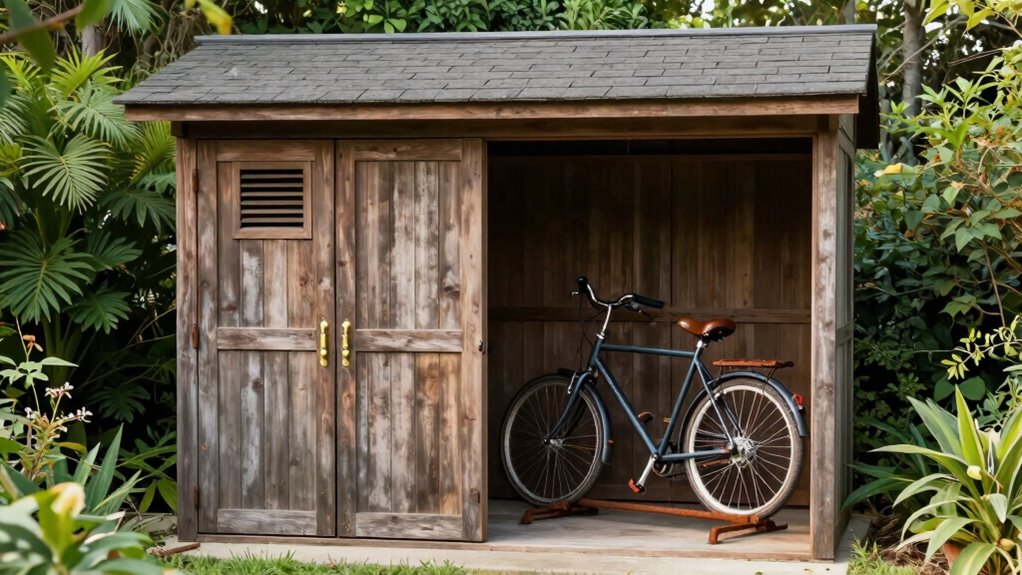
A good bike shed for long-term storage needs durable, weather-resistant materials like treated wood, metal, or high-quality plastic. Guarantee it’s well-ventilated to prevent moisture buildup and mold, with vents or openable windows. Seal gaps around doors and windows, and apply weatherproof paint or sealant to protect against the elements. Elevate the shed slightly to avoid water seepage. For more tips on keeping your bikes safe over time, keep exploring these essential features.
Key Takeaways
- Construct with weather-resistant, durable materials to withstand long-term exposure to the elements.
- Incorporate effective ventilation to prevent moisture buildup and mold growth inside the shed.
- Ensure the shed is properly sealed and elevated to prevent water ingress during heavy rains.
- Include reinforced security features like strong locks and sturdy construction to protect stored items.
- Design for adequate size and easy access, ensuring sufficient space for bike maintenance and retrieval.

Are you looking for a reliable way to protect your bike during long-term storage? The key to guaranteeing your bike stays in top condition lies in choosing the right bike shed. A good bike shed for long-term storage should prioritize protection from the elements while maintaining a suitable environment inside. One of the most essential features is effective bike shed ventilation. Proper ventilation helps prevent moisture buildup, which can lead to rust and corrosion on your bike’s metal components. Without adequate airflow, humidity can accumulate, damaging your bike over time. Look for a shed that promotes good air circulation, with vents or windows that can be opened to allow fresh air in and damp air out. This simple design feature can greatly extend the lifespan of your stored bike. Additionally, incorporating proper ventilation design can significantly improve the shed’s long-term durability and your bike’s preservation. Ensuring consistent airflow is especially important in humid climates, where moisture levels tend to be higher. Proper ventilation not only helps prevent moisture issues but also reduces the buildup of stale air that can contribute to mold and mildew growth.
Weatherproofing techniques are also vital in a long-term bike shed. A well-constructed shed should be made from durable, weather-resistant materials like treated wood, metal, or high-quality plastic. Sealing gaps around doors and windows prevents water from seeping in during rain or snow. Applying weatherproof paint or sealant on the exterior adds an extra layer of protection, especially if your shed is exposed to harsh weather conditions. A weatherproof shed keeps water, snow, and debris out, making sure your bike stays dry and free from damage. Additionally, elevating the shed slightly off the ground can help prevent water from seeping in through the base, especially during heavy rains. An elevated design can also aid in airflow underneath, contributing to overall better moisture control.
Security features are another factor to keep in mind. A good bike shed should be sturdy enough to deter theft or vandalism. Look for sheds with strong locks, reinforced doors, and sturdy construction. If you plan to store your bike for an extended period, these features give you peace of mind that your investment is safe. Easy access is also important; a shed that’s simple to open and close without sacrificing security ensures you can retrieve or store your bike conveniently whenever needed. Moreover, choosing a shed with security features can further enhance protection against potential threats. Incorporating additional security measures like outdoor lighting or alarms can also be beneficial for long-term peace of mind.
Finally, think about the size and layout of the shed. It should comfortably fit your bike and any accessories or tools you might want to store alongside it. Adequate space allows for easy maintenance and prevents your bike from being cramped or scratched. When combined with good ventilation and weatherproofing, these elements make a bike shed ideal for long-term storage, helping your bike stay protected, secure, and in excellent condition for years to come.
As an affiliate, we earn on qualifying purchases.
Frequently Asked Questions
How Weather-Resistant Should a Bike Shed Be?
You should guarantee your bike shed is highly weather-resistant to protect against rain, snow, and UV rays, preventing rust and deterioration. Opt for durable materials like treated wood or metal with a sealant, which also enhances aesthetic appeal. Prioritize space optimization inside, so your bikes stay organized and accessible. A well-constructed, weather-resistant shed not only safeguards your bikes but also complements your outdoor space over time.
Can a Bike Shed Be Securely Lockable?
Yes, a bike shed can be securely lockable. You should look for security features like sturdy door locks and reinforcement. Opt for lock types such as deadbolts or padlocks, which offer better protection against theft. Make certain the lock fits well and is made from durable materials. Combining strong security features with high-quality lock types helps keep your bike safe during long-term storage.
What Is the Best Material for Long-Term Durability?
You should choose steel or high-quality wood for long-term durability in your bike shed. Steel offers strength and weather resistance, while treated wood blends durability with appealing bike shed aesthetics. Consider customization options like paint or stain to enhance protection and style. Both materials withstand harsh weather, reducing maintenance needs. Prioritize sturdy construction and weatherproofing to guarantee your bike shed remains reliable and attractive over time.
How Much Ventilation Is Necessary?
You need enough ventilation to prevent moisture buildup—think of it as giving your bike shed a gust of fresh air, essential for long-term health. Proper airflow reduces mold and rust, preserving bike aesthetics and extending lifespan. Choose a shed with adjustable vents or windows, and consider color options that reflect sunlight, minimizing condensation. Too little ventilation risks damage; too much can compromise security. Aim for balanced airflow to keep your bikes in top shape.
Are There Maintenance Requirements for Outdoor Sheds?
Yes, outdoor sheds require regular maintenance to stay secure and organized. You should check for any damage, such as loose hinges or cracks, to maintain garden security. Keep the shed clean and well-ventilated to prevent mold and pests. Regularly organize your shed to maximize space and access, making sure bikes and tools are stored safely. Proper upkeep guarantees your bike shed remains functional and secure over the long term.
Conclusion
Choosing the right bike shed for long-term storage isn’t just about protection; it’s about crafting a sanctuary where your bike can rest undisturbed, yet always ready for the next adventure. When you select a shed that whispers reliability and shelters your bike from life’s gentle wear, you nurture a quiet trust. In this delicate balance, your bike remains a loyal companion, patiently waiting, as if in a gentle slumber, until the road calls once more.