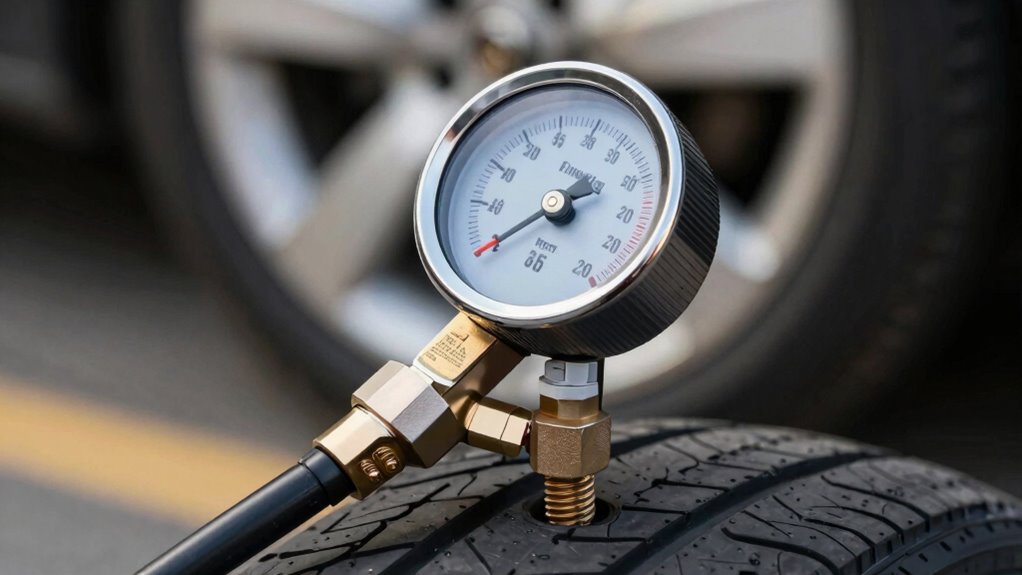
To choose a better pressure gauge for tire setup, prioritize accuracy, durability, and user-friendly features like large, backlit displays and ergonomic design. Opt for digital gauges with strong materials such as stainless steel for long-term reliability. Make certain it’s resistant to dirt, moisture, and temperature extremes for outdoor use. Consider ease of operation and maintenance, like easy unit switching and battery indicators. Keep exploring for more tips on selecting the best gauge to keep your tires safe and efficient.
Key Takeaways
- Prioritize digital gauges for more accurate, consistent readings and easier visibility with large, backlit displays.
- Ensure the gauge is made from durable materials like stainless steel or reinforced plastics for long-lasting use.
- Check for user-friendly features such as ergonomic design, simple controls, and auto shut-off to enhance ease of use.
- Verify the gauge has undergone durability testing for environmental resistance and reliable performance over time.
- Consider cost versus quality, opting for well-reviewed models with proven accuracy and durability for better long-term value.
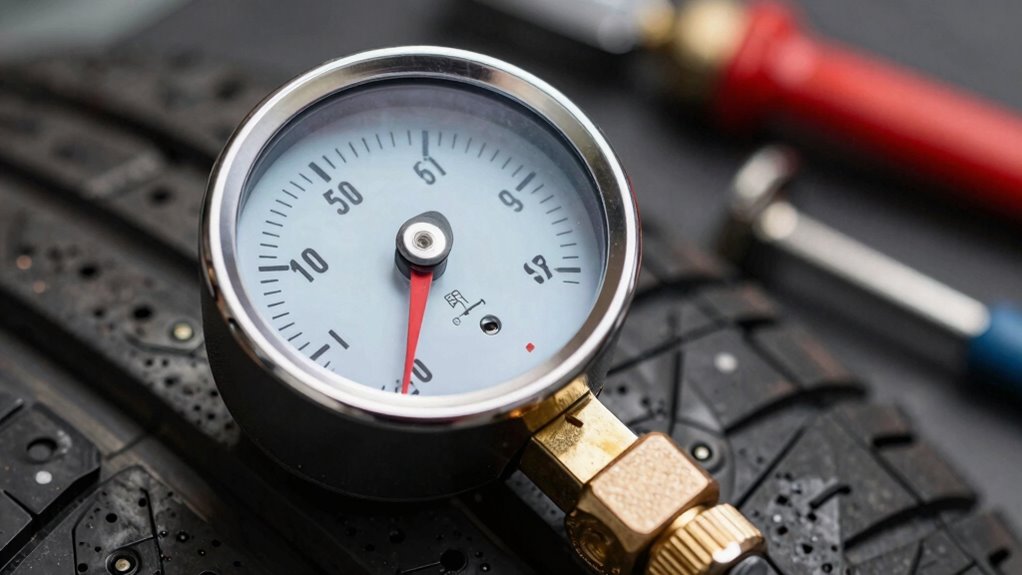
When selecting a pressure gauge, it’s essential to prioritize accuracy, durability, and ease of use to guarantee reliable readings in your applications. For tire setup, this means choosing a gauge that provides precise measurements, withstands tough conditions, and is straightforward to operate. Digital accuracy plays a significant role here, as digital gauges tend to deliver more consistent and exact readings than traditional analog types. You’ll find that digital displays reduce guesswork, especially in low or high-pressure ranges, ensuring you inflate your tires to the correct pressure every time. This precision helps improve tire longevity, fuel efficiency, and safety. Additionally, consider the user interface of the gauge, as intuitive controls can make your tire maintenance process more efficient and less frustrating.
Prioritize digital accuracy, durability, and ease of use for reliable tire pressure readings and safer, more efficient maintenance.
Durability testing is another vital factor. Tire gauges are often subjected to rough handling, exposure to dirt, moisture, and temperature fluctuations. When evaluating options, look for gauges built with sturdy materials like stainless steel or reinforced plastics, which can handle daily wear and tear. Some models undergo rigorous durability testing to verify they maintain accuracy over time, even after drops or exposure to harsh environments. Choosing a gauge that has passed such durability testing guarantees it remains reliable in demanding conditions, saving you money and hassle in the long run. Furthermore, selecting a temperature resistance gauge ensures reliable performance even in extreme weather conditions, which is especially beneficial if you often work in varying climates.
Ease of use is equally important. You want a gauge that’s simple to read and operate, especially if you’re frequently checking tire pressures. Digital gauges often feature large, backlit displays that are easy to see in low light, and some have ergonomic designs that fit comfortably in your hand. Features like auto shut-off help conserve battery life, while straightforward buttons make adjusting settings or switching units quick and effortless. The more intuitive the gauge, the less time you spend fumbling with it, and the more consistently you can maintain proper tire pressure. Also, a battery life indicator can be helpful to prevent unexpected power loss during use, ensuring your gauge remains ready whenever needed.
When choosing a pressure gauge for tire setup, think about the balance between digital accuracy, durability testing, and user-friendly features. A high-quality digital gauge might cost a bit more initially, but its accuracy and robustness can pay off by preventing under- or over-inflation, which can lead to uneven tire wear or safety issues. Don’t forget to check reviews and specifications to verify the gauge has been tested for durability and provides reliable readings over time. Ultimately, a well-chosen pressure gauge makes tire maintenance safer, more precise, and more efficient, giving you confidence every time you check your tires.
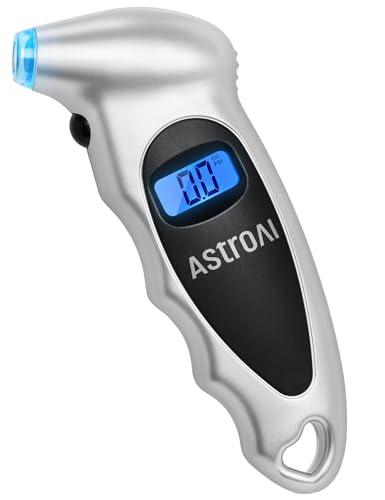
AstroAI Digital Tire Pressure Gauge 150PSI, ±1PSI Accuracy for Car Truck
- Accurate, Factory-Calibrated Readings: ±1 PSI accuracy for reliable results
- Backlit LCD & Nozzle Light: Illuminated display and nozzle for dark conditions
- Multiple Measurement Units: Switch between PSI, Bar, Kgf/cm², KPA
As an affiliate, we earn on qualifying purchases.
As an affiliate, we earn on qualifying purchases.
Frequently Asked Questions
What Is the Ideal Pressure Gauge Accuracy for Tire Setup?
You should look for a pressure gauge with at least 1-2% accuracy for precise tire setup. Regular calibration guarantees your gauge remains dependable; check it every 3-6 months. Digital gauges often provide higher precision and easier reading, while analog gauges can be more durable. Choose based on your preference, but prioritize accuracy to maintain ideal tire pressure, safety, and fuel efficiency during setup.
How Often Should I Calibrate My Pressure Gauge?
You should calibrate your pressure gauge at least once a year to guarantee accuracy. Regular maintenance tips, like calibration, help prevent common mistakes such as relying on an inaccurate gauge that could lead to improper tire pressure. If you notice inconsistent readings or after dropping the gauge, calibrate it more often. Proper calibration keeps your tire setup precise, extending tire life and maintaining peak performance.
Are Digital or Analog Gauges More Reliable for Tire Pressure?
Did you know that digital gauges are about 2-3 times more accurate than analog ones? When choosing between them, consider digital accuracy for precise tire pressure readings, especially if you check often. Analog gauges, with their durability, stand up well to rough handling and long-term use. If you want high precision and easy readability, go digital. For longevity and ruggedness, an analog gauge might be your best bet.
Can a Pressure Gauge Measure Both Tire and Other Fluid Pressures?
Yes, some pressure gauges can measure both tire and other fluid pressures, offering measurement versatility. When choosing one, check fluid compatibility to guarantee it handles different fluids safely. These gauges are designed with materials that resist corrosion and damage from various liquids, making them suitable for multiple applications. By selecting a versatile gauge, you save money and space, and you get reliable readings across different pressure measurement needs.
What Features Should I Look for in a Professional-Grade Gauge?
Looking for a professional-grade gauge? Focus on durability—steel or aluminum bodies withstand tough conditions. A user-friendly design matters too; easy-to-read dials and comfortable grips make the job smoother. But wait, there’s more—precision is key, so check for high accuracy and consistent readings. Don’t settle for less; a top-tier gauge combines durability, ease of use, and precision, ensuring you get reliable measurements every time you check your tires.
Conclusion
Now that you’ve picked the perfect pressure gauge, imagine yourself confidently gliding down the road, every tire perfectly inflated like a finely tuned instrument. Feel the crisp air inside each tire, ready to grip the pavement with precision. That steady, accurate reading in your hand guarantees a smooth, safe ride, like steering a well-oiled machine. With your new gauge, you’re all set to conquer every mile ahead, knowing your tires are just right and your journey will be seamless.