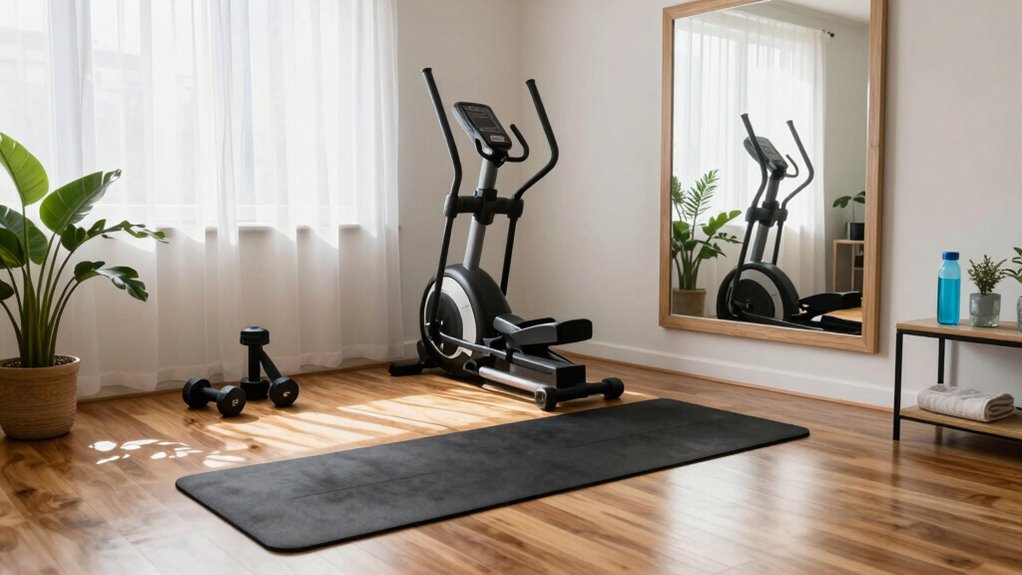

To set up your home training space, choose a clutter-free area with enough room for varied exercises, like a basement or spare room. Add essential accessories like a yoga mat, free weights, resistance bands, and a stability ball. Guarantee good lighting, proper ventilation, and comfortable flooring such as rubber mats. Organize small items with shelves and keep the space motivating and safe. Keep exploring for tips on creating a functional, inspiring workout environment that works for you.

Get sports gear delivered free with Prime
- Fast, free delivery on millions of items
- Prime Video, Amazon Music and more included
- Member-only deals all year
Key Takeaways
- Choose a spacious, clutter-free area with good ventilation and natural or bright lighting.
- Incorporate essential accessories like yoga mats, free weights, resistance bands, and compact cardio equipment.
- Install a mirror, sound system, and proper lighting to enhance motivation and monitor form.
- Use rubber flooring or mats to ensure safety, grip, and joint protection during workouts.
- Organize equipment with shelves and storage solutions to maximize space and maintain a tidy environment.

Are you looking to optimize your fitness routine without leaving home? Setting up an effective indoor training space requires a bit of planning, but it’s well worth the effort. The key is to create a dedicated area that’s functional, comfortable, and well-organized. Start by choosing a space with enough room to move freely and perform a variety of exercises. This could be a spare room, a corner of your garage, or even a section of your basement. The goal is to maximize space optimization, so your area feels open and inviting rather than cluttered.
Once you’ve selected your space, focus on incorporating essential fitness accessories that suit your workout style. Think about adding a yoga mat for floor exercises, free weights or resistance bands for strength training, and perhaps a stability ball for balance work. If you prefer cardio, consider investing in a compact treadmill, stationary bike, or jump rope. Keep in mind that you don’t need a lot of equipment to get a good workout; choose items that align with your fitness goals and fit comfortably within your space. Store smaller accessories like dumbbells and resistance bands on shelves or in bins to keep your area tidy and accessible.
To make your indoor training setup more inviting and motivating, pay attention to your environment. Good lighting is essential—natural light is ideal, but if that’s limited, add bright, energizing LED lights. Keep the temperature comfortable so you can work out without feeling too hot or cold. Adding a mirror can help you monitor your form and make your space feel larger. Consider installing wall hooks or racks to keep your fitness accessories organized and off the floor, which contributes to better space optimization. A small speaker or sound system can also boost your motivation with your favorite music or workout playlists. Creating a motivating environment can significantly enhance your workout consistency and enjoyment.
Finally, think about safety and flooring. Use a sturdy mat or rubber flooring that provides grip and cushioning, protecting both your joints and your equipment. Make sure your space has enough ventilation and airflow to keep fresh air circulating during intense sessions. Incorporating proper ventilation** and airflow improves overall comfort and safety during workouts. Additionally, ensuring good air quality can reduce fatigue and make breathing easier during strenuous exercises. Keep in mind that space optimization involves thoughtful arrangement and multifunctional equipment to make the most of your available area. As you set up your home indoor training area, remember that simplicity and organization** are your best allies. With thoughtful space optimization and the right fitness accessories, you’ll create a motivating environment that encourages consistency and helps you reach your goals—all within the comfort of your home.
Products Worth Considering

Bowflex SelectTech 840 Adjustable Kettlebell

BowFlex Results Series SelectTech Adjustable Dumbbells, Pair

Therabody Theragun Relief Massage Gun, 3-Speed, Navy
As an affiliate, we earn on qualifying purchases.
Frequently Asked Questions
How Much Space Do I Need for Indoor Training?
You’ll need at least 50 to 100 square feet for comfortable indoor training. Make sure equipment placement leaves enough room for safe movement and stretching. Optimize lighting by using bright, even lights or natural sunlight to reduce eye strain and boost motivation. Clear space around your equipment helps prevent accidents. Keep enough room for ventilation and airflow, making your workout more comfortable and effective.
What Type of Flooring Is Best for Indoor Workouts?
Looking for the best flooring for indoor workouts? Have you considered exercise mats with shock absorption? They protect your joints and provide stability during high-impact exercises. Rubber or foam flooring is ideal because it absorbs shock, reduces noise, and prevents slips. Do you want a durable, comfortable surface that supports your fitness goals? Choosing the right flooring can make all the difference in creating a safe, effective workout space at home.
How Do I Ensure Proper Ventilation During Training?
To guarantee proper ventilation during training, focus on airflow optimization by using effective ventilation systems like exhaust fans or air purifiers. Keep windows open if possible, creating cross-ventilation to circulate fresh air. Use oscillating fans to boost airflow and prevent stuffiness. Regularly check and maintain your ventilation systems to stay efficient, and consider adding plants to improve air quality naturally. This approach keeps your training space fresh and comfortable.
What Safety Measures Should I Consider Indoors?
You should prioritize safety by wearing appropriate gear, like helmets or knee pads, to prevent injuries. Make certain your space has clear access to emergency exits, so you can quickly leave if needed. Keep your training area clutter-free to avoid accidents, and always stay aware of your surroundings. Having safety gear on and knowing your emergency exits guarantees you can train confidently and safely indoors.
How Can I Reduce Noise From Indoor Exercise Equipment?
To tame the tumult of treadmill noise, try soundproofing techniques like sealing gaps and adding acoustic panels. Place noise reducing mats beneath your equipment to dampen vibrations and absorb sound. Using thick rubber or foam mats helps minimize noise transmission, while strategic placement away from shared walls reduces disturbance. Combining these methods creates a quieter workout zone, making indoor exercise more peaceful for you and your neighbors.
Conclusion
Now, your home gym is a canvas, ready for your daily masterpiece of movement. With each workout, you’re planting seeds of strength and endurance, growing a vibrant garden of health within your four walls. Embrace this space as your sanctuary, a place where sweat and determination bloom into confidence and resilience. As you close the door behind you, remember—you’re not just training; you’re sculpting a happier, healthier you, one workout at a time.