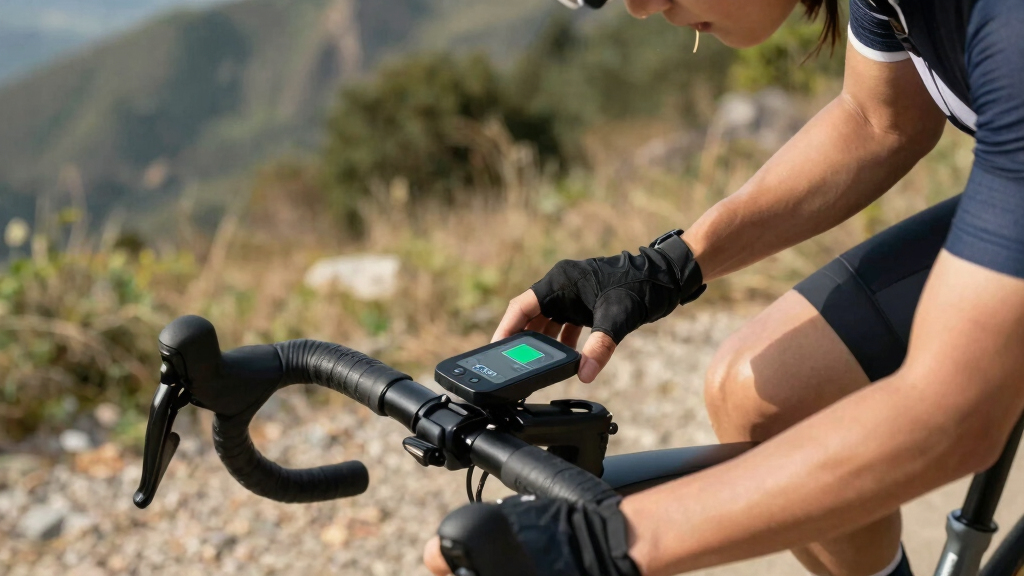

If you’re searching for the best bike computers with battery save mode, you’re likely looking for a device that balances extended battery life with essential features. The Garmin Edge 1040 Solar stands out for its solar charging capabilities, offering impressive endurance for long rides. The Wahoo ELEMNT Bolt V3 is known for its simplicity and efficient power use, making it a popular choice for riders who want reliable performance without frequent charging. However, many options trade off advanced features for longer battery life, leaving buyers to weigh functionality against longevity. Continue reading for a detailed breakdown of how these devices compare and which one suits your riding style best.
Complete the kit


Key Takeaways
- Top picks excel in balancing battery life and core cycling features, with solar charging and ultra-long runtime being key highlights.
- Advanced navigation and performance metrics often reduce battery longevity, so simpler screens tend to last longer in battery save mode.
- Build quality and waterproof ratings are consistent across top models, ensuring durability for varied weather conditions.
- Price varies significantly, with premium models offering more features but shorter battery life in some cases, highlighting the importance of choosing based on your riding priorities.
- Ease of use and interface clarity often influence how effectively a rider can utilize battery save modes without sacrificing critical data.
| Wireless GPS Bike Computer, 2.4-inch Screen, IPX7 Waterproof, 28H Runtime, Auto Backlight, MPH/KMH, Altitude & Gradient Data |  | Best Budget GPS for Long Rides | Weight: 50g | Screen Size: 2.4 inches | Waterproof: IPX7 | VIEW LATEST PRICE | See Our Full Breakdown |
| Garmin Edge 850 Compact GPS Cycling Computer with Touchscreen and Performance Insights |  | Best for Advanced Navigation and Smart Connectivity | Display: Vivid color touchscreen | Battery life: Up to 12 hours (standard), 36 hours (battery saver mode) | Maps: Preloaded detailed maps with Forksight mode | VIEW LATEST PRICE | See Our Full Breakdown |
| iGPSPORT BSC500 GPS Bike Computer with 3.3” Touchscreen, Voice Navigation, and Climb Training |  | Best for Navigation and Route Planning | Screen Size: 3.3 inches | Navigation: GPS, Beidou, GLONASS, GALILEO, QZSS | Operation: Touchscreen and buttons | VIEW LATEST PRICE | See Our Full Breakdown |
| Garmin Edge 1040 Solar GPS Bike Computer with Solar Charging |  | Best for Extended Battery Life and Solar Power | Control Method: Application | Special Feature: Bluetooth | Battery Life: Up to 100 hours in battery saver mode | VIEW LATEST PRICE | See Our Full Breakdown |
| Magene C606 V2 Bike Computer GPS |  | Best for Customization and Cycling Dynamics | Display: 2.8-inch color touchscreen | Battery Life: 15-25 hours | Navigation: Offline multi-source routing | VIEW LATEST PRICE | See Our Full Breakdown |
| Wahoo ELEMNT Bolt V3 GPS Cycling/Bike Computer, Black |  | Best for Advanced Navigation and Safety Alerts | Navigation: Turn-by-turn prompts, route import from GPX, TCX, Strava, Ride With GPS, Komoot | Connectivity: Bluetooth, ANT+ | Notifications: Smart notifications for calls, texts, emails, messaging apps | VIEW LATEST PRICE | See Our Full Breakdown |
| Garmin Edge 1050 Premium Cycling Computer |  | Best for Extended Rides and Performance Tracking | Display: Vivid color touchscreen | Battery Life: Up to 20 hours, 60 hours in battery saver mode | Connectivity: Smartphone integration, Garmin Pay | VIEW LATEST PRICE | See Our Full Breakdown |
| CC600 Color Screen Bike/Cycling Computer Wireless with Route Navigation, GPS, WiFi & Bluetooth |  | Best for Versatile Indoor and Outdoor Use | Display: 2.4-inch color touchscreen | Memory Capacity: up to 100 hours | GPS Support: GPS, BEIDOU, GLONASS, QZSS, GALILEO | VIEW LATEST PRICE | See Our Full Breakdown |
| Bryton Rider S810 3.5 Inch Color Touchscreen GPS Bike Computer |  | Best for Long-Distance Multi-Day Adventures | Display: 3.5-inch color touchscreen | Battery Life: 50 hours | Navigation: Offline maps and turn-by-turn GPS | VIEW LATEST PRICE | See Our Full Breakdown |
| SRAM Hammerhead Karoo GPS Bike Computer |  | Best for Versatile Routing and Surface-Specific Maps | Device Type: Bike Computer | Display: Colorful touchscreen | Memory: 64GB | VIEW LATEST PRICE | See Our Full Breakdown |
| Wireless GPS Bike Computer with 2.4-inch Screen, 650mAh Battery, IPX7 Waterproof, and 28H Runtime |  | Best Value with Reliable Battery Life | Display: 2.4-inch LCD | Battery: 650mAh rechargeable | Runtime: Up to 28 hours | VIEW LATEST PRICE | See Our Full Breakdown |
| Magene C606 Pro GPS Bike Computer |  | Best for Advanced Navigation and Sensor Support | Screen Size: 2.8 inches | Battery Life: 25 hours | Waterproof Rating: IPX7 | VIEW LATEST PRICE | See Our Full Breakdown |
| CYCPLUS Wireless GPS Bike Computer G1 |  | Best for Lightweight and Long-Lasting Battery | Weight: 70g | Screen Size: 2.0 inches | Battery Capacity: 1200mAh | VIEW LATEST PRICE | See Our Full Breakdown |
| Garmin Edge 840, Compact GPS Cycling Computer |  | Best for High-Performance, Multi-Use Cycling | Battery life: up to 32 hours in battery saver mode | Display: Touchscreen | Navigation: Multi-band GNSS, ride maps | VIEW LATEST PRICE | See Our Full Breakdown |
| COOSPO CS600 Color Touchscreen GPS Bike Computer |  | Best for Color Display and Seamless App Integration | Display: 2.4-inch high-resolution color touchscreen | Waterproof: IPX7 | Battery Life: 36 hours | VIEW LATEST PRICE | See Our Full Breakdown |
| bike computers with battery save mode | Connectivity | Battery Life | Display | Navigation |
|---|---|---|---|---|
| Wireless GPS Bike Computer | Built-in GPS | 28 hours | — | — |
| Garmin Edge 850 Compact GPS Cy | Smartphone notifications, Garmin Pay | Up to 12 hours (standard), 36 hours (battery saver mode) | Vivid color touchscreen | — |
| iGPSPORT BSC500 GPS Bike Compu | None specified | Not specified | — | GPS, Beidou, GLONASS, GALILEO, QZSS |
| Garmin Edge 1040 Solar GPS Bik | — | Up to 100 hours in battery saver mode | — | — |
| Magene C606 V2 Bike Computer G | Wi-Fi, Bluetooth | 15-25 hours | 2.8-inch color touchscreen | Offline multi-source routing |
| Wahoo ELEMNT Bolt V3 GPS Cycli | Bluetooth, ANT+ | — | — | Turn-by-turn prompts, route import from GPX, TCX, Strava, Ride With GPS, Komoot |
| Garmin Edge 1050 Premium Cycli | Smartphone integration, Garmin Pay | Up to 20 hours, 60 hours in battery saver mode | Vivid color touchscreen | — |
| CC600 Color Screen Bike/Cyclin | WiFi, Bluetooth, ANT+ | — | 2.4-inch color touchscreen | — |
| Bryton Rider S810 3.5 Inch Col | Bluetooth, ANT+ | 50 hours | 3.5-inch color touchscreen | Offline maps and turn-by-turn GPS |
| SRAM Hammerhead Karoo GPS Bike | USB-C | — | Colorful touchscreen | Multi-band GNSS |
| Wireless GPS Bike Computer wit | — | — | 2.4-inch LCD | — |
| Magene C606 Pro GPS Bike Compu | ANT+/Bluetooth/Wi-Fi | 25 hours | — | Map navigation with waypoint routing |
| CYCPLUS Wireless GPS Bike Comp | — | — | — | — |
| Garmin Edge 840 | — | up to 32 hours in battery saver mode | Touchscreen | Multi-band GNSS, ride maps |
| COOSPO CS600 Color Touchscreen | Bluetooth, ANT+ | 36 hours | 2.4-inch high-resolution color touchscreen | Built-in route navigation |
More Details on Our Top Picks
Wireless GPS Bike Computer, 2.4-inch Screen, IPX7 Waterproof, 28H Runtime, Auto Backlight, MPH/KMH, Altitude & Gradient Data
This model stands out for its simplicity and impressive battery life, making it an excellent choice for riders who want basic ride metrics without the complexity of advanced connectivity. Compared with the Garmin Edge 850, it lacks smart features and detailed mapping but compensates with a straightforward design and up to 28 hours of runtime, ideal for all-day adventures. The absence of Bluetooth or ANT+ means you won’t sync with sensors, which might be a drawback for performance-focused cyclists. Its waterproof build and auto backlight enhance usability in various conditions, but the basic display limits metric customization. This pick makes the most sense for casual riders or those seeking a reliable, long-lasting device without the need for sophisticated data analysis.
Pros:- Long battery life of up to 28 hours for extended rides
- No need for wheel sensors or spoke magnets, simplifying setup
- Waterproof IPX7 rating suitable for rainy conditions
Cons:- Limited to GPS tracking without Bluetooth or ANT+ connectivity
- Basic display may lack advanced metrics and customization options
Best for: Budget-conscious cyclists who prioritize battery life and waterproof durability over advanced features
Not ideal for: Performance riders or tech enthusiasts wanting sensor integration and detailed metrics
- Weight:50g
- Screen Size:2.4 inches
- Waterproof:IPX7
- Battery Life:28 hours
- Connectivity:Built-in GPS
- Backlight:Auto green backlight
- Mounting:Standard mount
Our verdict“This GPS bike computer is ideal for riders seeking a straightforward, durable device with impressive battery endurance and waterproof design.”
Garmin Edge 850 Compact GPS Cycling Computer with Touchscreen and Performance Insights
This pick excels with its high-end mapping, multi-band GPS accuracy, and robust connectivity features, making it suited for serious cyclists who want in-depth performance insights. Unlike the simpler GPS-only devices, such as the previous model, the Garmin Edge 850 offers smart notifications, Garmin Pay, and incident detection, adding safety and convenience. Its battery life of up to 12 hours is decent but falls short of the 28-hour mark, though its battery saver mode can extend this to 36 hours, which is beneficial for long rides. The complex feature set may require a learning curve for newcomers, and the price is steep for casual users. This device is best for competitive cyclists or adventure riders seeking comprehensive data and seamless connectivity.
Pros:- Multi-band GPS provides highly accurate positioning
- Long battery life with battery saver mode extending use to 36 hours
- Rich connectivity options include smart notifications and Garmin Pay
Cons:- Premium price may be prohibitive for casual users
- Complex interface could be overwhelming for beginners
Best for: Performance-focused cyclists who need detailed navigation and smart features for long rides
Not ideal for: Casual riders or those on a tight budget who don’t need advanced features or mapping
- Display:Vivid color touchscreen
- Battery life:Up to 12 hours (standard), 36 hours (battery saver mode)
- Maps:Preloaded detailed maps with Forksight mode
- GPS accuracy:Multi-band GPS
- Connectivity:Smartphone notifications, Garmin Pay
- Additional features:Incident detection, weather monitoring
Our verdict“This device is perfect for serious cyclists who want detailed navigation, extensive data, and smart features, even at a higher cost.”
iGPSPORT BSC500 GPS Bike Computer with 3.3” Touchscreen, Voice Navigation, and Climb Training
This model makes the list for its large, user-friendly touchscreen and extensive navigation features, including voice alerts and multi-satellite support. Compared to simpler devices like the previous Garmin, it offers route import from third-party apps and climb training, catering to serious cyclists who want detailed navigation and ride analysis. The device supports multiple satellite systems for precise positioning, a significant advantage in challenging environments. However, its setup can be intimidating for beginners, and the absence of advanced connectivity options like Bluetooth or ANT+ limits sensor integration. The price and complexity mean it suits riders who prioritize navigation and route customization over straightforward metrics.
Pros:- Large 3.3-inch touchscreen with intuitive operation
- Supports multiple satellite systems for precise navigation
- Includes voice alerts, route import, and climb training features
Cons:- Potentially complicated initial setup for new users
- Lacks Bluetooth or ANT+ for sensor connectivity
Best for: Tech-savvy cyclists who depend heavily on navigation, route import, and climb training features
Not ideal for: Casual riders or those seeking a simple, plug-and-play device without complex setup
- Screen Size:3.3 inches
- Navigation:GPS, Beidou, GLONASS, GALILEO, QZSS
- Operation:Touchscreen and buttons
- Features:Voice navigation, route import
- Battery Life:Not specified
- Connectivity:None specified
Our verdict“Ideal for navigation-focused cyclists who want detailed route planning and climb analysis, despite a steeper learning curve.”
Garmin Edge 1040 Solar GPS Bike Computer with Solar Charging
This option stands out for its innovative solar charging, significantly extending battery life compared to standard models like the Garmin Edge 850. With up to 100 hours of battery in power-saving mode, it’s well-suited for ultra-distance rides and remote adventures. The multi-band GNSS offers precise navigation, and its compatibility with various sensors and apps makes it versatile. However, the high price tag and setup complexity might deter casual cyclists, and the solar feature requires consistent sunlight to maximize benefits. Compared with other models, this device prioritizes endurance, making it ideal for riders who need long-lasting power in challenging conditions.
Pros:- Extended battery life up to 100 hours with solar charging
- Accurate multi-band GNSS for reliable navigation
- Compatible with various sensors and fitness platforms
Cons:- High price point limits accessibility
- Setup and calibration can be complex for new users
Best for: Ultra-distance and adventure cyclists seeking maximum battery endurance and solar charging capability
Not ideal for: Casual riders or those on a tight budget who don’t need ultra-long battery life or solar features
- Control Method:Application
- Special Feature:Bluetooth
- Battery Life:Up to 100 hours in battery saver mode
- Solar Charging:Power Glass solar lens
- Charging Time:Adds 42 minutes per hour in daylight
- Navigation Technology:Multi-band GNSS
Our verdict“This solar-powered GPS is perfect for long-distance riders needing maximum battery life and advanced navigation, despite its premium cost.”
Magene C606 V2 Bike Computer GPS
This device earns its spot by combining a sizable 2.8-inch color touchscreen with advanced navigation and cycling metrics, appealing to riders who want detailed data and performance analysis. Its offline multi-source routing and online rerouting support make it flexible for various scenarios, surpassing simpler GPS units like the previous Garmin model. The device supports compatibility with multiple power meters, making it suitable for performance-oriented riders. Its battery life of 15-25 hours is adequate but less than the others, which might be limiting on longer outings. The complex setup and premium features make it more suitable for experienced cyclists rather than newcomers seeking an easy-to-use device.
Pros:- Large, responsive color touchscreen for easy data access
- Supports offline and online routing with rerouting options
- Compatible with various power meters for detailed performance data
Cons:- Setup can be overwhelming for less experienced users
- Battery life may vary widely with usage intensity
Best for: Cyclists interested in detailed performance metrics and customization, especially those using power meters
Not ideal for: Beginners or casual riders who prefer a straightforward, easy-to-set-up device
- Display:2.8-inch color touchscreen
- Battery Life:15-25 hours
- Navigation:Offline multi-source routing
- Connectivity:Wi-Fi, Bluetooth
- Waterproof:IPX7
- Compatibility:Power meters (Magene P715, Garmin Rally, Favero Assioma)
Our verdict“This GPS bike computer is suited for advanced riders who want detailed analytics and routing options, accepting some complexity for richer data.”
Wahoo ELEMNT Bolt V3 GPS Cycling/Bike Computer, Black
The Wahoo ELEMNT Bolt V3 stands out for cyclists who prioritize detailed turn-by-turn navigation and real-time safety features, thanks to its ANT+ radar integration. Unlike the Garmin Edge 1050, it offers seamless route downloads and live tracking without a complex interface, making it more approachable for tech-savvy riders. However, it requires a smartphone connection for some features, and battery life details are vague, which could be a concern on longer rides. This pick is ideal for riders who want reliable navigation with added safety but are okay with some reliance on smartphone pairing.
Pros:- Accurate turn-by-turn navigation with audible and LED cues
- Automatic route downloads and workout uploads for convenience
- Real-time vehicle proximity alerts via ANT+ radar
Cons:- Requires smartphone connection for full feature set
- Battery life not clearly specified, limiting long-distance confidence
Best for: Cyclists needing precise navigation and vehicle proximity alerts, especially during group rides or in urban environments
Not ideal for: Casual riders or those seeking a fully standalone device with long battery life for extended off-grid adventures
- Navigation:Turn-by-turn prompts, route import from GPX, TCX, Strava, Ride With GPS, Komoot
- Connectivity:Bluetooth, ANT+
- Notifications:Smart notifications for calls, texts, emails, messaging apps
- Live Tracking:Yes
- Radar Integration:ANT+ Rearview radar compatible
- Color:Black
Our verdict“Best suited for cyclists who need dependable navigation combined with real-time safety alerts, accepting some dependency on smartphones.”
Garmin Edge 1050 Premium Cycling Computer
The Garmin Edge 1050 Premium is ideal for serious cyclists who want an immersive experience, with its vivid touchscreen, advanced navigation, and extensive training features. Its impressive 20-hour battery life, extendable to 60 hours in battery saver mode, makes it stand out for ultra-distance rides, surpassing the Bryton Rider S810’s 50 hours. While its interface can be complex for beginners, the wealth of features like hazard alerts, incident detection, and personalized coaching justifies the learning curve for dedicated athletes. This device makes the most sense for those who need long-range endurance and detailed performance insights without frequent charging.
Pros:- Vivid color touchscreen for easy, clear navigation
- Up to 20 hours of battery life, extendable in battery saver mode
- Rich feature set including hazard alerts, coaching, and incident detection
- Smart connectivity with messaging and Garmin Pay
Cons:- Complex interface can require time to master
- Premium price may be prohibitive for casual users
Best for: Endurance riders and competitive cyclists seeking comprehensive navigation and performance metrics for long-distance rides
Not ideal for: Casual cyclists or beginners who prefer a simple, straightforward interface and shorter battery life
- Display:Vivid color touchscreen
- Battery Life:Up to 20 hours, 60 hours in battery saver mode
- Connectivity:Smartphone integration, Garmin Pay
- Features:Road hazard alerts, course creation, in-ride messaging, incident detection
- Additional:ClimbPro ascent planner, power guide with stamina and wind adjustments
Our verdict“Best suited for committed cyclists who want detailed navigation and long-lasting battery performance for extended adventures.”
CC600 Color Screen Bike/Cycling Computer Wireless with Route Navigation, GPS, WiFi & Bluetooth
The CC600 offers an impressive 2.4-inch color touchscreen with quick GPS fix, making it suitable for both outdoor and indoor cyclists. Its support for multiple satellite systems ensures reliable positioning, outperforming simpler models like the Magene C606 V2, especially in challenging environments. The seamless wireless sync via WiFi and Bluetooth is a plus, but the setup process can feel overwhelming for newcomers, and battery life details are missing. This device is best for riders who value a large, colorful display and multi-platform connectivity but are prepared for a potentially steep setup.
Pros:- Vivid color display with intuitive interface
- Fast GPS positioning within 5 seconds
- Supports multiple satellite systems for reliable tracking
- Wireless data sync via WiFi and Bluetooth
Cons:- Complex setup with many features may be daunting
- Battery life not specified, which could impact longer rides
Best for: Cyclists who want a flexible device for both indoor training and outdoor navigation, with quick GPS positioning
Not ideal for: Beginners or those seeking a straightforward device with minimal setup and long battery life
- Display:2.4-inch color touchscreen
- Memory Capacity:up to 100 hours
- GPS Support:GPS, BEIDOU, GLONASS, QZSS, GALILEO
- Positioning Speed:5 seconds with AGNSS and WiFi
- Connectivity:WiFi, Bluetooth, ANT+
- Languages:11 including English, Italian, Japanese
Our verdict“Ideal for tech-savvy cyclists who want a versatile, colorful display for both indoor and outdoor use, accepting a potentially complex setup process.”
Bryton Rider S810 3.5 Inch Color Touchscreen GPS Bike Computer
The Bryton Rider S810 combines a large 3.5-inch touchscreen with a robust 50-hour battery, making it a strong choice for multi-day rides or remote exploration. Its offline maps and turn-by-turn navigation outperform many competitors like the Magene C606 Pro in rugged conditions, thanks to tactile buttons and a vivid display. However, the device’s full capabilities may require additional accessories, and its waterproof rating isn’t specified, which could be a concern for serious outdoor use. This model is perfect for riders who need long-lasting power and detailed offline navigation but are willing to navigate a steeper learning curve.
Pros:- Large, easy-to-read touchscreen with tactile buttons
- 50-hour battery life for multi-day rides
- Offline maps and turn-by-turn GPS navigation
- Supports a wide range of sensors and smart trainers
Cons:- Additional accessories may be needed for full functionality
- No waterproof rating specified, risking exposure in harsh weather
Best for: Riders planning multi-day trips or remote exploration needing offline maps and long battery life
Not ideal for: Casual cyclists or those who prefer plug-and-play simplicity with basic features
- Display:3.5-inch color touchscreen
- Battery Life:50 hours
- Navigation:Offline maps and turn-by-turn GPS
- Sensors Support:ANT+ Heart Rate, Speed, Cadence, Power Meters, Radar
- Connectivity:Bluetooth, ANT+
- Compatibility:Strava, TrainingPeaks, Komoot
Our verdict“Best suited for adventurous riders who require long battery life and offline navigation in rugged conditions, accepting some setup complexity.”
SRAM Hammerhead Karoo GPS Bike Computer
The SRAM Hammerhead Karoo is designed for riders who need highly customizable routing and reliable multi-band GNSS accuracy. Its large, colorful touchscreen and 64GB storage outpace simpler devices like the Magene C606 V2, offering extensive map options and surface-specific routing for road, MTB, or gravel. While the device provides long battery life and precise navigation, its heavier build and complex setup may deter casual users. This computer makes sense for dedicated adventurers who want detailed, surface-specific routes and reliable navigation in diverse terrains, even if it comes at a higher cost and learning curve.
Pros:- Vivid display with intuitive controls
- Multi-band GNSS for highly accurate positioning
- Large 64GB storage for detailed maps and routes
- Versatile routing options for different surface types
Cons:- Expensive relative to simpler models
- Heavy weight may affect handling on some bikes
- Setup complexity may challenge new users
Best for: Serious off-road and gravel riders seeking precise, surface-adapted navigation and extensive map storage
Not ideal for: Casual cyclists or beginners who prefer simpler, lighter devices with minimal setup
- Device Type:Bike Computer
- Display:Colorful touchscreen
- Memory:64GB
- Connectivity:USB-C
- Navigation:Multi-band GNSS
- Routing:Surface-specific (road, MTB, gravel)
Our verdict“Best suited for experienced cyclists who want precise, surface-specific navigation with extensive map storage, accepting higher cost and weight.”
Wireless GPS Bike Computer with 2.4-inch Screen, 650mAh Battery, IPX7 Waterproof, and 28H Runtime
This wireless GPS bike computer stands out for its straightforward setup and impressive battery life, making it ideal for riders who prioritize long rides without hassle. Compared to the Garmin Edge 840, it offers a simpler interface without complex coaching features, but at a significantly lower price. Its 28-hour runtime and waterproof IPX7 rating ensure dependable performance in varied weather conditions, though it lacks advanced navigation or sensor support. The automatic backlight and clear display enhance usability during day or night, yet the device’s limited data metrics and absence of map navigation mean it’s less suited for tech-savvy or adventure-focused cyclists.
Pros:- Long battery life of up to 28 hours, suitable for extended rides
- Easy installation with sensor-free setup and standard mount
- Clear display with auto backlight for day/night readability
- Waterproof design for all-weather riding
Cons:- Limited to GPS tracking without additional sensor compatibility
- No detailed map navigation, restricting route planning
Best for: Long-distance cyclists seeking dependable, easy-to-use GPS with extended battery life
Not ideal for: Riders who want detailed mapping or sensor integration for mountain or trail riding
- Display:2.4-inch LCD
- Battery:650mAh rechargeable
- Runtime:Up to 28 hours
- Waterproof:IPX7
- Features:GPS tracking, auto start/stop, sensor-free setup
Our verdict“This pick makes the most sense for cyclists who need reliable GPS tracking and long battery life without complex features.”
Magene C606 Pro GPS Bike Computer
The Magene C606 Pro elevates cycling data with its bright, sunlight-readable 2.8-inch touchscreen and extensive navigation options, making it ideal for riders who demand detailed route analysis. Unlike the CYCPLUS G1, which offers an impressive 55-hour battery life but simpler metrics, the C606 Pro balances a solid 25-hour runtime with advanced climb analysis, device connectivity, and support for over 11 sensors, including power meters. Its bulkier design and complex features may be overwhelming for casual riders, but for those who want in-depth ride metrics and navigation, it’s a worthy investment. The high price and learning curve are tradeoffs for its capabilities.
Pros:- Bright, sunlight-readable touchscreen for easy reading
- Advanced navigation with waypoint routing and climb analysis
- Supports extensive sensors including power meters
- Long 25-hour battery life suitable for long rides
Cons:- Higher price point may deter casual users
- Bulkier and more complex interface than simpler models
Best for: Serious cyclists and competitive riders needing detailed navigation and sensor integration
Not ideal for: Casual riders or beginners who prefer straightforward devices with minimal setup
- Screen Size:2.8 inches
- Battery Life:25 hours
- Waterproof Rating:IPX7
- Navigation:Map navigation with waypoint routing
- Connectivity:ANT+/Bluetooth/Wi-Fi
- Compatibility:Supports 11+ sensors
Our verdict“Ideal for dedicated riders who want comprehensive navigation and sensor compatibility in a durable device.”
CYCPLUS Wireless GPS Bike Computer G1
The CYCPLUS G1 is a standout for its impressive 55-hour battery life, making it perfect for multi-day tours or ultra-long rides. Its lightweight 70g frame combined with a simple 2.0-inch screen offers reliable GPS tracking in all weather conditions with IPX6 waterproofing. Unlike the Garmin Edge 840, which provides advanced performance metrics, the G1 focuses on core ride data such as distance and altitude, with no touchscreen or complex features. Its GPS-dependent tracking requires a clear signal, but the long-lasting battery and waterproof design make it a practical choice for riders who prioritize endurance over detailed analytics or navigation.
Pros:- Extra-long battery life of over 55 hours
- Lightweight design at just 70g
- Large, sunlight-visible backlit screen
- Waterproof to IPX6 standards
Cons:- Limited to basic ride metrics without advanced navigation
- No touchscreen functionality for quick interaction
- GPS dependence can be affected by signal quality
Best for: Endurance riders and long-distance cyclists seeking maximum battery longevity
Not ideal for: Cyclists needing detailed metrics, touchscreen interaction, or navigation features
- Weight:70g
- Screen Size:2.0 inches
- Battery Capacity:1200mAh
- Working Time:Over 55 hours
- Waterproof Rating:IPX6
Our verdict“This device suits riders who value extreme endurance and straightforward GPS tracking over detailed data or maps.”
Garmin Edge 840, Compact GPS Cycling Computer
The Garmin Edge 840 combines advanced navigation, performance tracking, and personalized coaching in a compact package, making it suitable for competitive cyclists or serious enthusiasts. Its multi-band GNSS technology ensures precise positioning even in challenging environments, outperforming the COOSPO CS600 in accuracy and feature depth. The device offers up to 32 hours of battery life in battery saver mode, balancing performance with endurance, but its complex interface and premium price tag are drawbacks for casual riders. It’s particularly advantageous for those who want detailed ride metrics, route planning, and training insights in a durable, feature-rich device.
Pros:- Multi-band GNSS for accurate positioning in tough environments
- Up to 32 hours of battery life in battery saver mode
- Performance insights and personalized coaching
- Ride-specific maps with POIs and climb info
Cons:- Complex features require time to master
- High price for entry-level users
Best for: Competitive cyclists and performance-oriented riders needing detailed analytics and navigation
Not ideal for: Casual riders or beginners seeking a simple, budget-friendly GPS
- Battery life:up to 32 hours in battery saver mode
- Display:Touchscreen
- Navigation:Multi-band GNSS, ride maps
- Features:Performance tracking, coaching, climb info
Our verdict“Best suited for cyclists who want detailed performance data and reliable navigation in a compact form.”
COOSPO CS600 Color Touchscreen GPS Bike Computer
The COOSPO CS600 offers a vibrant 2.4-inch high-resolution color touchscreen, ideal for riders who want visual clarity and easy customization. It supports route navigation with breadcrumb trails and syncs effortlessly with apps like Strava, making it appealing for multi-day riders and those who value connected data. While it lacks built-in sensors for heart rate or cadence, its 36-hour battery life and waterproof IPX7 rating provide reliability over longer rides. Compared with simpler models like the Wireless GPS Bike Computer, it provides more data customization, but requires compatible sensors for full fitness tracking, which adds to the overall cost and setup complexity.
Pros:- High-resolution, vibrant color touchscreen with auto backlight
- Long battery life of 36 hours
- Seamless app synchronization for data sharing
- Built-in route navigation with breadcrumb trail
Cons:- No sensors included for advanced metrics
- Requires compatible accessories for full fitness data
- Limited to GPS and basic ride data
Best for: Cyclists looking for a colorful, customizable display with long battery life and app connectivity
Not ideal for: Riders requiring integrated sensors for heart rate, cadence, or power measurement
- Display:2.4-inch high-resolution color touchscreen
- Waterproof:IPX7
- Battery Life:36 hours
- Navigation:Built-in route navigation
- Connectivity:Bluetooth, ANT+
Our verdict“This device makes sense for riders who want a bright, customizable display with reliable multi-day tracking and app integration.”
How We Picked
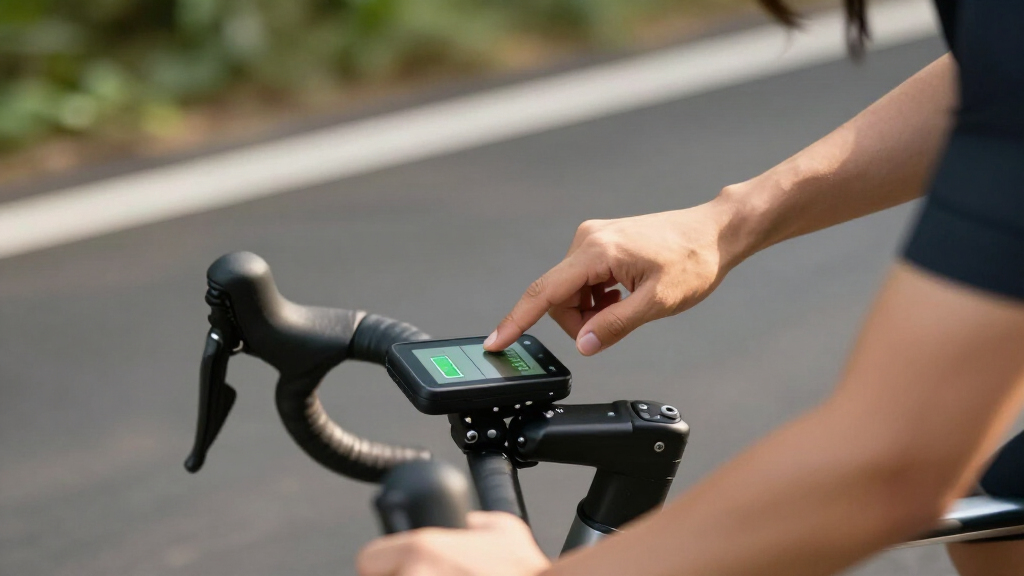
Our selection process focused on evaluating bike computers based on battery performance, especially in save mode, usability, and durability. We examined each device’s battery life in typical use, ease of activating and managing save modes, and overall feature set. Build quality, waterproof ratings, and user interface were also critical, ensuring the devices could withstand real-world riding conditions. To ensure relevance, we prioritized models with recent firmware updates and positive user feedback on battery longevity. The ranking reflects a balance of extended runtime, functionality, and value, helping riders find the best fit for long-distance and daily cycling needs.
Factors to Consider When Choosing Best Bike Computers With Battery Save Mode
Choosing a bike computer with effective battery save mode involves more than just looking at battery capacity. Riders should consider how the device balances power management with essential features like navigation, performance tracking, and display clarity. Understanding these factors helps prevent common pitfalls such as sacrificing critical data for longer runtime or investing in overly complex units that drain batteries quickly. Here are key considerations to guide your decision:Battery Life and Power Management
Pay close attention to the advertised battery life in both normal and save modes. Some devices offer customizable power-saving settings, which can extend runtime significantly. However, overly aggressive saving can limit data visibility, so it’s important to find a device that offers a good balance and easy control over these modes. Consider whether the device supports solar charging or fast charging to further enhance endurance on long rides.
Display and User Interface
The clarity and responsiveness of the display influence how well you can monitor your ride without draining the battery. Larger, high-resolution screens consume more power, but are easier to read. Conversely, monochrome or simplified displays tend to last longer in save mode. Think about your riding environment—if you need quick glances in bright sunlight, a high-contrast display may be worth the extra power use.
Navigation and Performance Features
Advanced navigation, route planning, and performance metrics are attractive but tend to increase energy consumption. If long battery life is a priority, opt for a device that offers essential navigation features with efficient power use. Some models allow toggling off features you don’t need, preserving battery in critical moments. Be mindful that more features often mean shorter runtime in save mode, so prioritize what matters most for your rides.
Build Quality and Durability
Durability in various weather conditions is vital, especially if you ride in rain or rough terrain. Waterproof ratings like IPX7 are common among top models and prevent damage that could reduce battery performance over time. A sturdy construction also ensures the device can withstand impacts, so you won’t need to replace it prematurely, saving money in the long run.
Price and Value
Battery save mode features and extended runtimes often come at a premium. Consider your riding style—occasional riders may not need the longest possible battery life, while long-distance cyclists benefit from investing in models with solar charging or larger batteries. Look for devices that offer a good mix of features and longevity within your budget, and avoid paying extra for bells and whistles that won’t be used often.
Frequently Asked Questions
How does battery save mode impact the features available on a bike computer?
Battery save mode typically reduces display brightness, disables non-essential functions, and limits background data updates to extend runtime. While this helps prolong the battery life, it can also limit the immediacy of navigation prompts, performance metrics, or live updates. Many devices allow customizing what is disabled, so you can prioritize essential features while conserving power. Balancing save mode settings ensures you don’t miss critical information during longer rides.
Can I rely solely on battery save mode for ultra-long rides?
While battery save mode significantly extends the device’s operating time, relying solely on it for ultra-long rides may still be risky. External factors like cold weather or high screen brightness can reduce actual battery life. For very long adventures, consider models with solar charging or larger batteries, and carry a portable charger if possible. Combining multiple strategies will provide more peace of mind during extended excursions.
Are there specific features that drain battery faster even in save mode?
Yes, features like GPS tracking, detailed maps, and high-refresh-rate displays tend to consume more power. Even in save mode, active navigation or real-time performance data can drain the battery faster. Disabling or simplifying these functions during rides with battery constraints can help, but it’s important to understand which features are critical for your safety and performance. Some devices offer modes that disable non-essential sensors, optimizing for longer battery life.
How important is waterproofing when choosing a bike computer with battery save mode?
Waterproofing is vital if you frequently ride in rain or muddy conditions. A device with a high waterproof rating, like IPX7 or higher, will resist water ingress and maintain battery health over time. Even when using battery save mode, exposure to water can damage internal components, reducing battery efficiency or causing failure. Therefore, prioritizing durability alongside power management features ensures reliable performance in diverse weather conditions.
Should I pay more for a solar-powered bike computer?
Investing in a solar-powered bike computer can be worthwhile if you often ride long distances without access to charging. Solar panels help replenish the battery during daylight, reducing the need for external charging and allowing longer use of save modes. However, these devices tend to carry a higher price tag and may be bulkier. Consider your riding frequency, typical ride length, and budget to decide if solar power provides enough value for your specific needs.
Conclusion
For everyday riders or those new to cycling electronics, the Wahoo ELEMNT Bolt V3 offers excellent battery efficiency with straightforward usability, making it ideal for casual rides. The Garmin Edge 1040 Solar stands out for long-distance cyclists who prioritize extended runtime and solar charging, though it commands a higher price. If you seek a balanced device with robust features and reliable battery life, the Garmin Edge 850 remains a versatile choice. Budget-conscious riders should consider models like the Magene C606 V2 or COOSPO CS600, which deliver decent performance with moderate power conservation. Ultimately, your choice depends on how much you value advanced features versus extended battery life in your riding adventures.