Bicycle chains come in different types designed for specific riding styles, like mountain or road biking, and are made from materials such as steel or stainless steel for durability and corrosion resistance. Proper maintenance involves regular cleaning, lubrication, and checking for wear, while timely replacement depends on signs like chain stretch or skipping. Learning how to identify issues and replace your chain correctly guarantees smooth performance and safety—keep exploring for detailed tips and techniques to keep your bike in top shape.
Key Takeaways
- Different bicycle chains are designed for specific riding styles, materials, and gear systems, affecting durability, weight, and performance.
- Regular cleaning, lubrication, and tension adjustment are essential to maintain chain efficiency and prolong lifespan.
- Signs of chain wear include elongation, skipping gears, rust, or damaged links, indicating the need for replacement.
- Proper chain replacement involves assessing wear, selecting compatible chains, and ensuring correct installation and tension.
- Prompt chain care and timely replacement prevent drivetrain damage, ensure smooth shifting, and enhance overall bike safety.

Bike Chain Kit, 6/7/8 Speed Multi-Function Bike Mechanic Repair Kit, Chain Breaker and Bike Link Plier with Hook and 3 Pairs Bicycle Buckle, Reusable
- Complete Bike Chain Kit: Includes chain, plier, breaker, and buckles
- Durable Forged Steel Construction: High-strength, rust-resistant, wear-resistant materials
- Enhanced Chain Design: Double X bridge for improved strength and smoothness
As an affiliate, we earn on qualifying purchases.
As an affiliate, we earn on qualifying purchases.
Common Types of Bicycle Chains
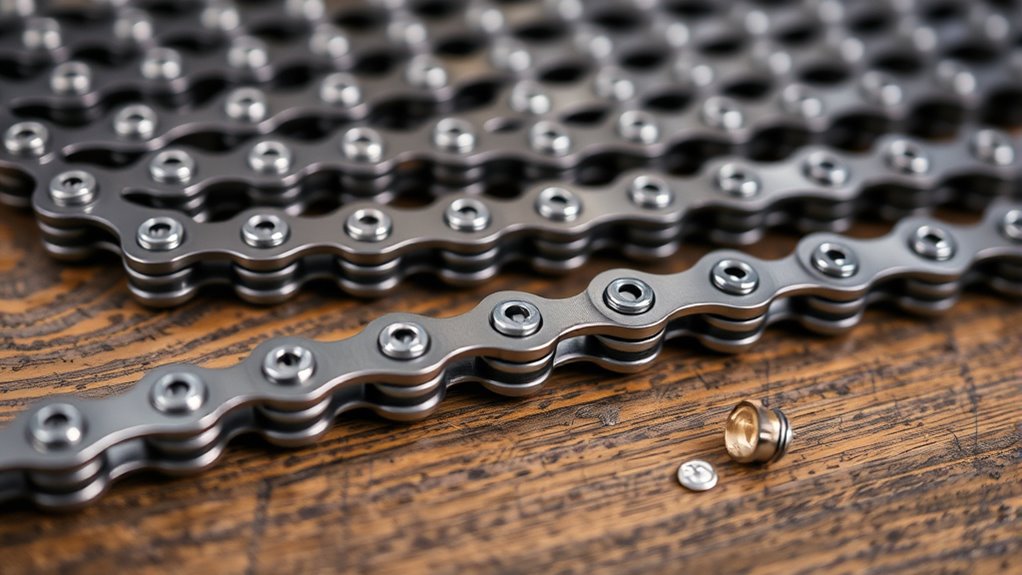
Have you ever wondered why there are different types of bicycle chains? It’s mainly due to variations in chain design, which suit different riding styles and bike types. Some chains are optimized for mountain biking, offering durability and strong chain lubrication, while others focus on lightweight performance for road cycling.
Different bike chains are designed to match specific riding styles and bike types for optimal performance.
The chain length also varies depending on the bike’s gear system, affecting how smoothly it shifts and rides. Choosing the right chain type guarantees proper fit and maximum efficiency. Proper maintenance, like chain lubrication, is essential to keep your chain functioning well, regardless of its type. When replacing or adjusting your chain, pay attention to the chain length to prevent issues like chain skipping or excessive wear.
Additionally, understanding the different types of bicycle chains can help you select the most suitable one for your riding needs. This knowledge is crucial for maintaining your bike’s performance and ensuring a safe, smooth ride every time, and knowing about chain materials can help you choose a more durable option for your riding conditions. Proper quality assurance practices in chain manufacturing and maintenance can significantly extend the lifespan of your bike chain.
Materials and Construction of Bicycle Chains
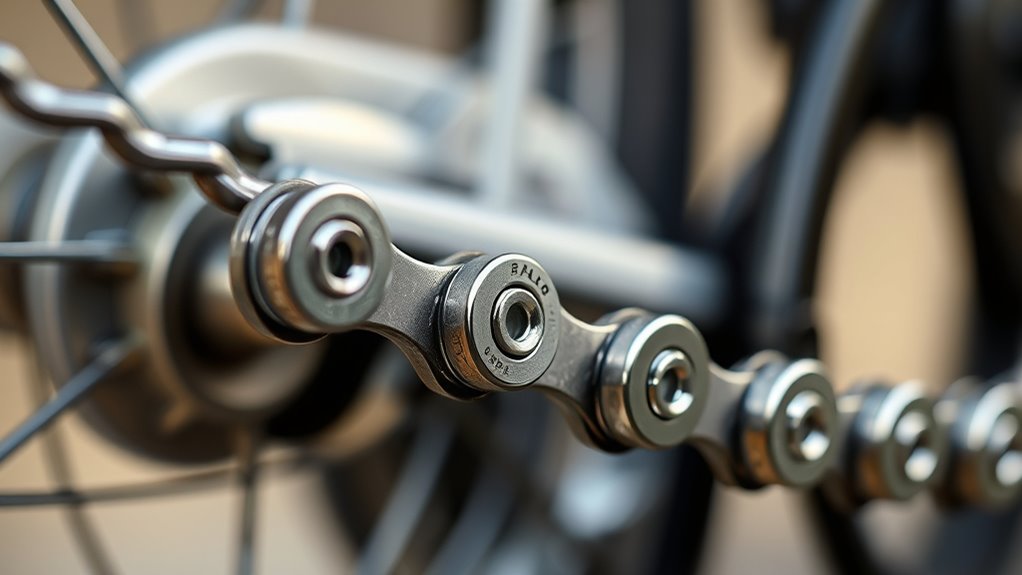
The materials and construction of bicycle chains directly impact their performance and lifespan. You’ll find variations in metal composition, link design, and plate shape that influence strength and flexibility. For instance, some chains incorporate advanced materials to increase durability and resistance to wear, making them suitable for demanding riding conditions. Understanding these differences helps you choose a chain that’s durable and suited to your riding needs. Additionally, lubrication and maintenance techniques can significantly extend the life of your chain by reducing wear and preventing rust. Proper chain tension also plays a crucial role in maintaining optimal performance and preventing premature wear. Moreover, the manufacturing process can affect the overall quality and consistency of bicycle chains, impacting their longevity and reliability.
Material Composition Variations
Bicycle chains come in various materials and construction styles, each designed to balance durability, weight, and performance. The material composition profoundly influences how well your chain performs and lasts. Many chains use different chain alloys, with steel composition being a common choice for strength and flexibility. High-quality steel alloys often include elements like chromium or nickel to resist corrosion and wear. Some chains incorporate lightweight materials for racing, while others prioritize durability. Here’s a quick overview:
| Material Type | Features | Best Use |
|---|---|---|
| Carbon Steel | Strong, affordable | Everyday riding |
| Alloy Steel | Corrosion-resistant, durable | Mountain biking |
| Stainless Steel | Rust-proof, lightweight | Commuting |
Additionally, understanding the Angel Number Soulmate significance can inspire confidence in your romantic pursuits and personal growth, just as choosing the right bike chain material can enhance your riding experience. Proper lubrication and regular maintenance are also crucial for extending the lifespan of your chain and ensuring smooth operation, especially when using specialized materials designed for specific riding conditions. Regular inspection for signs of wear and tear helps prevent unexpected failures and prolongs the effectiveness of your bicycle chain.
Link and Plate Design
Ever wondered how the design of links and plates impacts a bicycle chain’s performance? Your chain’s efficiency heavily depends on its chain link design and how the plates are shaped. Different plate shape variations can reduce friction, improve shifting, and enhance overall smoothness. For example, some designs feature wider plates for added strength or narrower ones for lighter weight. Manufacturing precision plays a crucial role in ensuring these variations function optimally under stress. Proper lubrication and wear resistance also contribute to the longevity and performance of the chain. The choice of material quality affects how well the chain withstands the rigors of cycling and environmental factors. The link design also influences how well the chain moves over gears and withstands stress. Precise engineering of these components ensures minimal derailment and maximum power transfer. Additionally, understanding juice cleansing can provide insights into maintaining overall health, which supports consistent cycling performance. Advances in material technology continue to improve chain durability and efficiency for cyclists.
Durability and Strength
Choosing durable materials and solid construction is essential if you want your chain to withstand the rigors of regular riding. High-quality chains are made from strong steel alloys that offer excellent strength and minimal chain elasticity, ensuring efficient power transfer. Supporting emotional well-being can help you maintain patience and resilience during maintenance routines. Look for chains with good corrosion resistance, especially if you ride in wet or salty environments, as this prolongs lifespan and reduces maintenance. The construction, including tightly fitted links and reinforced pins, enhances durability and reduces the risk of stretching or breaking under stress. Well-built chains resist deformation and maintain their integrity over time, making your rides smoother and safer. Investing in a robust chain guarantees longevity and reliable performance, no matter how tough your riding conditions get. Regular inspections, proper lubrication, and material quality further prevent premature wear and ensure consistent performance over the lifespan of your chain. Additionally, selecting chains with advanced construction features can further improve durability and ride quality.
How to Properly Maintain Your Bicycle Chain
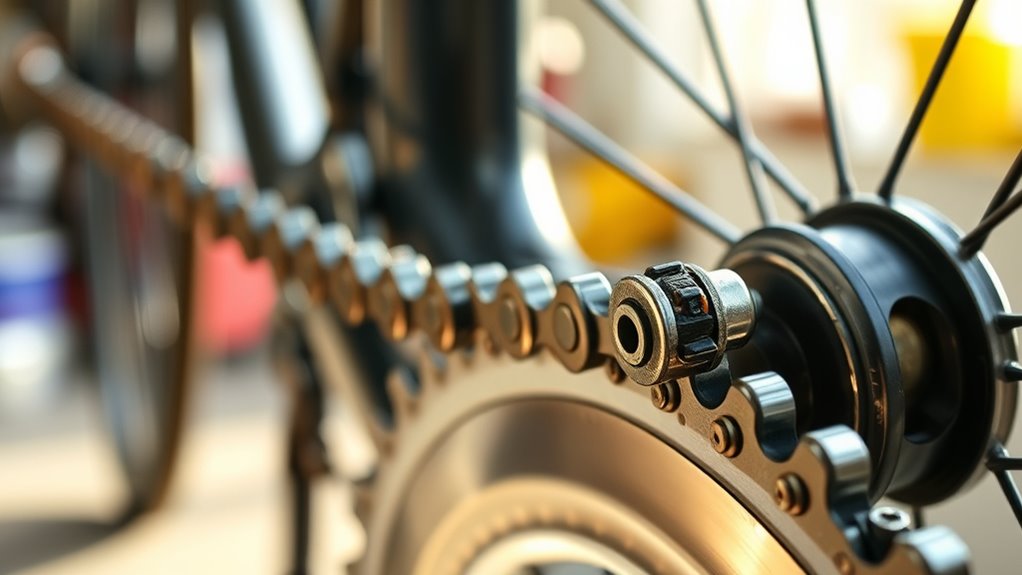
To keep your bicycle running smoothly, you need to maintain your chain regularly. This involves cleaning it to remove dirt, applying the right amount of lubricant, and adjusting the tension properly. Using professional-grade maintenance techniques can further enhance your chain’s longevity. Mastering these steps will extend your chain’s lifespan and improve your ride quality. Additionally, paying attention to chain wear indicators can help you determine when it’s time for a replacement to prevent drivetrain damage.
Regular Cleaning Routine
Maintaining a clean bicycle chain is essential for smooth riding and long-term durability. Regular chain cleaning prevents dirt buildup and guarantees peak performance. Start by removing excess grime with a brush. Use a degreaser to thoroughly clean the chain, focusing on chain degreasing to break down old grease and dirt. Once cleaned, rinse with water and dry completely to prevent rust. To ensure optimal lubrication, consider applying a professional-grade lubricant after cleaning. Key steps include: – Applying a degreaser specifically designed for bike chains – Using a brush or rag to scrub away grime – Rinsing thoroughly to remove all residue – Drying the chain completely before applying lubricant. Incorporating proper cleaning techniques can also help preserve your chain’s corrosion resistance and overall lifespan. Consistent chain cleaning not only prolongs the life of your chain but also improves shifting and pedaling efficiency. Incorporate this routine into your maintenance to keep your bike running smoothly.
Proper Lubrication Techniques
After cleaning your bicycle chain, applying lubricant correctly is essential to guarantee smooth operation and protect against wear. Proper chain lubrication involves using the right amount of lubricant and applying it evenly. To do this, shift your drivetrain to the smallest chainring and cassette sprocket. Then, drip lubricant onto each link while slowly pedaling backward. Allow the lubricant to penetrate, then wipe off excess with a clean cloth to prevent dirt buildup. Use these lubrication techniques to ensure longevity:
| Step | Action | Purpose |
|---|---|---|
| 1 | Apply lubricant | Penetrate links |
| 2 | Pedal slowly | Distribute evenly |
| 3 | Wipe excess | Prevent dirt accumulation |
Correct Tension Adjustment
Ever wondered if your bicycle chain has the right tension? Proper chain tension is essential for smooth shifting and efficient pedaling. To check, lift the chain midway between the gears—there should be slight slack, but not too loose.
For derailleur adjustment, follow these steps:
- Shift to the smallest chainring and sprocket
- Loosen the derailleur’s mounting bolt
- Move the derailleur cage to achieve proper tension
- Tighten the bolt securely
Ensure the chain isn’t too tight, which can cause drivetrain wear, or too loose, risking chain drops. Regularly inspecting and adjusting derailleur alignment keeps your chain tension ideal, improving ride quality and extending your bike’s lifespan.
Proper tension adjustment is key to maintaining a reliable, smooth ride.
Signs Indicating Your Chain Needs Replacement
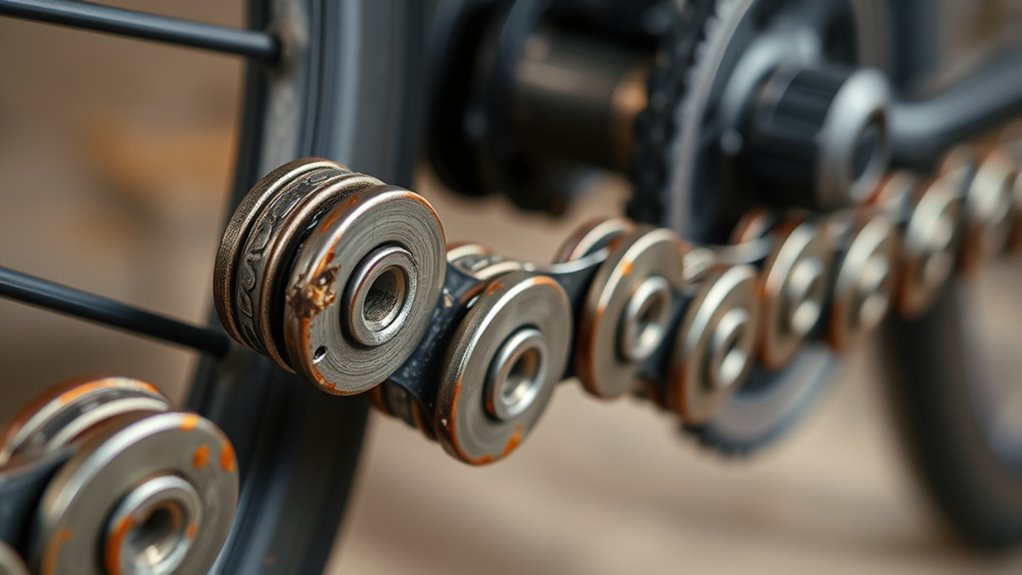
Your bicycle chain will give you warning signs when it’s time for a replacement. One key indicator is if the chain length feels unusually loose or if you notice skipping gears while riding.
Over time, chains stretch, which affects chain sizing and can cause poor shifting. You might also see visible wear or rust that doesn’t clean off easily.
A stretched chain can lead to inefficient power transfer and damage to other drivetrain components. Additionally, if you notice chain links that are bent or damaged, it’s a clear sign you need a new one.
Regularly inspecting your chain for these signs helps prevent more costly repairs down the line. When in doubt, use a chain wear tool to check for elongation and guarantee your chain is still in good condition.
Step-by-Step Guide to Chain Replacement
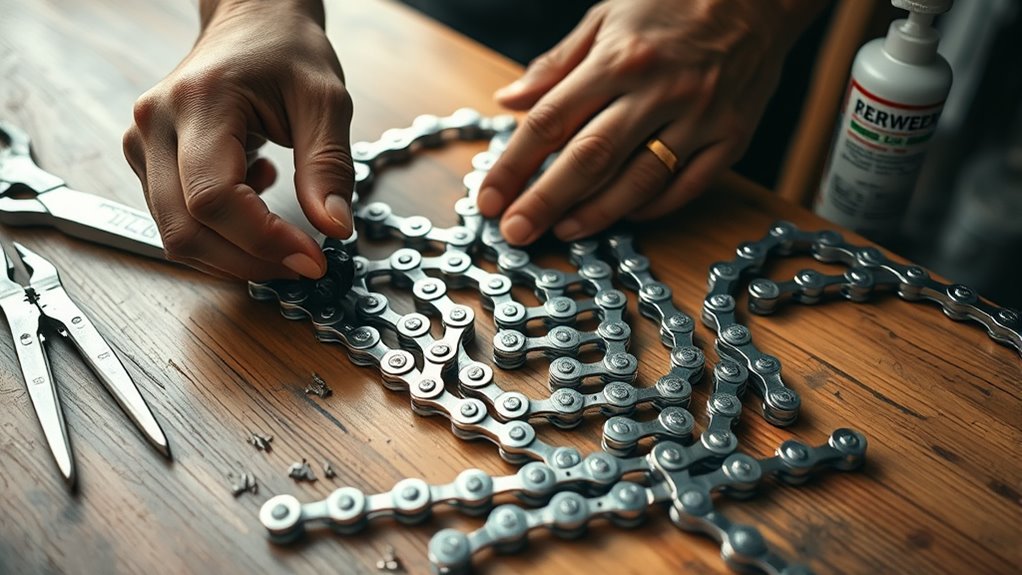
Replacing a bicycle chain might seem intimidating, but you can do it yourself with the right tools and some basic steps.
First, remove the old chain using a chain tool, then clean your cassette and chainring to remove dirt and grime.
Once clean, install the new chain, ensuring it’s the correct length—add or remove links as needed.
To keep your chain running smoothly, perform chain cleaning regularly and apply chain lubrication after replacement.
Keep these tips in mind:
- Measure and adjust chain length
- Use a chain tool for removal and installation
- Regularly clean your chain to prevent buildup
- Lubricate your chain after cleaning for ideal performance
Tools Needed for Chain Maintenance and Replacement
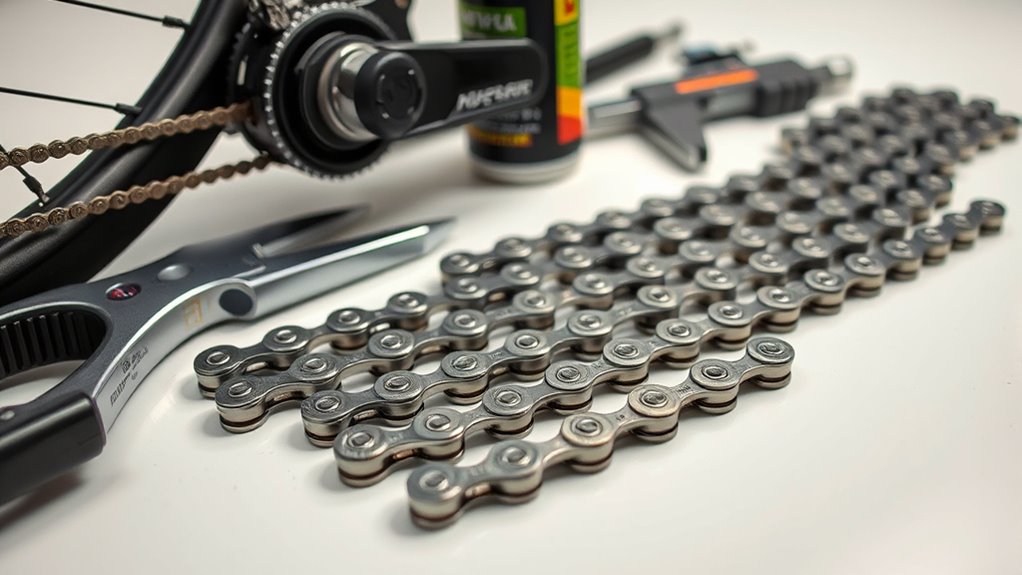
Having the right tools is essential for effective chain maintenance and replacement. First, you’ll need a chain lubricant to keep your chain running smoothly and prevent rust. Regular application of chain lubricant reduces wear and improves performance.
Having the right tools ensures smooth, rust-free chain performance and easier maintenance.
Next, invest in chain cleaning brushes—these make removing dirt and grime easier, ensuring your chain stays clean and functional. A chain tool or master link pliers are also necessary for removing and installing chain links. A rag helps wipe off excess lubricant and debris.
If you’re replacing the chain, a chain checker can help determine wear levels. For detailed cleaning, a degreaser is useful to break down stubborn dirt.
With these tools on hand, you’ll maintain your chain efficiently, extending its lifespan and ensuring a smooth ride.
Tips for Extending the Lifespan of Your Chain

To maximize the lifespan of your bike’s chain, regular maintenance is key. Proper chain lubrication reduces friction and prevents rust, so make sure to apply lubricant after rides or when the chain looks dry.
Additionally, check and adjust the chain length periodically to avoid excessive wear or slack, which can cause poor shifting and chain damage.
Here are some tips to help extend your chain’s life:
- Keep your chain clean and free of dirt and debris
- Lubricate your chain consistently, avoiding over-lubrication
- Perform regular chain length adjustments to maintain proper tension
- Inspect for signs of wear, replacing the chain before it damages the sprockets
Following these steps ensures smoother rides and prolongs your chain’s durability.
Compatibility Considerations When Choosing a Chain
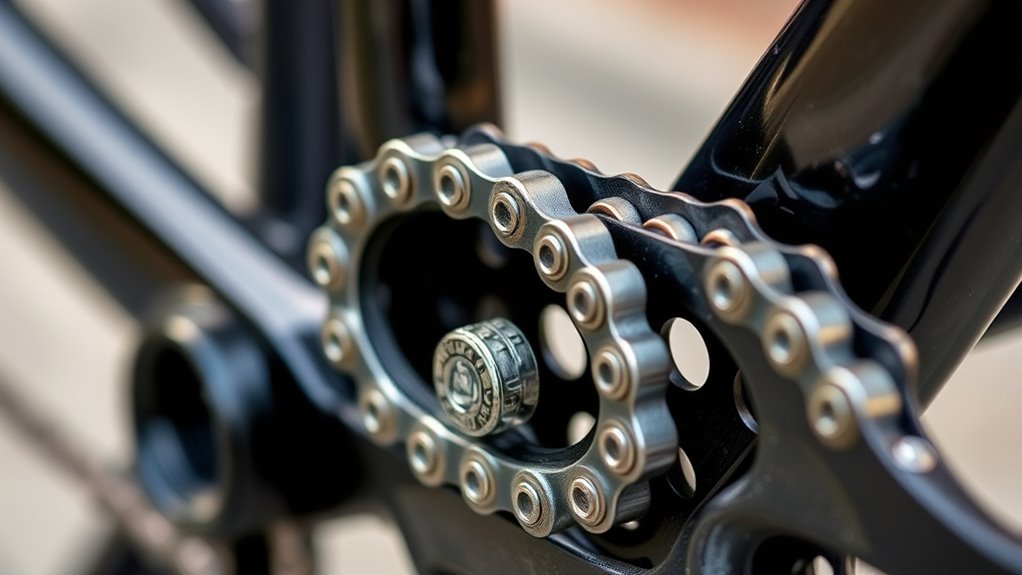
Choosing the right chain for your bike is essential to guarantee ideal performance and longevity. First, check your bike’s frame compatibility; different frames require specific chain widths and types. A narrow chain is necessary for bikes with higher gear ratios, such as racing bikes, while wider chains suit mountain bikes or those with lower ratios.
Matching the chain to your gear system ensures smooth shifting and prevents damage. Also, consider whether your drivetrain uses a traditional or more advanced setup, as this impacts chain compatibility. Always verify the manufacturer’s specifications for your bike’s frame and gear ratios before purchasing.
Using an incompatible chain can lead to poor shifting, increased wear, or even damage to other components. Proper compatibility is key to maintaining ideal performance and avoiding costly repairs.
Troubleshooting Chain-Related Issues
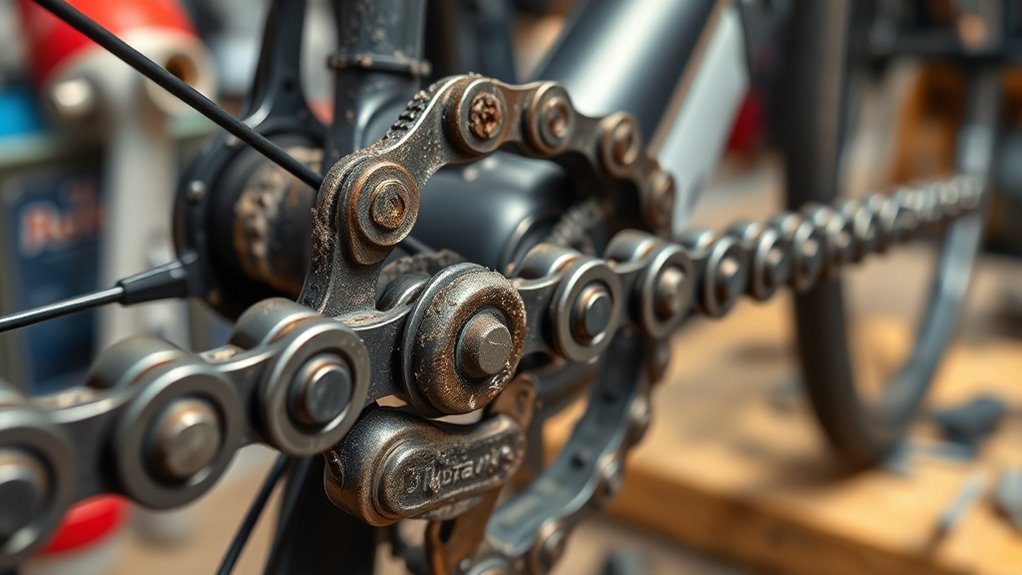
When your bike’s shifting feels rough or the chain keeps slipping, it’s often a sign of underlying issues that need addressing. Chain skipping and excessive chain noise indicate problems like misalignment, wear, or dirt buildup.
To troubleshoot, check these common causes:
- Inspect for chain wear and replace if stretched
- Clean and lubricate the chain thoroughly
- Ensure the derailleur is properly aligned
- Verify that the cassette and chainrings aren’t damaged or worn
Ignoring these signs can lead to worse issues down the line. Regular maintenance helps keep your chain running smoothly, reducing chain noise and preventing chain skipping.
Addressing these problems promptly ensures safer, more efficient rides.
Frequently Asked Questions
How Often Should I Replace My Bicycle Chain?
You should replace your bicycle chain when you notice chain stretch or shifting issues.
Generally, replacement intervals are every 2,000 to 3,000 miles, but it depends on riding conditions and maintenance.
Regularly check for chain elongation with a ruler or a chain checker tool.
If the chain has stretched beyond recommended limits, it’s time for a replacement to prevent wear on other components and keep your ride smooth.
Can I Use Any Chain on My Bike?
You can’t just use any chain on your bike because chain compatibility and chain sizing are vital.
Check your bike’s specifications to find the right chain type and size that fit your drivetrain. Using an incompatible or incorrectly sized chain can cause poor shifting and damage your bike.
Always match the chain to your bike’s gear system, and if unsure, consult your bike’s manual or a professional for the correct chain choice.
What Are the Best Lubricants for Bicycle Chains?
Choosing the right lubricant for your bike chain is like giving it a secret potion for smooth rides. You should consider chain cleaning first to remove dirt and grime.
Then, pick lubricant types suited for your riding conditions—wet lubes for rain, dry lubes for dust. These lubricants reduce friction, extend your chain’s life, and keep you rolling effortlessly.
Regular application guarantees your bike performs at its best.
How Does Chain Wear Affect Gear Shifting Performance?
When your chain wears, chain elongation occurs, causing it to stretch and not fit properly on your gears. This results in gear slip, making shifting less smooth and more difficult. You might notice delayed responses or the chain skipping under load.
Regularly checking for chain elongation helps you catch wear early, ensuring better gear performance and preventing further damage to your drivetrain. Replacing a worn chain restores smooth shifting and prolongs your bike’s lifespan.
Is It Necessary to Replace the Cassette When Changing the Chain?
Think of your chain and cassette as dance partners; they must move in harmony. When you change your chain, you mightn’t need to replace the cassette if they’re still compatible and the cassette’s lifespan isn’t up.
However, if the chain has worn considerably, it can damage the cassette over time. Always check chain compatibility and inspect your cassette for wear to decide if replacements are necessary, ensuring smooth shifts and longevity.
Conclusion
So, you’ve got your bike running smoothly and your chain in check—what a surprise! Just remember, no matter how well you maintain it, eventually, even the sturdiest chain will give up. Irony’s a funny thing—just when you think you’ve got it all under control, that squeak or slip reminds you who’s boss. Stay vigilant, keep up with maintenance, and maybe, just maybe, your chain will outlast your patience.