To keep your bike chain clean using household items, start with a baking soda and water paste to scrub away grime, letting it sit before gentle brushing. Use dish soap and an old toothbrush for stubborn grease, rinsing thoroughly afterward. For rust removal, soak the chain in household vinegar, then scrub and dry it completely. These simple tricks can extend your chain’s life—keep going to discover even more DIY maintenance tips.
Key Takeaways
- Use baking soda and water paste for effective, budget-friendly deep cleaning of bike chains.
- Employ old toothbrushes dipped in dish soap for thorough grease and grime removal.
- Submerge rusty chains in household vinegar overnight to dissolve rust naturally.
- Regular cleaning with household items prevents premature wear and extends chain lifespan.
- After cleaning, always dry and lubricate chains to prevent rust and ensure smooth operation.

focopot Bike Chain Cleaner Kit with Bike Chain Degreaser,Scrubber,Lube
- Complete Bike Cleaning Kit: Includes degreaser, lube, brushes, and scrubber
- Easy to Use: Simple mounting and turning for cleaning
- Universal Compatibility: Suitable for mountain, road, e-bike, and trail bikes
As an affiliate, we earn on qualifying purchases.
As an affiliate, we earn on qualifying purchases.
Using Baking Soda and Water for a Deep Clean
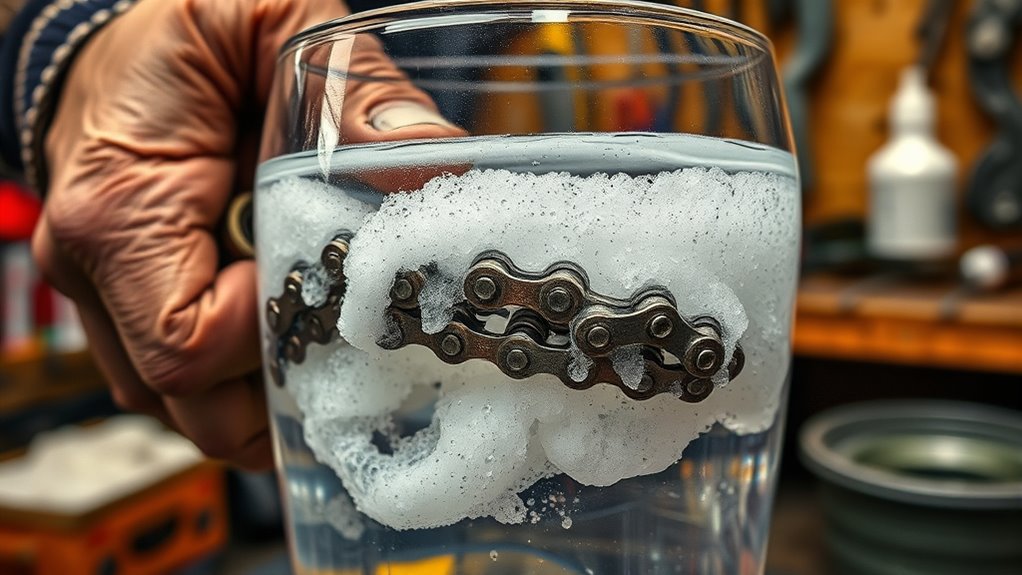
When it comes to a thorough chain cleaning, using baking soda and water is a simple yet effective method mechanics swear by. This technique helps maintain your chain’s integrity by removing grime and buildup that can cause premature wear. Incorporate this into your regular cleaning schedules to guarantee ideal chain maintenance. To do it, mix baking soda with water to create a paste, then apply it directly to the chain. Let it sit for a few minutes to loosen dirt, then scrub gently with a brush. Rinse thoroughly with water afterward. This method not only cleans your chain deeply but also keeps it in good condition between more intensive degreasing sessions. Consistent cleaning with baking soda extends your chain’s lifespan and improves overall bike performance. Proper chain maintenance is essential for ensuring your bike operates smoothly and lasts longer.
Degreasing With Dish Soap and Old Toothbrushes
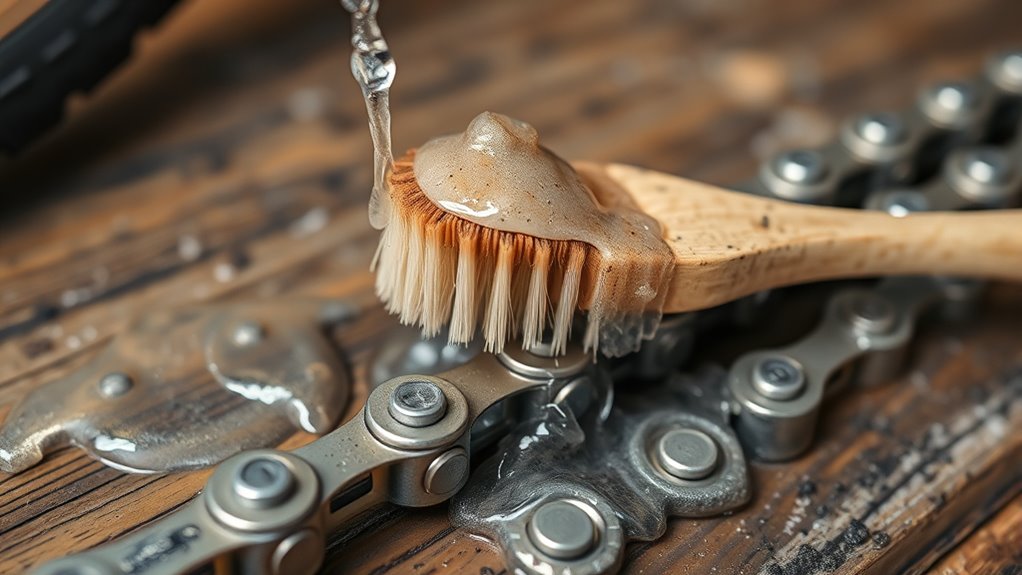
After removing surface grime with baking soda, tackling stubborn grease requires a more aggressive approach. Dish soap is excellent at breaking down grease, making it perfect for cleaning your chain. Dip an old toothbrush into soapy water and scrub the chain thoroughly, focusing on areas with built-up grime. This helps remove excess chain lubrication and reveals any damage needing chain inspection. Regular cleaning prevents chain wear and prolongs its lifespan. Use the table below to keep track of your cleaning process:
| Step | Tools Needed | Tips |
|---|---|---|
| Apply dish soap | Old toothbrush, water | Focus on chain links |
| Scrub thoroughly | Dish soap, toothbrush | Loosen grease and grime |
| Rinse and dry | Clean water, cloth | Prevent rust, check for wear |
Proper cleaning also helps maintain the optimal lubrication needed for smooth operation and extends the life of your chain. This method keeps your chain clean and ready for best performance.
Ridding Rust With Household Vinegar
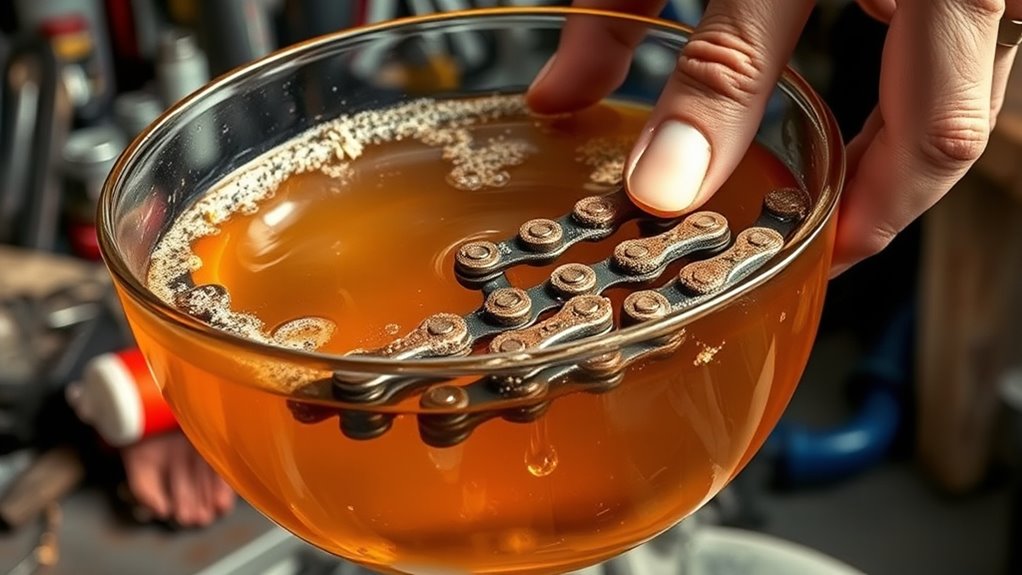
Vinegar is a simple, effective solution for removing rust from your bike chain. Its acetic acid breaks down rust layers, making rust removal easier without harsh chemicals. To use, submerge your chain in a container filled with white vinegar, ensuring full coverage. Let it soak for several hours or overnight, depending on the rust severity. After soaking, scrub the chain with an old toothbrush to loosen residual rust. Rinse thoroughly with water and dry completely to prevent further corrosion. Applying a light coating of lubricant afterward helps with corrosion prevention and keeps your chain running smoothly. This method is budget-friendly and environmentally safe, making it ideal for maintaining your bike’s performance and extending the life of your chain. Additionally, regular inspection of your chain and immediate treatment of rust can help prevent future damage, aligning with proper fire safety practices to keep your equipment in optimal condition. Recognizing the importance of content ownership rights can also encourage responsible handling and preservation of your gear. Incorporating automated maintenance techniques can further streamline your bike care routine, ensuring longevity and efficiency.
Frequently Asked Questions
How Often Should I Clean My Bike Chain Using These Household Hacks?
You should clean your bike chain regularly to maintain ideal performance. For most riders, a cleaning schedule of every 100-200 miles or once a month works well. Household hacks make this easier and more affordable. By incorporating simple tricks into your chain maintenance routine, you prevent buildup and prolong your chain’s life. Consistent cleaning keeps your bike running smoothly and saves you money on repairs down the line.
Are These Methods Safe for All Types of Bicycle Chains?
You wonder if household cleaning hacks are safe for all types of bicycle chains. It depends on your chain material and compatibility. Some household items, like vinegar or baking soda, may damage certain metals or finishes. Always check your chain’s manufacturer recommendations before using DIY methods. If unsure about your chain’s compatibility, stick to specialized bike cleaning products or consult a professional to avoid costly damage.
Can I Use These Hacks on Motorcycle or Motorized Bike Chains?
You shouldn’t use household hacks for motorcycle chain maintenance, as they may not guarantee chain cleaning safety. Motorcycle chains face higher stress and require specialized cleaning methods and lubricants. Using inappropriate household items could damage the chain or reduce its lifespan. Stick to products designed for motorcycle chains and follow proper maintenance procedures to keep your chain in top shape and avoid costly repairs.
Do These Household Items Damage the Chain’S Lubricant or Finish?
Did you know that improper cleaning can reduce a chain’s lifespan by up to 30%? When you use household items, you’re risking damage to the chain finish and lubricant. Some cleaners may strip away protective coatings or cause lubricant damage, leading to rust or faster wear. So, always check if your chosen method is safe for your chain’s finish and lubricant to keep it running smoothly longer.
What Are Signs That My Chain Needs Professional Cleaning Instead?
If your chain shows signs of excessive chain wear or rust formation, it’s time to get it professionally cleaned. You might notice stiff links, skipping gears, or unusual noise when pedaling. These issues indicate dirt, grime, or corrosion that household items can’t fully remove. Ignoring these signs can damage your drivetrain, so a professional cleaning helps restore smooth operation and prevents further wear.
Conclusion
Just like a master craftsman restores old tools, you can breathe new life into your chain with these simple household hacks. With baking soda, dish soap, and vinegar, you’re wielding the same secrets that pros trust—no magic needed. Before you know it, your chain will shine brighter than a knight’s armor, ready to conquer the road ahead. So, channel your inner mechanic and let these easy tricks turn your maintenance routine into a legendary ritual.