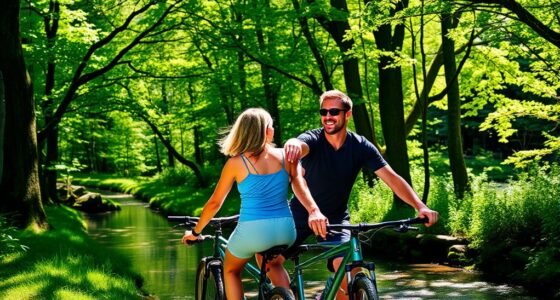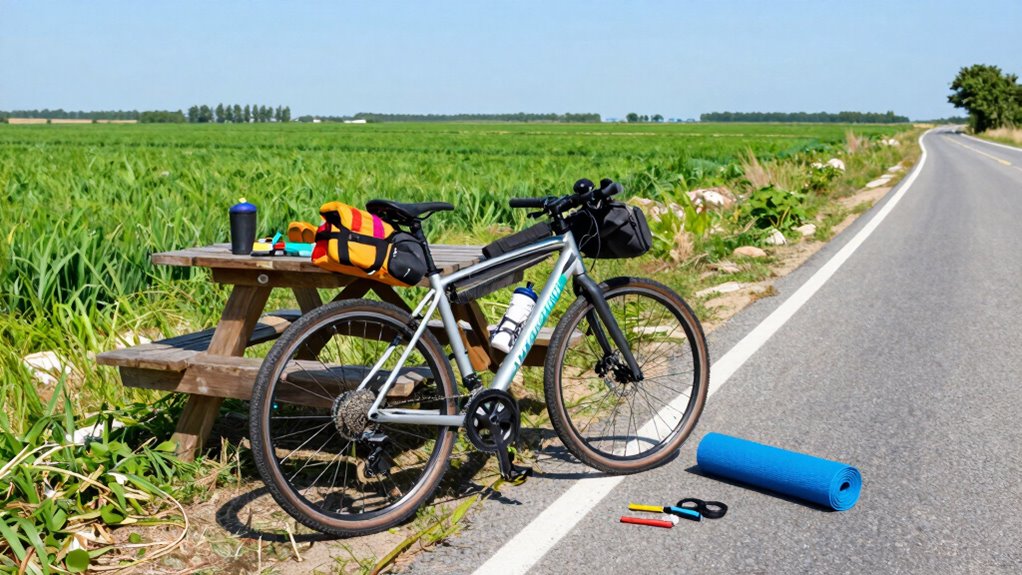

To build a better road trip setup, start by ensuring your bike is well-maintained—check tire pressure, lubricate moving parts, and tighten bolts. Pack lightweight, high-quality gear for balance and weather changes, including essentials like spare tubes, a multi-tool, and hydration supplies. Adjust your bike for comfort and efficiency, with proper fit and gear setup for varied terrains. Use organized compartments for quick access, and add safety features like lights and reflectors. Keep exploring for more tips to optimize your ride.

Get sports gear delivered free with Prime
- Fast, free delivery on millions of items
- Prime Video, Amazon Music and more included
- Member-only deals all year
Key Takeaways
- Prioritize lightweight, organized gear and quick-access items for efficient packing and easy retrieval during stops.
- Ensure bike fit, safety features, and maintenance are optimized for comfort and reliability over long distances.
- Pack suitable clothing layers and weather protection to adapt to changing conditions throughout the trip.
- Incorporate essential tools, spare parts, and hydration supplies to prevent breakdowns and maintain energy.
- Use waterproof covers and strategic compartment placement to safeguard gear and enhance accessibility in varied weather.

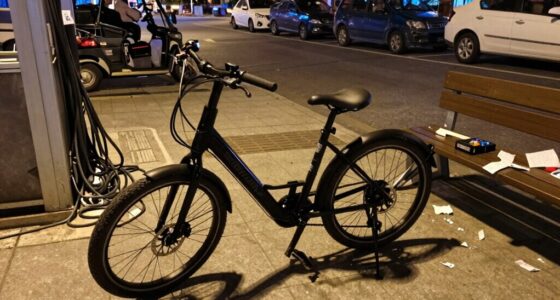
Planning a memorable cycling trip requires more than just choosing a route; it’s about setting up your gear for maximum efficiency and comfort. The foundation of a successful ride starts with proper bike maintenance. Before hitting the road, take the time to thoroughly check your bike. Confirm your tires are properly inflated, with no cuts or embedded debris. Lubricate the chain and moving parts to prevent rust and mechanical issues. Tighten bolts and check brakes for responsiveness. A well-maintained bike not only reduces the risk of breakdowns but also makes your ride smoother and more enjoyable. Regular maintenance also saves you time and frustration, especially when you’re miles away from repair shops. Incorporating bike maintenance routines into your preparation ensures your bike remains in optimal condition throughout your trip.
Next, focus on packing essentials that balance weight and functionality. Your goal is to carry everything you need without overloading, which can slow you down and cause discomfort. Prioritize lightweight, high-quality gear. Pack layers suitable for varied weather conditions, including moisture-wicking shirts, a weatherproof jacket, and warm layers for cooler evenings. Don’t forget a compact first aid kit, multi-tool, and spare tubes or patch kits. These small items are indispensable for quick repairs and emergencies. Hydration is essential, so include a reliable water bottle or hydration pack, along with electrolyte tablets if needed. Nutrition matters too—pack energy bars, gels, or fruit that give you quick, sustained energy during long stretches. Keeping your gear organized in easy-to-reach compartments minimizes stops and helps you stay focused on the road.
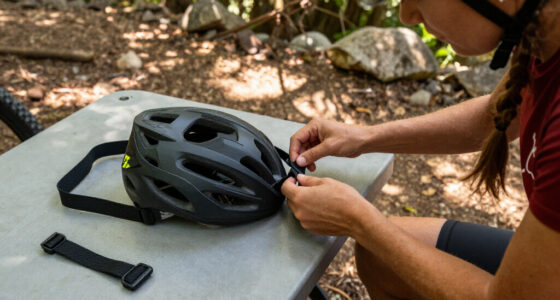
Your bike setup should also accommodate your comfort and safety. Invest in ergonomic grips and padded saddle cushions if needed. Consider installing lights and reflectors, especially if you plan to ride during dawn, dusk, or through poorly lit areas. A good-quality helmet is non-negotiable; ensure it fits well and meets safety standards. Additionally, set up your bike with the right gear ratios for your route—whether you’re tackling steep climbs or cruising flat terrains—to reduce fatigue. Paying attention to proper gear setup can significantly enhance your riding experience and efficiency. Proper bike fit not only improves comfort but also helps prevent injuries during long rides. Moreover, adjusting your bike correctly can improve your overall pedaling efficiency, making longer rides more manageable. Regularly inspecting your bike’s safety features, such as lights and reflectors, ensures visibility and security during your journey.
Finally, plan your packing strategy with accessibility in mind. Attach frequently used items—like your phone, map, or sunglasses—to easily reachable spots. Use waterproof bags or covers to protect your gear from unexpected weather. A thoughtful bike maintenance routine combined with smart packing essentials creates a road trip setup that’s reliable, comfortable, and ready for any adventure. When your bike is in top shape and your gear is well-organized, you’ll enjoy a seamless ride that lets you focus on the journey rather than worry about mechanical issues or discomfort.
As an affiliate, we earn on qualifying purchases.
Frequently Asked Questions
What Are the Best Snacks for Long Cycling Road Trips?
For long cycling road trips, you should pack energy bars and hydration packs to stay fueled and hydrated. Energy bars provide quick, sustained energy during your ride, while hydration packs guarantee you don’t run out of water. Opt for bars with carbs and protein, and carry enough water to match your ride’s length. These essentials help you maintain stamina and avoid fatigue, making your trip more enjoyable and efficient.
How Do I Choose the Right Cycling Clothing for Variable Weather?
Imagine you’re caught in a sudden rainstorm mid-ride, feeling cold and uncomfortable. To avoid this, choose clothing with smart layering strategies and moisture management. Start with a moisture-wicking base layer, add an insulating layer for warmth, and top it with a waterproof jacket. This adaptable setup helps you stay dry and comfortable in variable weather, allowing you to focus on the ride instead of the elements.
What Safety Gear Is Essential for Multi-Day Cycling Trips?
You should always wear a cycling helmet to protect your head in case of a fall or accident. A reflective vest is essential for visibility, especially during early mornings or late evenings. Consider adding lights, gloves, and padded shorts for comfort and safety. Carry a small first aid kit and a multi-tool. These gear pieces keep you safe and prepared for various situations during your multi-day cycling trip.
How Can I Prevent Bike Theft During Stops?
To prevent bike theft during stops, always use sturdy bike lock types like U-locks or heavy-duty chain locks. Secure your bike to immovable objects and avoid leaving it unattended in isolated areas. Theft prevention tips also include removing accessories, parking in well-lit, busy spots, and registering your bike with local authorities. Combining these tactics considerably reduces the risk, giving you peace of mind while enjoying your trip.
What Are Effective Ways to Document My Cycling Journey?
Like a modern-day Marco Polo, you can document your cycling journey through detailed cycling journaling and route mapping. Capture vivid descriptions, photos, and GPS data to preserve memories and track progress. Use apps or a dedicated notebook for route mapping, marking interesting spots and challenges. Sharing your stories on social media or a blog keeps loved ones updated and creates a lasting record of your adventures, inspiring others to explore.
Conclusion
Now, picture yourself gliding smoothly along the open road, your gear perfectly organized and within reach, the wind whispering past as you enjoy the journey. With a well-planned setup, every pedal stroke feels effortless, and the scenery becomes your constant companion. By optimizing your gear and packing smart, you create a seamless adventure where the road ahead is inviting, and your cycling trip transforms into an unforgettable voyage of discovery and joy.
Halloween Picks
halloween
As an affiliate, we earn on qualifying purchases.