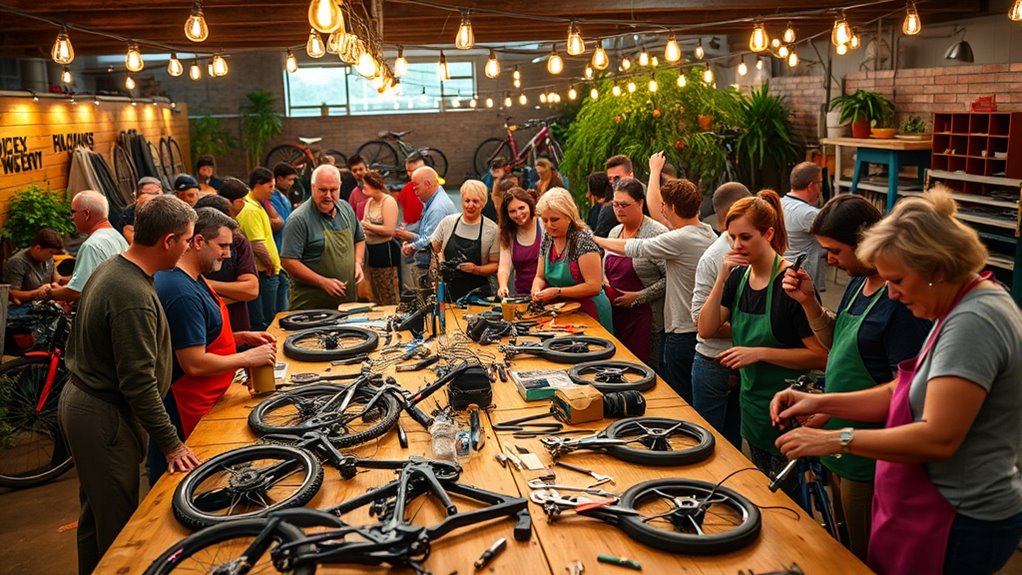

Hosting a community bike repair night brings neighbors together, promotes safe cycling, and teaches essential maintenance skills. Set up practical repair stations with basic tools, and invite local experts or volunteers to guide participants through fixes like patching flats or checking brakes. Focus on safety tips, organization, and fostering an inviting atmosphere with refreshments. This event helps strengthen community bonds and empowers individuals to maintain their bikes confidently. If you want to learn how to make it successful, keep exploring more tips.
Key Takeaways
- Organize repair stations with essential tools, clear labels, and safety demonstrations to facilitate hands-on learning.
- Partner with local bike shops or volunteers to provide expertise and encourage community involvement.
- Promote safety by emphasizing helmet use, reflective gear, and routine bike inspections during the event.
- Foster a welcoming atmosphere with refreshments and open discussions to build community connections.
- Set clear goals to enhance bike safety, maintenance skills, and promote eco-friendly commuting habits.

Hosting a community bike repair night is a great way to bring neighbors together and promote sustainable transportation. When you organize this event, you’re creating a space where people can learn how to keep their bikes in good condition, ensuring they ride safely and confidently. One of the key focuses should be on bike safety, which means emphasizing the importance of proper helmet use, reflective gear, and maintaining brakes and tires. You want your attendees to leave feeling empowered to ride securely, knowing they can handle minor repairs themselves. To support this, set up stations with repair tools that are easy to use and accessible to everyone, regardless of experience.
Organize bike safety stations with clear, accessible repair tools to empower confident, secure riding for all.
Having a variety of repair tools on hand is essential. Basic tools like allen wrenches, screwdrivers, tire levers, and pumps will cover most common fixes. Consider also providing chain lubricants, patch kits, and spare tubes. Make sure these tools are organized and clearly labeled so participants can quickly find what they need. Demonstrate how to use each tool properly, emphasizing safety precautions. Show how to check brake pads for wear, align wheels, and tighten bolts, so attendees understand the importance of preventative maintenance. When people become familiar with repair tools, they gain confidence in troubleshooting issues on their own, which encourages more frequent and safer riding.
Encourage a hands-on approach by setting up stations where participants can try out repairs with guidance. You might want to invite local bike shops or knowledgeable volunteers to assist, making the event more engaging and educational. As folks learn to fix flat tires or adjust gears, they’ll also learn about bike safety practices, like how to inspect their bikes regularly and recognize signs of wear. This awareness helps prevent accidents and promotes responsible riding habits. Additionally, emphasizing the significance of bike safety measures can help reinforce responsible riding behaviors and reduce accidents.
Creating an inviting atmosphere where questions are welcomed helps build community and trust. Offer refreshments and foster conversations around bike safety, repair techniques, and riding tips. You’ll find that the more approachable and inclusive the event feels, the more people will participate and learn. Remember, the goal isn’t just fixing bikes but encouraging a culture of safety, maintenance, and sustainable transportation. When your neighbors leave equipped with new skills and a better understanding of repair tools, you’re helping to build a stronger, more connected community that values safe, eco-friendly commuting.
Frequently Asked Questions
How Do I Promote the Event to Attract More Participants?
You should leverage social media outreach by posting engaging content and event updates on platforms like Facebook and Instagram. Encourage your community partners—local bike shops, schools, and neighborhood groups—to share the event too. Distribute flyers and posters around your area, and consider local media coverage. By actively promoting through these channels, you’ll attract more participants who are enthusiastic to join and learn at your community bike repair night.
What Safety Precautions Should Be in Place During Bike Repairs?
You should guarantee everyone wears protective gear like gloves and goggles to prevent injuries. Place clear safety signage around the repair area to warn participants about potential hazards. Keep tools organized and accessible, and supervise all activities to ensure safe practices. Regularly remind participants to follow safety guidelines, and have a first aid kit nearby in case of accidents. These precautions help create a safe, enjoyable environment for everyone involved.
Can I Host the Event Indoors or Only Outdoors?
Hosting the event indoors is like riding a bike through a tunnel—possible but requires careful planning. You should make sure good indoor ventilation to keep fresh air flowing, especially with bike fumes and dust. However, outdoor weather always plays the hero, offering natural airflow and space. If weather permits, hosting outside is ideal, but indoors can work if you prioritize proper ventilation and monitor weather conditions to keep everyone comfortable and safe.
Are There Recommended Tools and Supplies to Prepare?
You should prepare with essential bike toolkits that include wrenches, screwdrivers, tire levers, and pumps. Set up repair stations equipped with these tools to help participants easily access what they need. Consider including spare parts like tubes and chains. Make certain your space has enough room for multiple stations, and organize tools clearly for efficient repairs. This way, everyone can learn and fix their bikes comfortably.
How Do I Handle Liability and Insurance Concerns?
Did you know that over 60% of community events face liability issues? To handle liability and insurance concerns, you should have participants sign waivers and disclaimers to limit your legal exposure. Reach out to insurance providers to discuss coverage options tailored for such events. This proactive approach helps protect you and ensures everyone’s safety, giving you peace of mind to focus on the fun of the bike repair night.
Conclusion
As you wrap up your community bike repair night, you might notice how the evening’s surprises seem perfectly timed—someone showing up with that rare tool, or a neighbor fixing a bike just as you’re about to call it a night. It’s funny how these little coincidences make the event feel even more special, like the community was just waiting for the perfect moment to come together. And in those moments, you realize you’ve built more than bikes—you’ve built connections.