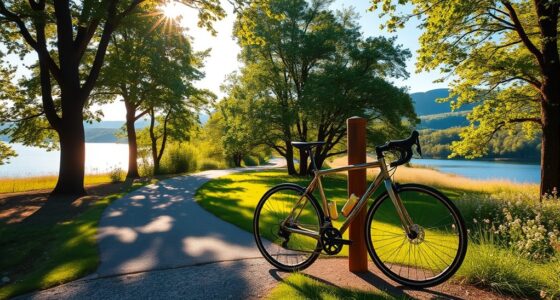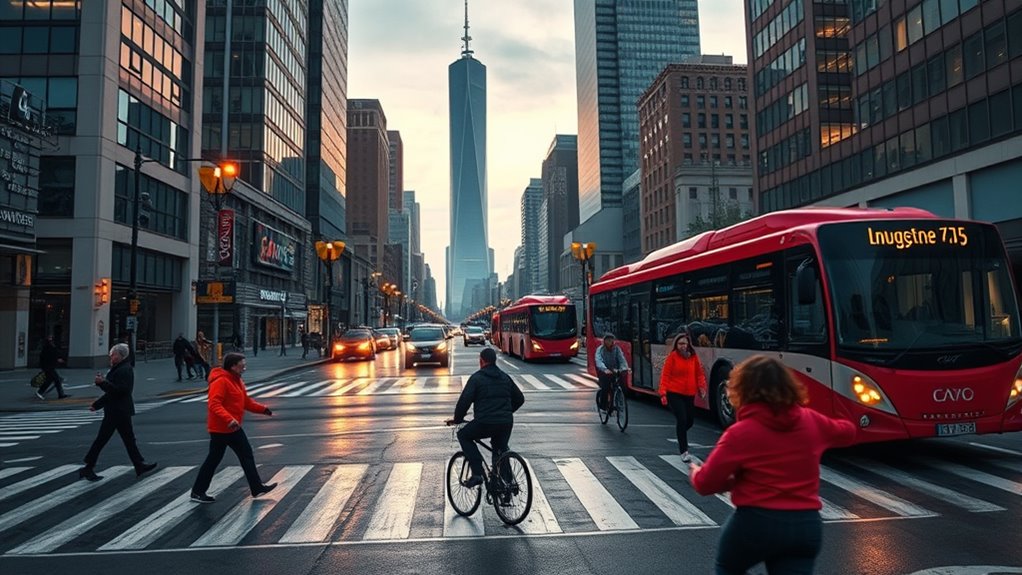
To plan a safer commute, choose routes with designated crosswalks, pedestrian signals, and bike lanes. Avoid poorly lit or secluded areas, especially after dark. Use navigation apps to identify less congested roads and travel during off-peak hours. Consider public transportation, carpooling, or park-and-ride options to reduce exposure to traffic. Incorporating these strategies can greatly improve your safety—keep going to learn more tips for smarter, safer route planning.
Key Takeaways
- Choose routes with designated crosswalks, pedestrian signals, and bike lanes for increased visibility and safety.
- Avoid poorly lit or secluded areas, especially after dark, to reduce safety risks.
- Use navigation apps to identify less congested, alternative routes and avoid busy intersections during peak hours.
- Consider public transportation or carpooling to decrease exposure to traffic hazards.
- Regularly review and update your route plan based on real-time traffic, construction, and safety information.
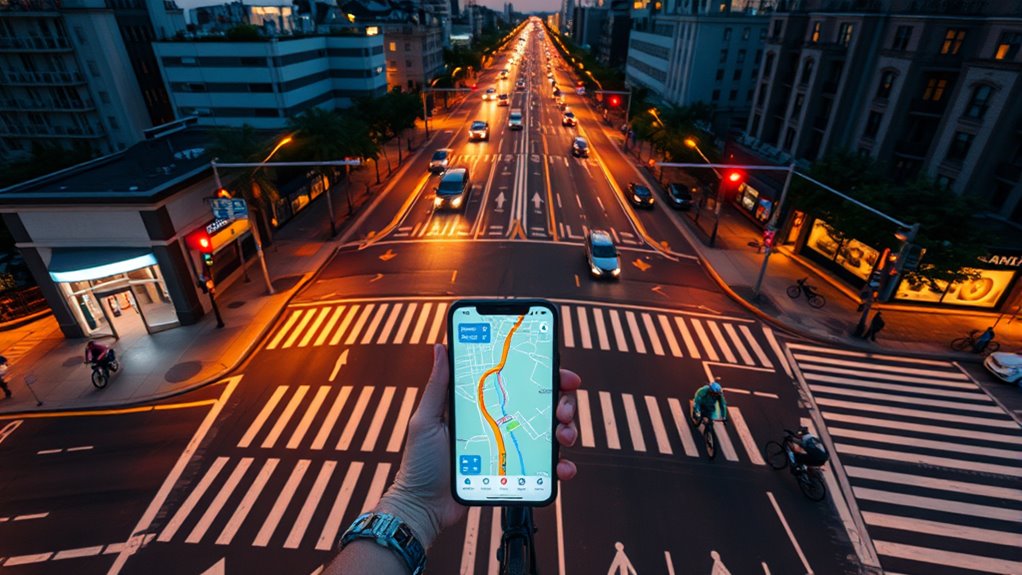
Planning your route carefully can considerably reduce the risks associated with daily commuting. When you choose your path wisely, you not only save time but also enhance your safety and that of others around you. One of the key factors to ponder is pedestrian safety. If you walk or cycle, selecting routes with designated crosswalks, pedestrian signals, and bike lanes makes a significant difference. These features help you stay visible and predictable to drivers, minimizing the chances of accidents. Avoid shortcuts through poorly lit or secluded areas, as these can pose safety threats after dark. By sticking to well-maintained, populated routes, you create a safer environment for yourself and pedestrians sharing the road. Additionally, being aware of signs of spoilage in food or drink can help prevent health hazards during your travels, especially if you carry snacks or beverages with you.
Choose routes with crosswalks, signals, and bike lanes to improve safety and visibility.
Traffic congestion is another critical aspect to contemplate when planning your commute. Heavily congested roads increase the likelihood of accidents, road rage, and stress. To mitigate these risks, look for alternative routes that bypass busy intersections or areas known for bottlenecks during peak hours. Using navigation apps can help identify less congested streets and provide real-time updates, allowing you to adapt your route on the fly. Taking less crowded roads not only reduces your exposure to unpredictable traffic behavior but also cuts down on your overall travel time, making your journey smoother and less stressful. Additionally, planning your departure times to avoid peak hours can prevent you from getting stuck in gridlock, further improving safety and efficiency.
Another way to enhance your route planning involves considering public transportation options or carpooling, which can reduce traffic congestion and lessen your individual risk. If you have the flexibility, traveling during off-peak times or using park-and-ride facilities can help you avoid the worst traffic and pedestrian-heavy zones. When you combine these strategies with careful route selection, you’ll find that your daily commute becomes safer, more predictable, and less taxing. Remember that staying informed about road conditions, construction, and accidents along your usual routes allows you to adapt quickly and avoid potential hazards.
Ultimately, thoughtful route planning isn’t just about getting from point A to point B—it’s about making your journey safer, more predictable, and less stressful. By prioritizing pedestrian safety and avoiding traffic congestion, you take proactive steps to protect yourself and others. Whether you’re walking, cycling, driving, or using public transit, a well-planned route makes all the difference. Keep reviewing and adjusting your routes as needed, and you’ll find that your daily commute becomes safer, more efficient, and far less intimidating.
Frequently Asked Questions
How Do Weather Conditions Affect Route Safety?
Weather conditions can markedly impact your route safety by introducing weather hazards like ice, snow, or heavy rain, which make roads slippery and harder to navigate. Visibility issues from fog, rain, or snow reduce your ability to see obstacles, signs, or other vehicles, increasing the risk of accidents. Always check the weather forecast before your trip, and consider adjusting your route or delay your commute if conditions are severe.
Can Real-Time Traffic Updates Improve Safety?
Yes, real-time traffic updates can improve your safety by helping you avoid traffic congestion and unexpected delays. When you receive current information, you can choose alternative routes, reducing the risk of accidents caused by sudden stops or congestion. This active route optimization allows you to stay alert and make better decisions, ensuring a smoother and safer commute. Staying informed with live updates ultimately helps you navigate more securely.
What Are the Best Apps for Route Planning?
You should try apps like Google Maps, Waze, or Apple Maps for route planning. These apps use advanced navigation algorithms to suggest the safest and quickest routes. They rely on highly accurate map data, which helps you avoid hazards and traffic delays. Regular updates guarantee you get real-time traffic info, making your commute safer. Downloading and customizing alerts in these apps can further improve your safety on the road.
How Do I Assess Personal Safety Risks in New Areas?
To assess personal safety risks in new areas, start by researching neighborhood security through online reviews and local forums. Check lighting conditions on your planned route—well-lit paths reduce risk. Use maps or safety apps that highlight crime reports or unsafe zones. Trust your instincts; if something feels off, consider alternative routes. Staying aware and prepared helps you navigate new areas more safely, reducing potential dangers.
Are There Specific Routes Safer for Pedestrians Versus Cyclists?
Yes, some routes are safer for pedestrians than cyclists, and vice versa. Look for designated pedestrian pathways that are separated from traffic to guarantee safety. For cyclists, dedicated cyclist lanes reduce the risk of accidents with vehicles and pedestrians. Always prioritize routes with clear signage and well-maintained paths. Using these designated lanes and pathways helps you stay safe, whether you’re walking or cycling, by minimizing interactions with traffic and other users.
Conclusion
Just like Odysseus charted his course through treacherous waters, planning your route guarantees you’ll reach your destination safely. By choosing well-lit streets, avoiding risky shortcuts, and staying alert, you’re steering clear of unseen dangers lurking in the shadows. Remember, every mindful decision is a step closer to a safe journey. As Homer’s hero navigated storms and monsters, you too can conquer today’s hazards with foresight and caution—your path to safety is in your hands.