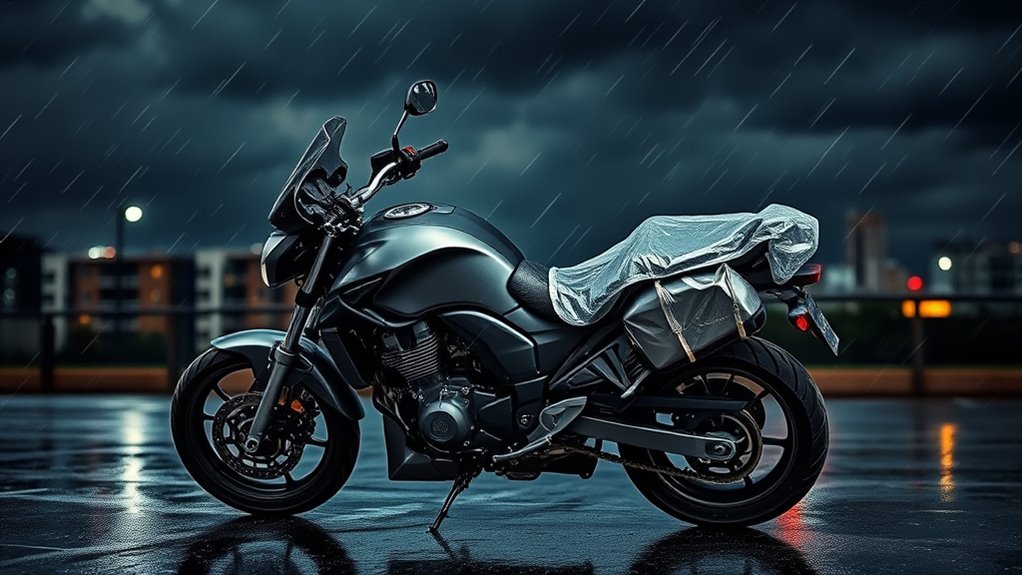

To weather-proof your ride in the rain, start by checking your tires for proper tread and replace them if worn. Keep your visor clean and use anti-fog treatments for clear visibility. Reduce your speed, brake gently, and stay alert to changing road conditions. Make sure your headlights and brake lights work well to boost visibility and alert others. Implement these safety tips, and you’ll feel more confident in wet weather—learn more tricks for safe riding in rain below.
Key Takeaways
- Ensure tires have adequate tread depth and are designed for wet conditions to prevent hydroplaning.
- Keep visors and windshields clean, scratch-free, and treated with anti-fog coatings for clear visibility.
- Reduce riding speed and brake gently to maintain control and prevent skidding on slick surfaces.
- Verify that headlights and brake lights are functioning properly and are bright enough for visibility.
- Carry rain-resistant gear, including a spare visor or cover, and stay alert to changing road conditions.

Ever wondered how to keep your bike or motorcycle in top shape despite unpredictable weather? One of the most essential aspects of weather-proofing your ride involves understanding how to navigate rain safely. Rainy conditions can make riding more dangerous if you’re not prepared, but with a few simple adjustments, you can stay confident and secure on the road. First, pay close attention to your tire tread. Your tires are your only contact with the road, so having proper tread depth is fundamental for maintaining traction. Worn-out tires with shallow or bald tread lose their ability to grip slick surfaces, increasing the risk of slipping or hydroplaning. Before heading out in rainy weather, inspect your tires thoroughly. If the tread looks worn or uneven, replace them promptly. Investing in tires designed for wet conditions can greatly improve your safety, as they often feature specialized patterns that channel water away more effectively. Additionally, consider applying essential oils for respiratory health to your riding gear or helmet to help maintain clear breathing and reduce discomfort during long rides in damp weather.
Another critical element that many riders overlook during wet weather is the condition of their windshield wipers or, in the case of motorcycles, the windshield or visor. Clear visibility is paramount when rain is falling, so verify your windshield wipers are in excellent condition. If the wipers leave streaks or chatter across the glass, it’s time to replace them. For motorcyclists, keeping your visor clean and scratch-free is equally important; consider investing in anti-fog and anti-scratch coatings to maintain clarity. When riding in rain, your ability to see hazards, other vehicles, and road signs hinges on unobstructed visibility. Take a moment to clean your visor regularly, especially if rain causes water droplets to obscure your view. Keep a spare visor or rain-resistant visor cover handy for quick replacements if your current one gets heavily scratched or fogged.
Beyond tires and visors, adjusting your riding style is equally necessary. Reduce your speed to increase reaction time and brake gently to avoid skidding. Use your windshield wipers or visor treatments to maintain a clear view and keep your hands dry, so your control remains precise. It’s also wise to check your motorcycle’s lighting system—brighter headlights and functioning brake lights can help others see you better in poor weather conditions. Staying alert and adapting your riding habits to wet conditions allows you to respond swiftly to any sudden changes on the road. With these simple yet effective measures, you can withstand the rain confidently, ensuring your ride remains safe and enjoyable regardless of the weather forecast.
Frequently Asked Questions
How Do I Prevent Rust on My Bike After Rain Exposure?
To prevent rust on your bike after rain exposure, you should clean and dry it thoroughly as soon as possible. Apply protective coatings like bike wax or a rust inhibitor to create a barrier against moisture. Regularly inspect for any signs of rust and reapply protective coatings when needed. Proper maintenance, including storing your bike in a dry place, helps make sure of rust prevention and keeps your ride in top condition.
What’s the Best Way to Dry My Gear Quickly?
To dry your gear quickly, use quick drying fabrics designed for fast moisture wicking. After exposure to rain, gently squeeze out excess water without wringing, then hang your gear in a well-ventilated area or near a heat source to accelerate drying. For gear cleaning tips, wash your gear regularly with mild soap, avoid harsh chemicals, and always make sure it’s fully dry before storing to prevent mold and odor buildup.
Can Rain Damage Electronic Components on My Motorcycle?
Rain can damage your motorcycle’s electronic components if moisture intrudes, leading to electronic corrosion. To prevent this, you should make certain all connectors are properly sealed and avoid exposing your bike to heavy rain for extended periods. Use waterproof covers and check your wiring regularly. By taking these precautions, you minimize the risk of moisture intrusion and help protect your electronics from corrosion and potential failure.
How Often Should I Waterproof My Riding Apparel?
You should waterproof your riding apparel every few months, especially if you ride regularly. While it might seem like basic apparel maintenance, neglecting this can leave you vulnerable to rain and moisture. Think of your gear like a shield—renew it before it wears down. A consistent waterproofing schedule keeps your gear effective, ensures comfort, and extends its lifespan, so you stay dry and protected no matter the weather.
Are There Specific Tires Better for Wet Conditions?
Yes, some tires are better for wet conditions. Look for tires with a deep tread pattern designed for water dispersion and a high wet grip rating. These features help prevent hydroplaning and improve traction on wet roads. When choosing tires, prioritize those specifically made for rainy weather, as they offer enhanced grip and safety, giving you better control and confidence during rainy rides.
Conclusion
Rain may blur your view and dampen your ride, but with the right precautions, it won’t dampen your spirit. Embrace the challenge of wet roads, knowing your preparedness keeps you moving forward. Just as rain reveals the world’s raw beauty, your readiness highlights your resilience. So, gear up, stay alert, and let each storm remind you that even in adverse weather, your ride remains unstoppable. After all, a little rain only deepens your ride’s story.