
To capture dynamic cycling photos, experiment with different angles like low shots to emphasize speed and power, and high shots to show the scenery. Use the golden hour for soft, warm light that enhances colors and depth. Play with backlighting and shadows to add drama or soften harsh contrasts. Keep your camera ready, try unusual perspectives, and use natural light creatively to highlight energy and motion. Continuing will reveal even more ways to elevate your cycling photography.
Key Takeaways
- Use low angles to emphasize speed and power of your bike and rider.
- Capture photos during golden hour for warm, vibrant lighting that enhances scenery.
- Incorporate diverse perspectives and unusual vantage points for dynamic, eye-catching images.
- Manage backlighting and shadows with reflectors or angle adjustments to reveal details.
- Frame your shots intentionally, experimenting with lighting and angles to tell a compelling story.
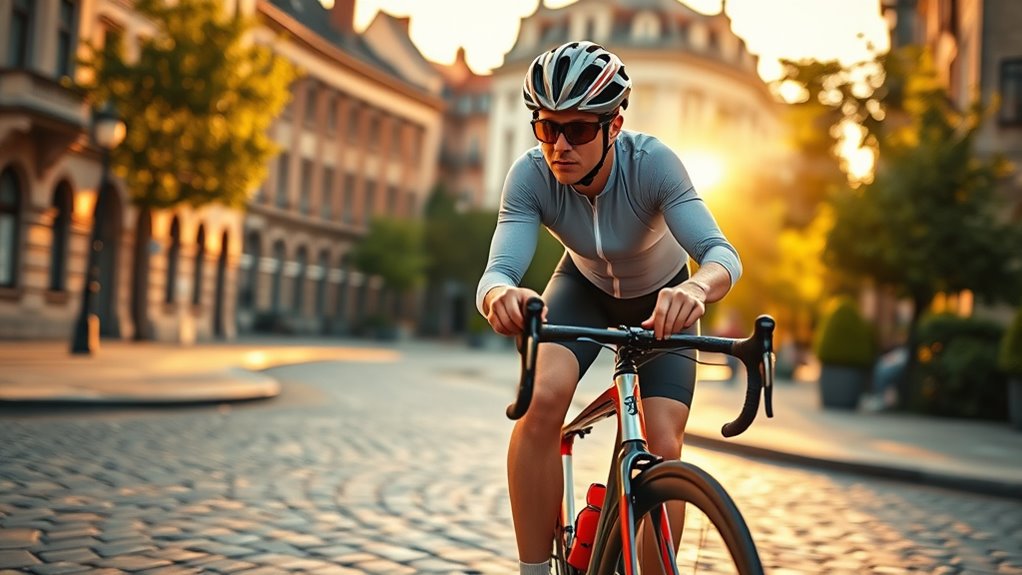
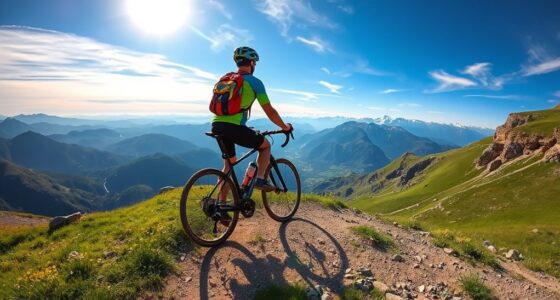
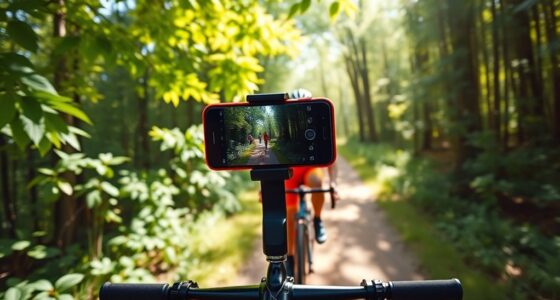
Ever wondered how to capture stunning cycling photos that truly stand out? The key lies in understanding how to use camera angles and lighting techniques to your advantage. When you’re out on a ride, your camera’s perspective can dramatically influence the mood and impact of your shots. Instead of sticking to straightforward shots, experiment with different camera angles. Low angles, for example, can make your bike and rider look more powerful and dominant, emphasizing the sense of speed and motion. High angles, for example, help you capture the surrounding scenery, giving viewers a sense of the environment you’re exploring. Don’t be afraid to get close to your subject or shoot from unusual vantage points—these choices add a dynamic feel to your photos. Moving around and trying various angles can reveal unexpected perspectives that make your images pop.
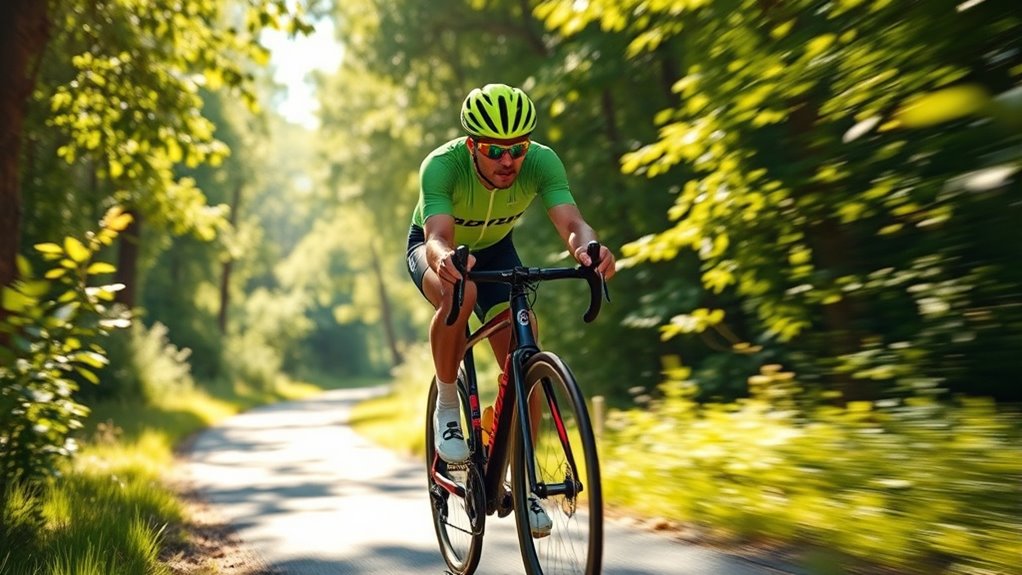
Lighting techniques are equally crucial in elevating your cycling photography. The time of day and natural light conditions can change the entire vibe of your shots. Aim to shoot during golden hour—shortly after sunrise or before sunset—when the light is soft, warm, and creates pleasing shadows. This kind of lighting adds depth and richness to your images, making colors more vibrant and details more defined. Avoid harsh midday sunlight, which can cause unflattering shadows and overexposed highlights. If you’re shooting in bright conditions, look for shaded areas or use diffusers to soften the light. Conversely, during overcast days, the diffused light reduces harsh shadows, providing even illumination that works well for capturing textures and details. Be mindful of backlighting as well—shooting into the sun can create dramatic silhouettes if you position yourself correctly, but it can also wash out details if not managed properly. Using a reflector or adjusting your angle can help bounce light onto your subject, brightening shadows and balancing exposure.
Additionally, understanding the contrast ratio of your camera can help you better control how your images will turn out in various lighting conditions. Combining strategic camera angles with thoughtful lighting techniques transforms an ordinary cycling shot into a compelling image. As you ride, keep your camera ready and experiment with different perspectives and light conditions. Take advantage of natural light changes and don’t hesitate to get creative with your angles. With practice, you’ll develop an eye for those perfect moments when the light hits just right and your composition captures the energy of the ride. Remember, every shot offers an opportunity to tell a story—so be intentional about how you frame your subject and use available light to craft images that truly stand out.
Frequently Asked Questions
What Camera Settings Are Best for Cycling Photos?
You should set your camera to a fast shutter speed to freeze motion, like 1/1000 sec. Use a narrow aperture, such as f/8 or higher, for sharpness across the scene. Adjust ISO based on lighting conditions—keep it low in bright daylight, but increase it if you’re in low light. These aperture settings and ISO adjustments help you capture clear, dynamic cycling photos with crisp details and minimal blur.
How Can I Prevent Motion Blur in Fast-Paced Shots?
Did you know that increasing your shutter speed to at least 1/1000 second can drastically reduce motion blur? To prevent motion blur in fast-paced shots, you should set your camera to a high shutter speed. This instantly freezes the action, keeping your cycling photos sharp and clear. Don’t forget to adjust your ISO if needed, so your images stay well-exposed even with a faster shutter speed.
What Are Some Tips for Capturing Candid Cyclist Moments?
To capture candid cyclist moments, focus on natural lighting to highlight genuine expressions. Stay unobtrusive and keep your camera ready to catch spontaneous shots. Use a longer lens to maintain distance, so cyclists remain relaxed and unaware of your presence. Observe their movements and anticipate moments when they’re focused or smiling. Take multiple shots quickly to increase your chances of capturing authentic, candid expressions that truly showcase their personality and the energy of the ride.
How Do I Protect My Camera From Weather During Rides?
Imagine your camera caught in a torrential downpour, turning it into a soggy soggy mess—funny, right? To avoid this, use camera covers or weatherproof cases that shield your gear from rain, mud, and splashes. These accessories keep your camera dry and safe, ensuring your shots stay crisp. Don’t let bad weather be the villain—protect your equipment with trusty gear covers and weatherproof cases, and keep snapping worry-free!
What Angles Work Best for Dynamic Cycling Photos?
You should try low camera angles to emphasize speed and power, making your bike look more dynamic. Experiment with perspective tricks like shooting from behind or slightly above to capture motion and environment. Using wide-angle lenses can add depth, while tilting the camera creates a sense of movement. Play around with different angles during your ride to find the most energetic shots, and don’t be afraid to move around to get unique perspectives.
Conclusion
Now that you have these cycling photo tips, you’re all set to capture your rides like a pro. Remember, each shot is a story waiting to be told—so don’t be afraid to experiment and let your passion shine through. As you pedal through your adventures, your photos will become more than just images; they’ll be memories frozen in time. So go ahead, snap away, and turn your cycling journey into a masterpiece waiting to be discovered.