During group rides, clear communication is key—use hand signals to indicate turns, stops, or slowing down well in advance, and stay consistent to prevent confusion. When pulling, maintain a steady pace, stay in predictable positions, and signal your changes smoothly to keep the group cohesive. Rotate pulls fairly to prevent fatigue and promote teamwork. If you’re attentive to these signals and techniques, your ride will be safer, smoother, and more enjoyable—discover how to master these skills with more tips ahead.
Key Takeaways
- Use clear, early hand signals for turns, stops, and slowing to prevent rider confusion and ensure safety.
- Maintain consistent signaling throughout the ride to coordinate group movements smoothly.
- Signal well in advance of turns or stops to give others time to react safely.
- Practice disciplined pulling by taking turns at the front, maintaining steady pace, and falling back smoothly.
- Communicate attentively with gestures and eye contact to promote teamwork, mutual respect, and a cohesive group ride.
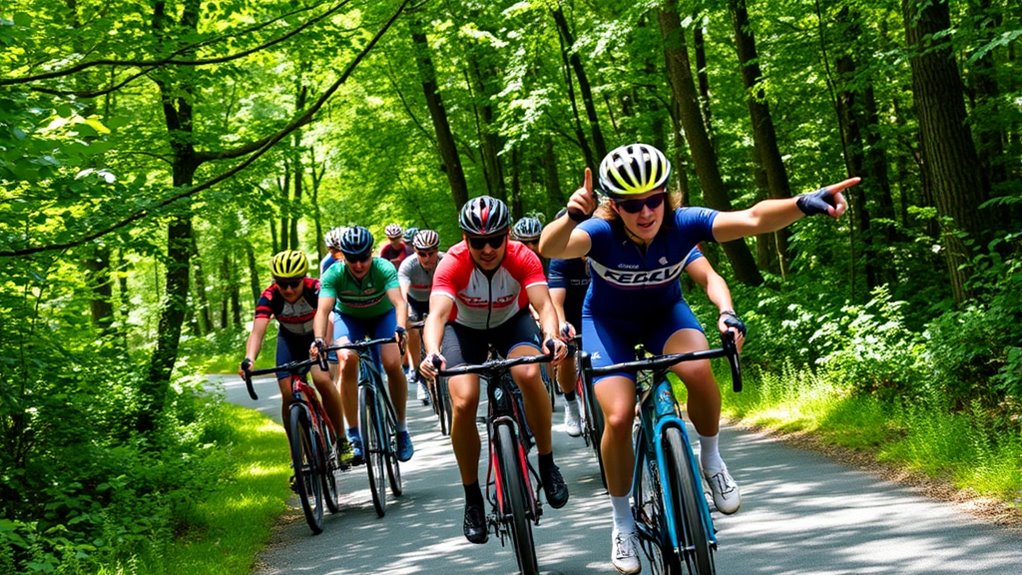
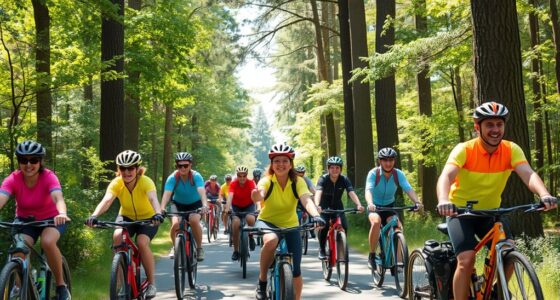
Joining a group ride can be a fun way to challenge yourself and connect with fellow cyclists, but it also requires following proper etiquette to guarantee everyone has a safe and enjoyable experience. One of the most important aspects of group ride etiquette involves effective communication, especially through hand signals. Hand signals are essential for alerting others to your intentions, such as turning, stopping, or slowing down. When you need to make a turn, extend your arm in the direction you plan to go—left or right—and hold it steady until the maneuver is complete. If you’re slowing down or stopping, raise your hand with an open palm, signaling to riders behind you to prepare to decelerate. Using clear and consistent hand signals prevents confusion and helps maintain the flow of the ride. Remember, signaling well in advance gives riders behind you plenty of time to react, which is crucial for safety. Additionally, being attentive to the group’s pace and maintaining a steady line contributes to a smooth ride. Pulling techniques also play a vital role in maintaining an efficient and safe group ride. As a rider in the bunch, understanding when and how to take a pull can make a significant difference. When it’s your turn to lead, smoothly accelerate to a steady pace that the group can maintain comfortably. Keep your cadence consistent, and communicate your intentions by eye contact or a subtle nod if needed. Once you’ve pulled for a while, signal the group by easing up slightly or making a hand gesture, indicating that others should take the lead. When it’s not your turn to pull, stay in a predictable position within the group, maintaining a steady line, and avoid sudden movements or braking. Good pulling techniques include staying low and aerodynamic, which helps reduce fatigue for yourself and the group. Rotating pulls evenly prevents any one rider from getting overly exhausted and keeps the group moving cohesively. Practicing these skills fosters a team-oriented environment that values safety and mutual respect among riders. Effective communication through hand signals and disciplined pulling techniques not only enhances safety but also promotes camaraderie among riders. Be attentive to the signals others give, and always use your own clearly. Respect the flow of the group by taking your turn at the front and then falling back smoothly. This rhythm keeps the ride organized and enjoyable for everyone involved. By mastering these skills, you contribute to a safer, more efficient ride, where everyone feels confident and connected. Remember, good ride etiquette is about teamwork, clarity, and mutual respect—making every group ride a rewarding experience for all.
Frequently Asked Questions
How Do I Signal a Flat Tire to the Group?
To signal a flat tire to your group, use the hand signal for flats—raise your hand with your palm open and thumb pointing downward, or gently tap your hip to indicate a problem. Make sure to utilize clear group communication cues, like calling out “Flat!” loudly or using a whistle if available. These signals make certain everyone understands quickly, so the group can safely slow down or stop without confusion.
What Is Proper Hand Signaling for a Sudden Stop?
To signal a sudden stop, you should raise one arm straight up with your hand open, making your intention clear through your hand signals. This is essential for group communication, ensuring everyone behind you understands you need to stop immediately. Keep your movements deliberate and visible to catch everyone’s attention quickly. Proper hand signals help maintain safety and coordination during the ride, preventing surprises and potential accidents.
When Should I Pass or Move to the Front?
When should you pass or move to the front? Think of the front as the captain’s seat—only take it when you’re fit, alert, and ready to lead the pace. Passing etiquette says you should wait until the group signals it’s okay or there’s a safe opportunity. Move to the front smoothly, communicate clearly, and respect the group’s rhythm. Don’t just rush ahead—lead responsibly, and keep everyone safe and in sync.
How Do I Handle Disagreements Over Pace or Route?
When disagreements over pace or route arise, use clear communication strategies like calmly expressing your concerns and listening actively to others. If tensions escalate, prioritize conflict resolution by suggesting compromises or pausing briefly to discuss options. Respect everyone’s input, stay friendly, and remember that flexibility helps keep the ride enjoyable for all. Staying open-minded and communicating effectively guarantees disagreements don’t ruin the group experience.
What Should I Do if I Get Separated From the Group?
It happens more often than you’d think—you get separated from the group. First, stay calm and try to rejoin using your phone if you have reception, or look for familiar landmarks. Keep riding safely, signaling your intentions clearly. Use group communication tools like radios or hand signals if available. If you can’t reconnect quickly, pull over safely and wait for others or contact the ride leader to guarantee everyone’s riding safety.
Conclusion
Mastering signals and pulls keeps the ride smooth and safe, but there’s more to discover. When everyone plays their part, the group moves seamlessly, pushing limits together. Yet, one mistake can unravel the rhythm you’ve built. Will you stay alert and communicate clearly? The key to a successful group ride lies in your next move—stay vigilant, respect others, and embrace the journey ahead. The road is waiting, and your next challenge is just around the corner.