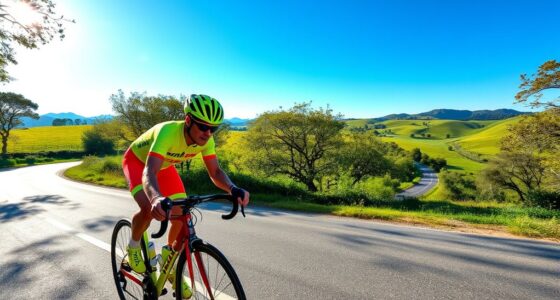
To lead inclusive group rides, communicate safety guidelines clearly upfront and use simple signals to keep everyone on the same page. Be attentive to riders’ needs, offering encouragement and checking in regularly. Adapt your plans based on the group’s comfort levels and abilities, and foster an atmosphere of mutual respect and trust. By prioritizing safety, inclusivity, and open dialogue, you’ll create a welcoming experience for all—keep going to discover more ways to make your rides successful.
Key Takeaways
- Establish clear safety protocols and communication methods tailored to diverse abilities.
- Use visual cues, written signals, and simple language to ensure everyone understands instructions.
- Regularly check in with riders to assess comfort, confidence, and address concerns promptly.
- Foster an inclusive atmosphere by encouraging questions, respecting all skill levels, and promoting mutual respect.
- Be flexible and ready to adapt plans based on group dynamics, environmental conditions, and rider needs.

Inclusive group rides are transforming the cycling community by welcoming riders of all backgrounds, skill levels, and abilities. As a leader, your role is essential in ensuring these rides are safe, enjoyable, and accessible for everyone involved. One of the most important aspects is establishing clear safety protocols. Before the ride begins, you should communicate fundamental guidelines, like signaling intentions, maintaining a consistent pace, and respecting each rider’s comfort zone. Making sure everyone understands how to signal turns, slow down, or stop can prevent accidents and confusion during the ride. Additionally, encouraging riders to perform a quick safety check on their bikes, such as brakes and tire pressure, helps prevent mechanical issues that could cause disruptions or injuries. Ensuring your group is familiar with projector technology can also help in sharing visual instructions or maps during the ride if needed.
Alongside safety protocols, effective communication strategies are key in fostering a welcoming environment. As a leader, you need to be proactive in establishing open lines of communication. Use clear, concise language when giving instructions or updates, and check in regularly with your group to gauge their comfort and confidence levels. Incorporating simple hand signals or verbal cues can help bridge communication gaps, especially when the group encounters obstacles or needs to slow down. If someone appears unsure or hesitant, approach them gently and offer reassurance or guidance. Creating an atmosphere where riders feel comfortable voicing concerns or asking questions helps build trust and camaraderie within the group.
Establish open communication, use clear cues, and foster trust to create an inclusive cycling environment.
You should also plan your communication approach to accommodate diverse abilities. For riders with hearing impairments, consider using visual cues or written signals. For those new to cycling or less confident, provide extra encouragement and patience. As the leader, your tone and manner matter—stay positive, approachable, and attentive. Emphasize the importance of mutual respect and inclusivity, which can be reinforced through your communication style. During the ride, continuously monitor the group’s dynamics and adapt your communication methods as needed. For example, if the group starts to spread out, remind everyone of the importance of staying together for safety.
Finally, always be prepared to adapt your plans based on group feedback and conditions. Clear safety protocols and effective communication strategies are the foundation of inclusive rides, ensuring everyone feels secure and valued. When riders see that you prioritize safety and foster open dialogue, they’re more likely to enjoy the experience and return for future rides. Your leadership can help break down barriers, making cycling accessible and fun for all.
Frequently Asked Questions
How Do I Handle Medical Emergencies During a Ride?
When a medical emergency occurs during a ride, you should stay calm and prioritize emergency communication by calling 911 immediately. Make certain you have first aid preparedness, including a basic kit and knowledge of how to assist until professional help arrives. Keep the group organized, reassure the injured person, and delegate someone to assist with emergency protocols. Your quick, calm response can make all the difference in managing the situation effectively.
What Gear Is Recommended for Diverse Fitness Levels?
You should recommend adaptive cycling gear tailored to each rider’s fitness level, ensuring comfort and safety. Encourage gear customization, like adjustable seats or handlebars, to accommodate diverse needs. Consider providing different bike types or accessories, such as tricycles or handcycles, so everyone can participate confidently. This approach helps create an inclusive environment where riders of all fitness levels feel supported and engaged throughout the ride.
How Can I Promote Respectful Behavior Among Riders?
You can promote respectful behavior by encouraging respectful communication and emphasizing cultural sensitivity among riders. Set clear expectations at the start of the ride, reminding everyone to listen actively, avoid assumptions, and respect differing backgrounds. Foster an inclusive environment by modeling respectful interactions yourself. Address any inappropriate behavior promptly and privately, reinforcing the importance of kindness and understanding. Your leadership helps create a safe, welcoming space for everyone to enjoy the ride.
What Routes Are Best for Accessibility Needs?
You should choose routes with wheelchair accessibility, ensuring smooth, flat terrain and minimal obstacles. Look for paved paths or well-maintained trails that accommodate different mobility devices. Avoid steep inclines or rugged terrain that could be challenging. Confirm accessibility features, like curb cuts and accessible rest stops, before finalizing your route. By prioritizing these terrain considerations, you create an inclusive, enjoyable experience for all riders with mobility needs.
How Do I Manage Group Pace for Inclusivity?
A stitch in time saves nine, so managing group pace early on is key. Use effective pacing strategies by setting a comfortable speed for all riders and adjusting as needed. Keep rider communication open; check in regularly and encourage feedback. This approach guarantees everyone stays together and feels included, fostering a positive, inclusive ride where no one is left behind. Your attentiveness makes the ride enjoyable for everyone.
Conclusion
Leading inclusive group rides creates a welcoming space where everyone can enjoy cycling. For example, imagine organizing a ride that welcomes beginners and riders with mobility challenges, ensuring everyone feels comfortable and valued. By setting a positive tone and being attentive to diverse needs, you foster a sense of community and shared adventure. Remember, your leadership can inspire more people to experience the joy of riding together—making every ride inclusive, fun, and memorable for all.