
To guarantee safe and enjoyable rides with your dog, start with proper training and a well-fitting harness. Get your dog comfortable by introducing the harness indoors and using treats to build positive associations. Practice leash commands and gradually increase trip lengths, always double-checking harness security. Using a harness helps prevent escapes, keeps your dog safe during sudden stops, and promotes control. Keep your pup calm with treats and praise—continue to explore more tips to make every ride stress-free.
Key Takeaways
- Properly fit a harness that distributes pressure evenly to ensure dog safety and comfort during rides.
- Conduct indoor leash training with treats to build positive associations with harness wearing.
- Practice short vehicle trips to acclimate your dog gradually and increase ride duration over time.
- Always secure the harness before starting the trip and periodically check it during travel for safety.
- Keep the environment calm with praise and treats to promote a positive, stress-free riding experience.
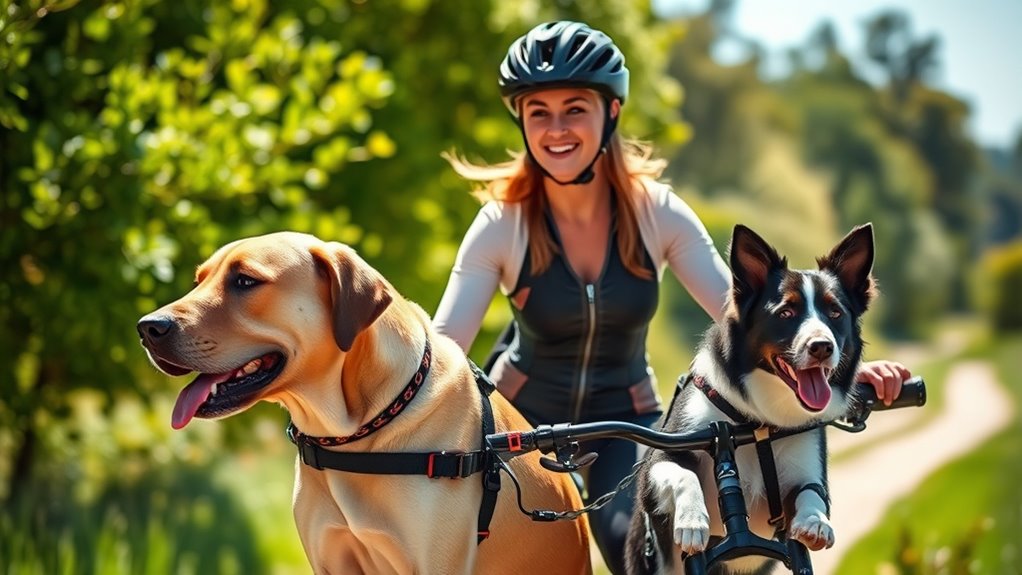
Riding with your dog can be a fun and rewarding experience, but it requires proper planning and safety measures. Before you hit the road, it’s essential to ensure your dog is comfortable and secure while traveling. One of the most important steps is choosing the right dog harnesses. Unlike collars, harnesses distribute pressure evenly across your dog’s chest and shoulders, reducing strain on their neck and preventing injuries during sudden stops or turns. Select a harness that fits snugly but isn’t too tight, allowing your dog to breathe comfortably and move freely. Proper fit is critical because a poorly fitted harness can cause chafing or slip off during movement, creating safety risks.
Leash training plays a vital role in riding safety as well. Even if your dog is well-behaved at home, riding presents new distractions and stimuli, so consistent leash training is key. Start by introducing your dog to wearing the harness indoors, rewarding them with treats and praise to build positive associations. Once they’re comfortable, attach the leash and practice gentle walking, focusing on commands like “heel” and “stay.” This builds their confidence and responsiveness. When it’s time to ride, keep the leash attached to the harness at all times, giving you control while allowing some freedom of movement. Avoid attaching the leash to a collar, as this can cause neck injuries if your dog suddenly pulls or jerks.
Training your dog to stay calm and steady during rides is essential. Practice short trips initially, gradually increasing duration as your dog becomes accustomed to the vehicle and the harness. Make sure the harness is securely fastened before starting your trip, and double-check it periodically during the ride. Keep the environment calm, offering treats and praise to reinforce good behavior. Using a harness during rides also helps prevent your dog from jumping or darting out of the vehicle, which can be dangerous. Consistent leash training combined with a well-fitted harness will give you peace of mind and make riding a positive experience for both of you.
Frequently Asked Questions
What Are the Best Harnesses for Dog Safety During Car Rides?
The best harnesses for dog safety during car rides are crash-tested, crash-test rated harnesses that attach securely to a seat belt. Look for a harness designed specifically for vehicle use, ensuring it has high safety ratings and a snug fit. These harnesses reduce the risk of injury in a crash, keeping your dog safe and secure. Always double-check the fit and attachment before hitting the road.
How Can I Train My Dog to Stay Calm in a Vehicle?
To help your dog stay calm in a vehicle, start with gentle exposure and positive reinforcement. Recognize that dog behavior and car anxiety are natural reactions, so create a soothing environment with familiar toys and treats. Keep rides short initially, gradually increasing duration as your dog relaxes. Consistent training, patience, and calm praise will help your pup associate car trips with comfort, turning anxious moments into peaceful adventures.
Are There Specific Dog Breeds Better Suited for Car Travel?
Certain breeds are better suited for car travel based on their temperament and size. For example, small, calm breeds like French Bulldogs or Cavalier King Charles Spaniels often adapt well to travel, while high-energy breeds like Border Collies may need more exercise before trips. Breed suitability varies, so consider your dog’s travel preferences and personality to choose a breed that will stay comfortable and relaxed during car rides.
What Should I Do if My Dog Gets Carsick Frequently?
Oh, your dog’s carsickness really keeps you on your toes, huh? Instead of just suffering through it, try alternative calming techniques like calming sprays or music, and make dietary adjustments—perhaps avoid heavy meals before travel. These simple tricks can make car rides more comfortable for your pup. Remember, patience and consistency are key; soon enough, your furry friend might actually enjoy the ride instead of dreading it.
How Can I Prevent My Dog From Distracting Me While Driving?
To prevent your dog from distracting you while driving, train them to stay focused and calm before hitting the road. Use commands like “sit” and “stay,” and reward good behavior. Keep your dog secure in a harness or crate to minimize movement. Regular exercise beforehand can also reduce excess energy. These steps help manage dog distraction, ensuring driver safety and a safer, more enjoyable trip for both of you.
Conclusion
Riding with your dog can be a rewarding experience, but safety always comes first. Did you know that over 50% of dog injuries during car rides happen because of improper restraint? By following proper training and safety tips, you guarantee both your safety and your furry friend’s comfort. Stay attentive, use the right gear, and keep training consistent. When you prioritize safety, every ride becomes a fun adventure you both can enjoy worry-free.