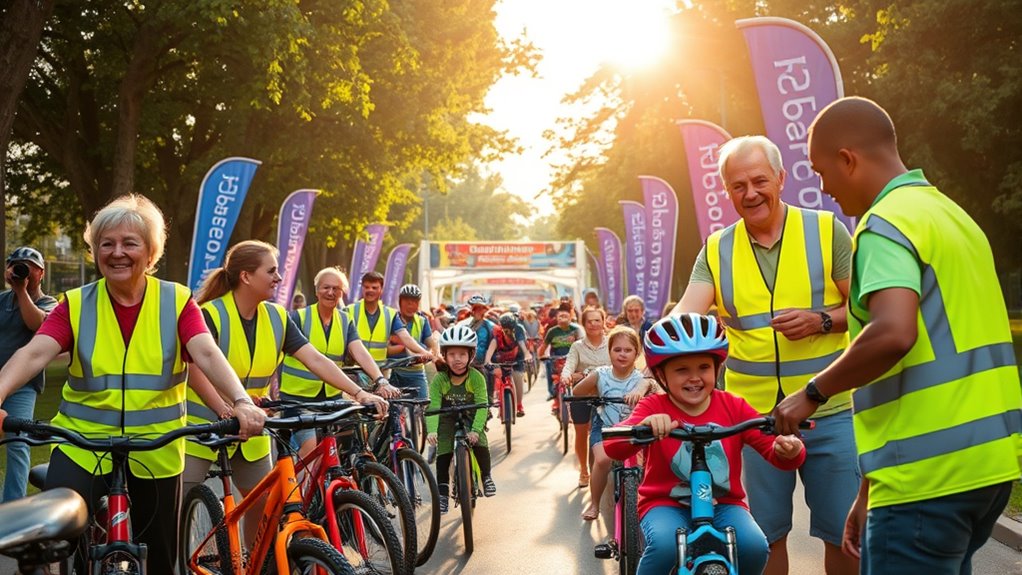

Volunteering at local bike events lets you actively promote safety and community health. You’ll help with route setup, safety checks, signage, and guiding participants, ensuring everyone has a secure and enjoyable experience. Your teamwork, communication, and flexibility will keep the event running smoothly and foster a safety-minded cycling culture. Plus, you gain valuable skills and connect with others who share your passion for cycling. Keep going to discover more about making a difference at these events.
Key Takeaways
- Volunteering enhances community safety by promoting helmet use, traffic awareness, and proper signaling during bike events.
- Volunteers assist with route setup, check-ins, and troubleshooting to ensure smooth event operations.
- Safety checks and signage set up by volunteers help guide participants and reduce injury risks.
- Effective volunteers demonstrate flexibility, teamwork, and clear communication to handle dynamic event needs.
- Participating as a volunteer fosters community bonds, develops skills, and contributes to memorable, safe cycling experiences.
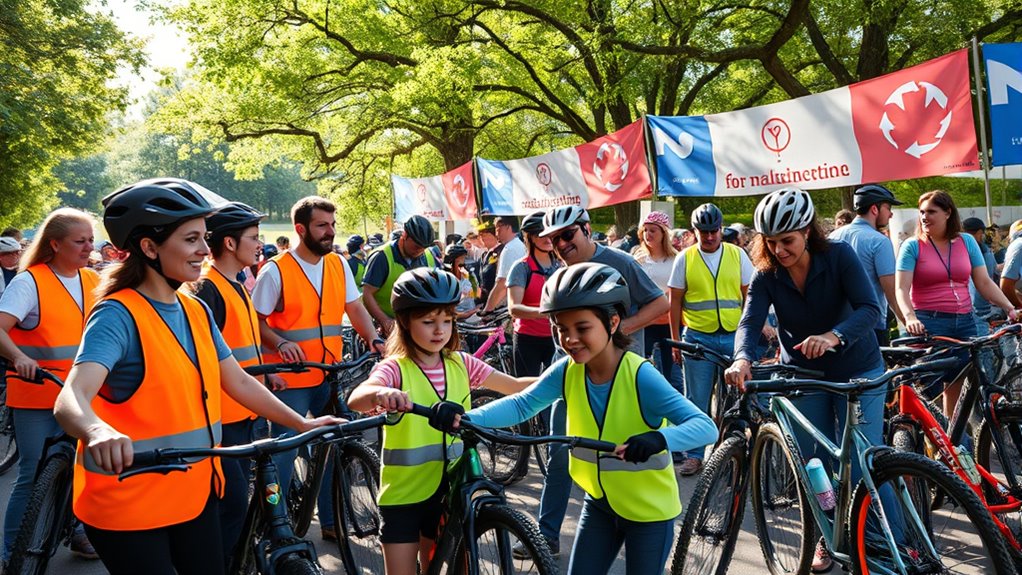
Volunteering at local bike events is a rewarding way to support your community while enjoying the thrill of cycling. When you step into a volunteer role, you’re directly contributing to the success of these events, which bring together riders of all ages and skill levels. One of your key responsibilities may involve promoting bike safety. Making sure participants understand the importance of wearing helmets, obeying traffic rules, and signaling correctly helps create a secure environment for everyone. Your presence and guidance can prevent accidents and foster a culture of safety that benefits the entire cycling community. Additionally, fostering open dialogue with fellow volunteers enhances teamwork and problem-solving during the event.
Volunteering at bike events promotes safety and community connection through education and guidance.
As a volunteer, you’ll also be involved in event coordination, which is essential for smooth operations. This could mean setting up routes, organizing check-in stations, or assisting with timing and scoring. Your proactive approach helps keep the event organized and enjoyable for all participants. You’ll often work alongside event organizers, helping to manage schedules, distribute materials, and troubleshoot unexpected issues. This hands-on involvement not only sharpens your organizational skills but also gives you a real sense of accomplishment when you see the event run seamlessly.
Bike safety is at the heart of every successful bike event, and your role in reinforcing it can’t be overstated. You might be stationed at safety checkpoints, offering advice on proper riding techniques or inspecting bikes for safety compliance. Your ability to communicate clearly and confidently encourages riders to prioritize safety, reducing the risk of injuries. Additionally, you may help in setting up safety signage and barriers, which are essential for guiding participants and alerting motorists. Your attentiveness ensures that the event runs smoothly and that everyone feels secure while enjoying their ride.
Event coordination requires a mix of flexibility, teamwork, and clear communication. You’ll need to adapt quickly to changing circumstances, whether it’s dealing with weather issues or last-minute route adjustments. Working closely with other volunteers and staff, you’ll coordinate tasks and keep everyone informed, fostering a collaborative atmosphere. Your enthusiasm and willingness to step into various roles can motivate others and create a positive environment. The more engaged you are, the more you’ll enjoy the experience, knowing you’re making a tangible difference. Developing conflict resolution skills can be particularly beneficial in managing unexpected challenges during the event.
In the end, volunteering at local bike events offers a fulfilling way to connect with fellow cycling enthusiasts, promote bike safety, and develop valuable skills in event coordination. Your contributions help make these events memorable and safe for everyone involved, strengthening your community and encouraging more people to embrace cycling as a fun and healthy activity.
Frequently Asked Questions
How Do I Become a Volunteer at a Bike Event?
To become a volunteer at a bike event, start by researching upcoming events in your area. Sign up through their website or contact the organizers directly. You’ll assist with bike safety, ensuring riders follow rules, and handle event logistics like registration and setup. Be proactive, show your enthusiasm for cycling, and arrive prepared to contribute. Your help keeps the event running smoothly and makes a positive impact on everyone’s safety.
Are There Age Restrictions for Volunteers?
Think of volunteering at bike events like planting seeds in a vibrant garden. Youth eligibility usually means kids as young as 12 can join, while seniors often find a welcoming spot for their experience. Age restrictions vary, but most events encourage enthusiastic participation from all ages. Whether you’re a young rider or a seasoned cyclist, you can roll up your sleeves and be part of the action, making the event flourish.
What Skills Are Needed to Volunteer Effectively?
To volunteer effectively, you need strong skills in bike maintenance and event logistics. Your hands-on knowledge helps keep bikes safe and running smoothly, while understanding event logistics guarantees everything stays organized. You should be proactive, detail-oriented, and able to work well under pressure. Good communication and teamwork skills are also essential, as you’ll coordinate with other volunteers and participants to ensure the event runs seamlessly.
Can I Choose My Volunteer Role?
Yes, you can usually choose your volunteer role, but be prepared for some surprises along the way. Imagine yourself stepping into a bustling event, where your responsibilities might range from guiding cyclists to managing registration. Role flexibility varies, so you might find yourself taking on tasks beyond your initial expectations. Communicate your preferences early, and you’ll increase the chances of matching your skills with the volunteer responsibilities that excite you most.
Is There Any Compensation or Perks for Volunteers?
You usually won’t get monetary compensation, but there are great volunteer benefits and perks for helpers. Many events offer t-shirts, event tickets, or exclusive access to activities. Some organize appreciation parties or provide food and drinks during your shift. Volunteering at local bike events also helps you meet new people, gain experience, and enjoy the community spirit. So, while no paycheck, the perks can make your experience rewarding and fun!
Conclusion
Volunteering at local bike events not only boosts your community spirit but also keeps you active and engaged. Did you know that over 60% of volunteers feel more connected to their neighborhoods after helping out? So, next time you see a bike event coming up, consider signing up. Your time and enthusiasm can make a real difference, and you’ll even gain new friends along the way. Get involved—your community will thank you!