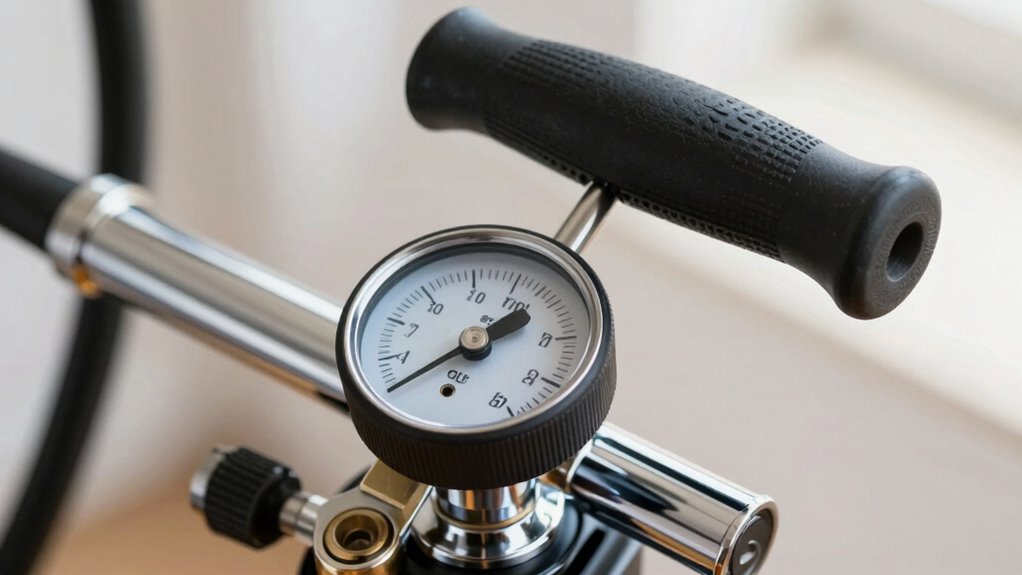

You’ll notice some floor pumps feel more accurate because they use high-quality valve mechanisms that seal tightly and allow steady airflow, reducing leaks and guesswork. Precise gauge calibration also plays a key role, ensuring your pressure readings are trustworthy even over time. Thoughtful design and good construction minimize measurement errors and make inflation smoother. If you keep exploring, you’ll discover ways to choose the most reliable pumps and keep them performing their best.

Get sports gear delivered free — and shop member deals
- Fast, free delivery on millions of items
- Access to Prime Big Deal Days deals on October 6–7
- Prime Video, Amazon Music and more included
Key Takeaways
- High-quality valves ensure airtight seals, preventing leaks and providing consistent airflow during inflation.
- Well-calibrated gauges accurately reflect true tire pressure, enhancing measurement reliability.
- Superior pump design minimizes leaks and measurement discrepancies, leading to more precise readings.
- Regular maintenance and calibration maintain gauge accuracy and overall pump performance.
- Better construction quality of valves and gauges reduces measurement errors and improves user confidence.
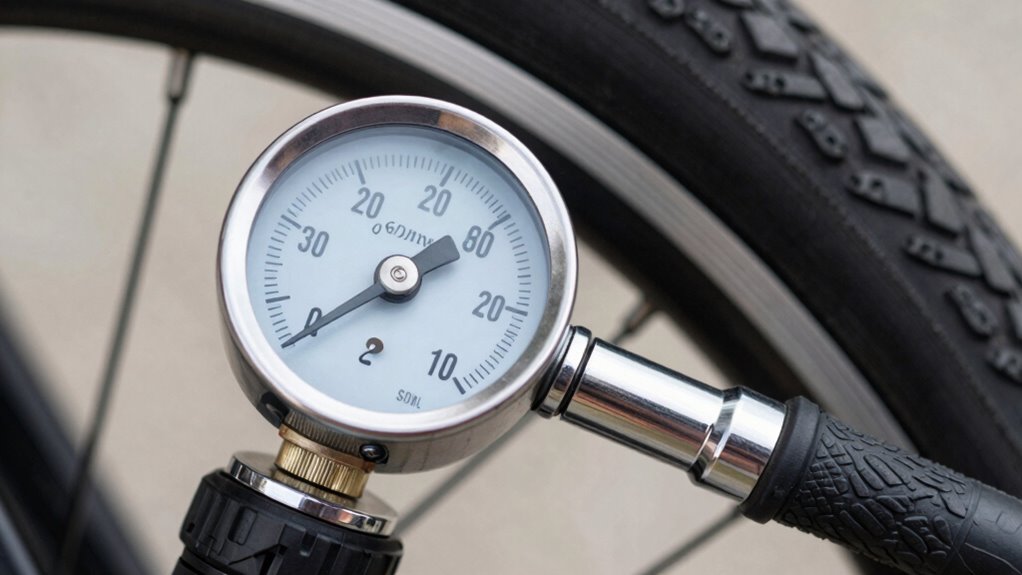
Have you ever noticed that some floor pumps give you a more precise reading than others? It’s something that can make a real difference, especially if you care about getting your tires just right. The secret often lies in the design of the valve mechanisms and how well the gauge is calibrated. When these components work smoothly and accurately, you’re more likely to trust the readings you see, making your inflation process quicker and more reliable. Additionally, the quality of valve mechanisms plays a crucial role in maintaining consistent airflow and preventing leaks. Valve mechanisms are critical because they control how air flows into your tire. High-quality pumps use advanced valve systems that seal tightly around the valve stem of your tire, preventing air leaks and ensuring consistent pressure transfer. Inexpensive or poorly designed pumps might have leaky or sluggish valves, which can throw off your pressure reading. When the valve mechanism is efficient, you get a stable, steady flow of air, and your gauge can provide a more accurate reflection of the actual pressure. This means you won’t overinflate or underinflate, helping extend the lifespan of your tires and improving your riding experience. A well-designed valve system also minimizes the need for re-inflation, saving time and effort during each use. Proper gauge calibration also relies on maintaining the accuracy of measurement, which can be affected by environmental factors or wear over time. Regular maintenance and calibration of your pump can help preserve its accuracy and ensure consistent performance.
As an affiliate, we earn on qualifying purchases.
Frequently Asked Questions
Do Digital Gauges Provide More Accuracy Than Analog Ones?
Digital gauges generally offer more accuracy than analog ones because they’re easier to read and less prone to user error. You’ll find that digital gauges maintain their calibration better over time, guaranteeing consistent readings. Plus, digital pumps often have better durability because they’re designed with advanced electronics. However, you should still check gauge calibration regularly to ensure accuracy, regardless of whether you choose digital or analog.
How Does Temperature Affect Tire Pressure Readings?
Temperature greatly affects tire pressure readings because of tire expansion and pressure stability. When it’s hot, your tires expand, increasing pressure, which can give false readings. Conversely, cold temperatures cause tire contraction and lower pressure, making your tires seem underinflated. To guarantee accurate readings, check your tire pressure in consistent temperatures, and remember that pressure stability varies with temperature changes, affecting overall safety and performance.
Are Higher-Priced Pumps More Accurate Than Cheaper Models?
Higher-priced pumps tend to be more accurate because they often feature better pump durability and more precise gauge readability. You’ll notice that expensive models are typically built with higher-quality materials, reducing wear over time, and their gauges offer clearer, more consistent readings. Cheaper pumps may work, but their gauges can be less reliable, and their durability might decline faster, affecting your ability to get accurate tire pressures consistently.
Can Pump Calibration Improve Measurement Precision?
Yes, pump calibration can improve measurement precision. By applying calibration techniques, you guarantee your pump provides consistent pressure readings. Regular calibration helps maintain pressure consistency, reducing inaccuracies caused by wear or manufacturing differences. When you calibrate your pump, you’re fine-tuning it for accurate performance, which means more reliable pressure measurements every time. This process enhances your confidence in the pump’s readings, making your inflation tasks more precise and effective.
What Maintenance Is Required for Consistent Accuracy?
You might wonder if maintenance influences your pump’s accuracy. Regularly check and calibrate the gauge to make sure consistent readings. Keep the pump clean and lubricated to extend its longevity, preventing wear that can skew measurements. Tighten any loose parts and inspect for damage. Proper maintenance guarantees your pump remains precise over time, giving you confidence in your tire pressures and overall performance.
Conclusion
Ultimately, a floor pump isn’t just a tool—it’s a trusted compass guiding your ride. When it feels precise, it’s like having a finely tuned instrument, ensuring every ride is balanced and safe. The pump’s accuracy symbolizes your attention to detail and care for your bike’s health. Choose one that feels right, and let it be the steady hand that keeps you on course, turning every journey into a confident adventure.
NFL season / tailgating Picks
team gear
As an affiliate, we earn on qualifying purchases.