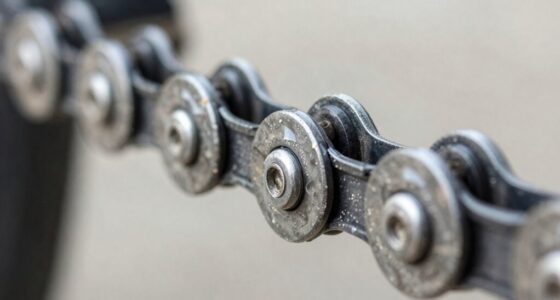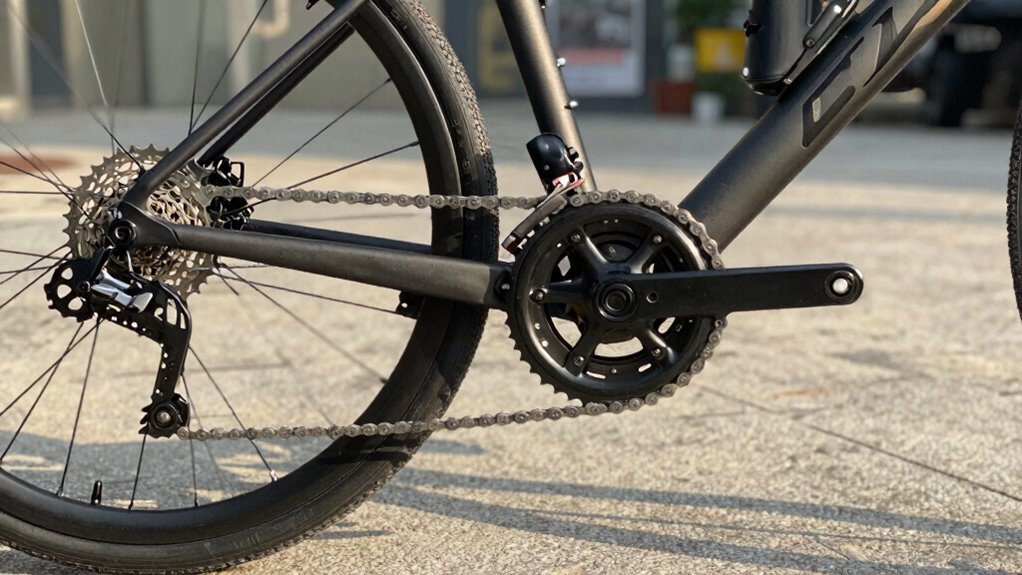

For daily commuting, belt drives are quieter, require less maintenance, and don’t need oiling, making them ideal for city riding. Chains are more durable, handle tougher conditions, and are easier to repair in the field, but they need regular lubrication and can be noisier. While belts cost more to replace, chains are budget-friendly and practical for demanding use. To understand which option suits your routine best, keep exploring the details ahead.

Get sports gear delivered free — and shop member deals
- Fast, free delivery on millions of items
- Access to Prime Big Deal Days deals on October 6–7
- Prime Video, Amazon Music and more included
Key Takeaways
- Belt drives are quieter and require less maintenance, ideal for a smooth, stress-free daily commute.
- Chains are more durable and handle rough conditions, making them suitable for demanding daily riding.
- Belt replacement is more costly and complex, while chains are easier and cheaper to repair or replace on the go.
- Chains need regular lubrication to prevent rust and noise, increasing maintenance effort for daily use.
- Belt drives offer a cleaner, low-maintenance option but may be less practical for tough terrains or long distances.
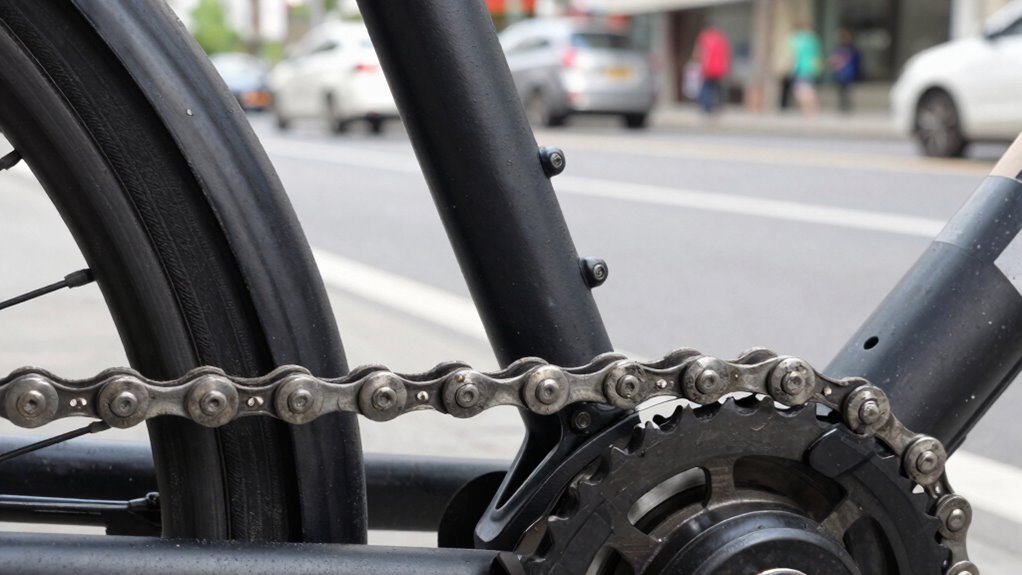
When choosing between a belt drive and a chain for your daily commuter bike, understanding their differences can help you make the best decision. Both options have unique advantages and drawbacks, particularly when it comes to lubrication requirements and noise levels. A belt drive requires minimal maintenance, as it’s designed to be nearly maintenance-free. Unlike chains, which need regular lubrication to prevent rust and ensure smooth operation, belts don’t need any oiling. This means you won’t have to carry around chain lube or worry about dirt and grime building up from frequent oiling. The absence of lubrication also means you won’t have to worry about over-lubricating or under-lubricating, both of which can lead to increased wear or noise. Additionally, lubrication requirements are a key factor that influences the overall maintenance effort for each drive type. Noise levels are another key factor to weigh. Belt drives tend to operate much more quietly than chains. You’ll notice a smoother, quieter ride because belts don’t produce the same rattling or clanking sounds associated with chains, especially when they’re not properly lubricated. This quiet operation makes belt drives particularly appealing for urban commuters who want a discreet, peaceful ride through busy streets or quiet neighborhoods. Chains, on the other hand, can be noisier, especially if they’re not regularly maintained. Over time, a well-lubricated chain can operate quietly, but neglecting lubrication can lead to squeaking, grinding, and increased noise that can be disruptive during your daily commute. Furthermore, durability and practicality are important considerations, as chains are generally more durable and can handle higher power outputs, making them suitable for bikes with multiple gears or those that need to withstand rough conditions. They’re also easier to repair in the field, with replacement links readily available. Belts, although less prone to rust and corrosion, are more delicate when it comes to repairs—if the belt breaks, it often requires replacing the entire belt rather than fixing a single link. Additionally, repairability can be a concern for riders who frequently encounter tough terrain or long-distance rides. In many cases, the cost of replacement for belts can also be higher than that of chains, which is an important factor for budget-conscious commuters. Proper installation and tensioning are also crucial, as incorrect setup can affect performance and longevity for either drive type.
As an affiliate, we earn on qualifying purchases.
Frequently Asked Questions
Which Drive System Is More Environmentally Friendly?
A belt drive is more eco-friendly because it uses eco-friendly materials like rubber and synthetic fibers, which have a lower environmental impact. It also produces a smaller carbon footprint since it requires less maintenance and replacement over time. Chains, on the other hand, often need more frequent lubrication and replacement, increasing resource use and emissions. So, for daily commuting, a belt drive helps you reduce your environmental impact.
How Do Maintenance Costs Compare Over the Bike’s Lifespan?
You might think belt drives are more cost-effective over time, and that’s often true. They require less lubrication, so maintenance costs for lubrication are lower. Plus, belt drives experience less wear and tear, leading to a longer lifespan with fewer replacements. Chains, on the other hand, need regular lubrication and tend to wear out faster, increasing maintenance costs over the bike’s lifespan. Overall, belt drives tend to be cheaper long-term.
Are There Specific Weather Conditions That Favor One System?
Weather impact definitely influences your choice between belt drive and chain. Belt drives excel in moisture resistance, handling rain and humidity better without rusting or slipping. Chains, on the other hand, can suffer from corrosion if exposed to wet conditions without proper maintenance. If you commute through unpredictable weather, a belt drive offers a more reliable, low-maintenance option, especially in wet or damp environments.
Can Belt or Chain Drives Be Easily Repaired by Beginners?
You can repair both belt and chain drives as a beginner, but each has different challenges. Belt drives require minimal lubrication and are generally easier to maintain, making repairs simpler. Chains demand regular lubrication and can be more complex to fix, especially for beginners. With patience and basic tools, you can handle minor repairs, but more complex issues might need professional help. Focus on safety and follow tutorials for a smoother experience.
How Do Noise Levels Differ Between Belt and Chain Drives?
You’ll notice that belt drives tend to be quieter than chain drives, mainly because they don’t require lubrication, reducing noise from friction. Chain drives, on the other hand, generate more noise due to increased wear and tear and the need for regular lubrication. Over time, a chain’s noise level can increase if not properly maintained, while belts stay relatively quiet, making them ideal if noise is a priority.
Conclusion
Choosing between a belt drive and a chain for your daily commute is like picking between a smooth ride and a rugged adventure. I once swapped my noisy chain for a belt, and suddenly, my mornings felt effortless—like gliding on air. According to industry data, belts require less maintenance and last longer, making your daily trek smoother and more reliable. So, whether you value convenience or durability, your choice shapes your ride’s story—make it a good one.
NFL season / tailgating Picks
team gear
As an affiliate, we earn on qualifying purchases.