
When choosing a light, focus on lumens to guarantee sufficient brightness for your needs, whether for close-up tasks or long-distance viewing. Pick a beam pattern that matches your activity—focused beams for spotting far off or wide beams for broad illumination. Consider runtime based on your battery capacity and how long you’ll need light. Balancing these factors helps you select the best light, and exploring more details will help you make an even smarter choice.
Key Takeaways
- Lumens indicate the brightness level of a light, affecting visibility and suitability for different tasks.
- Beam patterns, such as focused or wide, determine how light is distributed and impact area coverage.
- Runtime depends on battery capacity, brightness setting, and power source, influencing how long a light can operate.
- Adjustable brightness levels help conserve battery life while maintaining adequate illumination.
- Selecting the right combination of lumens, beam pattern, and runtime ensures optimal performance for specific needs.
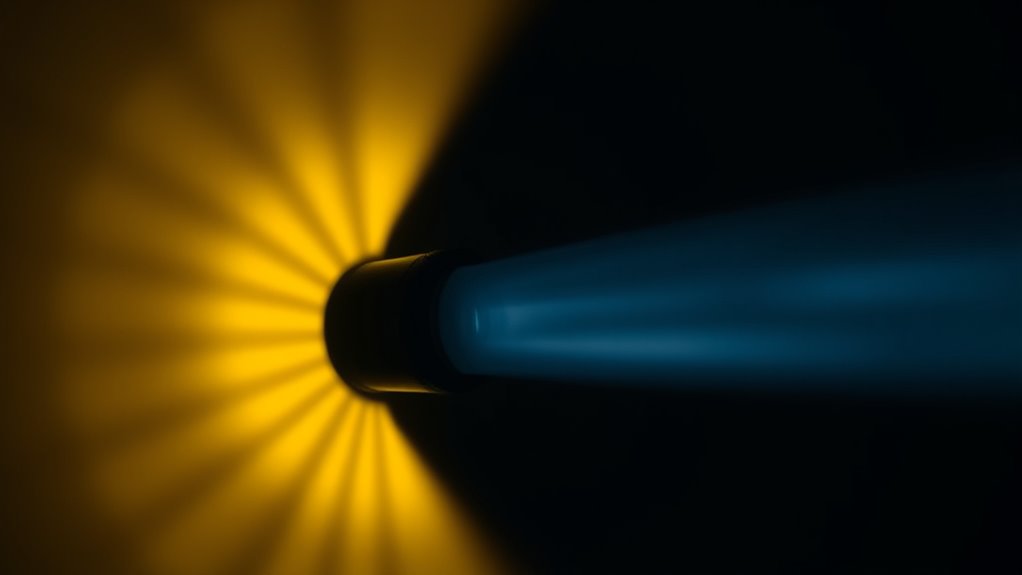
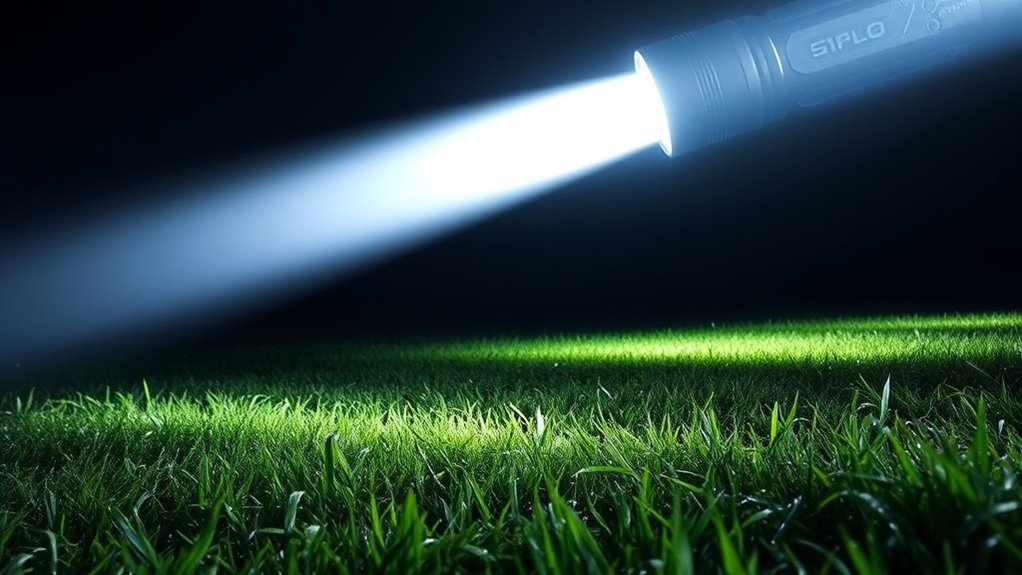
Have you ever stopped to think about how lights shape the world around us? From the glow of your phone screen to the headlights illuminating the road ahead, lighting influences how we see and interact with our environment. When choosing a light, understanding the different battery types is vital. Batteries power your device, and their capacity, rechargeability, and size can greatly impact performance. Common types include lithium-ion batteries, known for their high energy density and long lifespan, making them ideal for portable lights. Nickel-metal hydride (NiMH) batteries offer a good balance of capacity and affordability, while alkaline batteries are inexpensive but may not last as long under heavy use. Your choice depends on how long you need the light to operate and whether you prefer rechargeable options. Additionally, waterproof ratings play an essential role, especially if you plan to use your light outdoors or in wet conditions. These ratings, given by standards like IP (Ingress Protection), indicate how well a device resists water and dust. For instance, an IPX4 rating means the light can handle splashes from any direction, while an IPX7 rating indicates it can be submerged in water up to one meter for 30 minutes without damage. Knowing these ratings helps you select a light suitable for your environment, guaranteeing durability and reliability when it counts most. Moreover, understanding light distribution patterns can help you choose the right illumination for specific tasks. Alongside battery types and waterproof ratings, beam patterns and lumens determine how effectively your light performs. Beam patterns, whether focused or wide, influence how you see your surroundings. A narrow beam provides long-distance illumination, perfect for spotting far-off objects, while a flood beam covers a broad area, ideal for close-up tasks or camping. Lumens measure the brightness, with higher lumens offering more intense light. Balancing lumens and runtime is key; a brighter light often consumes more power, reducing how long it can run on a single charge. Many modern lights feature adjustable brightness levels, helping you conserve battery life when full brightness isn’t necessary. Runtime varies widely depending on the power source, brightness settings, and battery capacity. Some rechargeable models can run for hours on a single charge, while others rely on replaceable batteries that you swap out as needed. When selecting a light, consider how you’ll use it, the environment you’ll be in, and how long you need it to last. By paying attention to battery types, waterproof ratings, beam patterns, and lumens, you can find a light that meets your needs precisely. Whether it’s for outdoor adventures, work, or everyday use, understanding these factors guarantees you’re prepared with the right illumination to keep you safe and efficient in any situation.
Frequently Asked Questions
How Do I Choose the Best Lumens for My Needs?
You should choose the right lumens based on your activity and environment. If you need a bright light for outdoor adventures, go for higher lumens, but consider the light color for clarity. For indoor use or close-up tasks, lower lumens work well. Also, think about your power source—batteries or rechargeable—since higher lumens often drain power faster. Match the lumens to your needs for ideal performance and comfort.
What Are the Differences Between Flood and Spot Beam Patterns?
Flood beams have a wide beam angle, providing broad light dispersion ideal for illuminating large areas or close-up tasks. Spot beams feature a narrow beam angle, focusing light into a tight spot for long-distance visibility. Your choice depends on whether you need widespread coverage or concentrated illumination. Consider the beam pattern’s beam angle and light dispersion to match your activity, ensuring you get the right balance of visibility and focus.
How Does Battery Type Affect Flashlight Runtime?
Think of your flashlight like a trusty steed—its battery chemistry and power capacity determine how long it can run. Modern lithium-ion batteries offer high energy density, providing longer runtime compared to older NiMH or alkaline options. A battery with greater capacity supplies more power, meaning your flashlight stays lit longer. So, choosing the right battery type directly impacts how long your light will shine in the dark, making your adventures more reliable.
Can I Extend My Flashlight’s Runtime With External Batteries?
Yes, you can extend your flashlight’s runtime with external batteries, provided it has external battery compatibility or power bank integration. Check if your flashlight supports connecting to larger power sources, like portable power banks or external battery packs. By doing so, you can substantially increase your flashlight’s operating time. Just make sure the connection is secure and compatible to avoid damaging your device or reducing its performance.
Are There Eco-Friendly or Rechargeable Lighting Options Available?
Yes, you can find eco-friendly lighting options like solar-powered lights and rechargeable LED options. Solar lights harness sunlight, reducing your energy footprint, while rechargeable LEDs allow you to reuse batteries, cutting waste. Both choices are sustainable and convenient, especially if you’re looking to minimize environmental impact. These options are perfect for outdoor use, emergencies, or everyday illumination, helping you stay eco-conscious without sacrificing brightness or performance.
Conclusion
Now that you know how lumens, beam patterns, and runtime impact your lighting choices, you’re better equipped to pick the perfect light for any situation. Did you know that LED flashlights can last up to 50% longer than traditional ones? This means you’ll get more brightness and battery life in one device. So, next time you’re shopping for a light, remember these stats and enjoy reliable, efficient illumination whenever you need it most.