When choosing bikepacking frame geometry, focus on how it affects handling, comfort, and control across different terrains. A longer wheelbase and relaxed angles boost stability when carrying loads or descending rough trails, while more aggressive geometry offers responsiveness for technical sections. Material choice also influences durability and weight, with steel and titanium offering resilience for long adventures. Understanding how geometry and materials work together helps ensure a confident, enjoyable ride—exploring these factors further will give you even better insights.
Key Takeaways
- Frame geometry influences handling, stability, and maneuverability, tailored to riding style and terrain.
- Longer wheelbases and relaxed angles improve load stability and comfort during long rides.
- Material choice (steel, titanium, aluminum, carbon) affects durability, shock absorption, and weight.
- Upright geometries favor comfort for extended touring, while aggressive styles enhance responsiveness and speed.
- Proper geometry and material selection optimize control, resilience, and overall bikepacking experience.

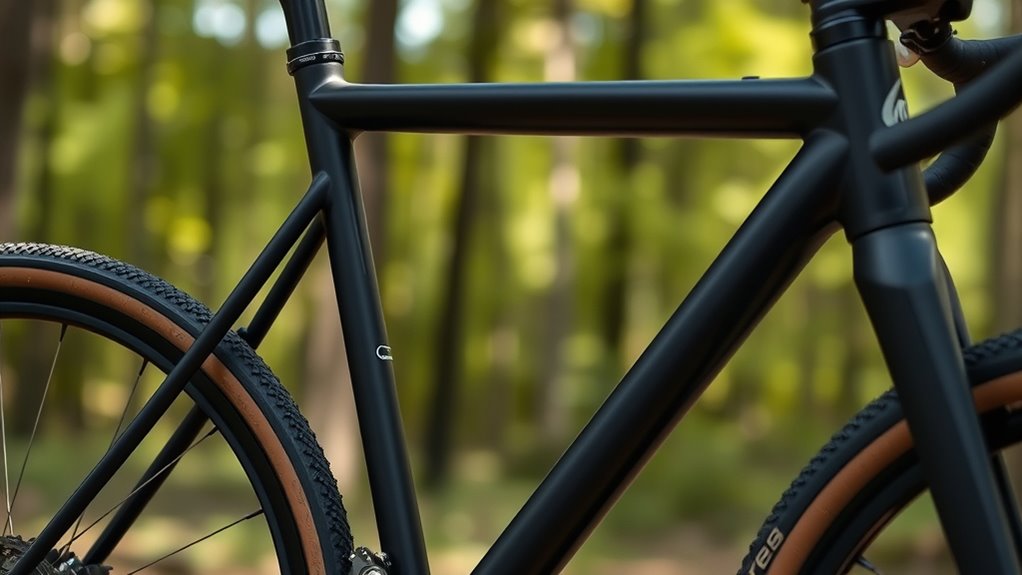
Have you ever wondered how your bike’s frame geometry affects your comfort and control on long adventures? The way your bike is designed influences how you handle rough terrain, how stable you feel, and even how long you can ride without fatigue. When it comes to bikepacking, understanding these aspects becomes even more important because you’re often covering diverse landscapes and carrying gear that adds weight and changes your bike’s dynamics. One key factor to consider is bikepacking frame durability, which depends heavily on your choice of frame material. Materials like aluminum, steel, titanium, and carbon fiber each offer different benefits and drawbacks regarding strength, weight, and resilience. For example, steel frames are known for their toughness and ability to absorb shocks, making them durable over rough trails and long distances. Titanium also offers excellent durability with a lighter weight, ideal for bikepackers who want a balance of strength and comfort. On the other hand, aluminum and carbon fiber can be lighter but may sacrifice some resilience, especially if you’re pushing your bike through challenging terrain. Your choice of frame material impacts not just durability but also how your bike responds to the stresses of off-road riding, influencing your overall control and confidence. Additionally, understanding how AI security measures and safety protocols can be integrated into modern bike technologies might help improve rider safety and bike tracking systems. Frame geometry is equally vital because it determines your riding position, weight distribution, and maneuverability. A longer wheelbase and relaxed angles typically provide better stability for heavy loads and high-speed descents, ideal for long-distance adventures where comfort and control matter most. Conversely, a more aggressive, race-inspired geometry might feel lively and responsive but can be less forgiving over rough terrain or when heavily loaded. When selecting your frame geometry, think about how you’ll be riding—whether you prefer a more upright position for comfort or a more aggressive stance for speed. The right geometry ensures you’re comfortable during extended hours and can handle technical sections without feeling overwhelmed. Combining this with a suitable frame material ensures your bike remains durable and reliable through all conditions, whether you’re crossing rocky streams or climbing steep grades. Ultimately, your choice of frame geometry and material shapes your entire bikepacking experience. It affects how your bike handles, how much wear and tear it endures, and how comfortable you feel over hours or days of riding. By thoughtfully matching your bike’s geometry to your riding style and selecting a durable frame material, you’re setting yourself up for smoother, more enjoyable adventures. This combination ensures your bike stays resilient against the elements and rough trails, giving you the confidence to go farther and explore more.
Frequently Asked Questions
How Does Frame Geometry Impact Bikepacking Comfort?
Frame geometry directly affects your bikepacking comfort by influencing your riding posture and handling. A relaxed geometry with a longer wheelbase offers stability and reduces fatigue, especially on rough terrain. The frame material also plays a role, with lighter options like aluminum or carbon providing smooth rides. Larger wheel sizes absorb shocks better, enhancing comfort, while smaller wheels offer agility. Choose geometry that matches your terrain and riding style for ideal comfort.
What Is the Ideal Head Tube Angle for Bikepacking?
You’ll find that a head tube angle around 68-70 degrees strikes a sweet spot, blending stability with a touch of nimbleness. This angle enhances aero efficiency, helping you glide smoothly over varied terrains, while also boosting aesthetic appeal with a sleek, modern look. It’s just enough to keep you confident on rough trails without sacrificing comfort, making your bikepacking adventures more enjoyable and visually appealing.
How Does Seat Tube Angle Influence Riding Position?
The seat tube angle directly affects your riding position by influencing saddle height and pedal efficiency. A steeper angle shifts the saddle forward, helping you maintain ideal saddle height for efficient pedaling, especially on long rides. This position keeps your hips aligned, reduces fatigue, and improves power transfer. Adjusting the seat tube angle ensures you stay comfortable and efficient, making your bikepacking experience smoother and more enjoyable.
Can Frame Geometry Affect Bike Handling on Rough Terrain?
Think of your bike as a ship steering through choppy waters; frame geometry is your steering wheel. It directly affects handling on rough terrain by enhancing frame stability and optimizing weight distribution. A well-designed geometry keeps you steady amidst rocks and roots, helping you respond swiftly to obstacles. When you choose the right frame, you gain better control, confidence, and comfort, turning those gnarly trails into your personal adventure playground.
How Do Different Geometries Suit Various Bikepacking Trip Durations?
You should choose a geometry that matches your trip duration; longer trips benefit from more relaxed angles for comfort, while shorter rides demand nimbleness. Frame material influences ride quality and weight, and tube length impacts handling and fit. For extended journeys, opt for a geometry with longer tubes and a comfortable stance, while shorter trips might favor a more aggressive setup. Adjust your frame based on trip length and terrain to optimize your experience.
Conclusion
So, get your frame geometry right, and you’re not just riding a bike—you’re releasing a beast that can conquer mountains, crush miles, and turn every trail into your personal playground. Your bike becomes an extension of your will, a powerhouse that defies limits. Neglect these details, and you might as well be pushing a bidget. Master your geometry, and you’ll forge a legend on wheels—an unstoppable force roaring through every adventure!