
Proper chain lubrication acts as a protective film that reduces friction by minimizing metal-to-metal contact, which in turn decreases heat and wear during operation. It prevents dirt and moisture from causing corrosion and abrasive damage, extending your chain’s lifespan. Using the right lubricant and applying it correctly guarantee smooth performance and less component degradation. If you’re curious about how different lubricants influence wear and friction, keep exploring for more detailed insights.
Key Takeaways
- Lubricants form a film that reduces direct metal contact, decreasing friction and wear between chain components.
- Proper lubrication minimizes heat generated by friction, preventing metal fatigue and deformation.
- Thinner lubricants penetrate inner links efficiently, reducing abrasive wear caused by dirt and grit.
- Consistent application maintains a protective barrier against dirt, moisture, and corrosion, prolonging chain life.
- Reduced friction from effective lubrication enhances chain efficiency and prevents premature failure.

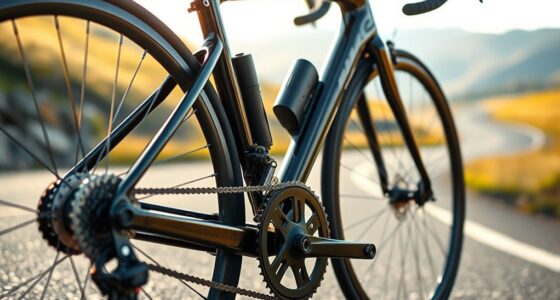
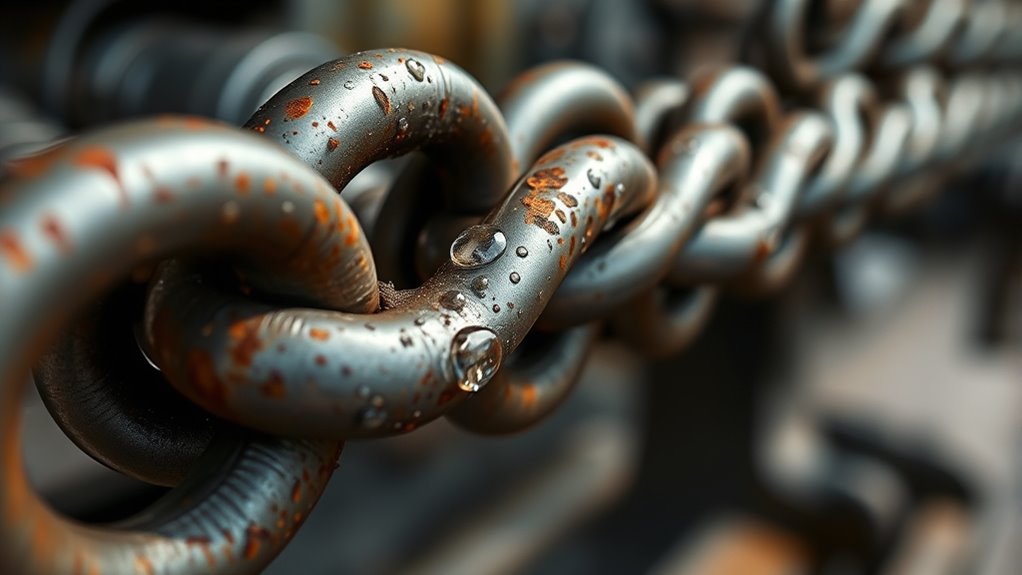
Understanding how to properly lubricate chains is vital for maintaining their performance and longevity. The right lubrication minimizes friction, reduces wear, and keeps your chain running smoothly over time. When choosing lubricant types, you have several options, each suited for different conditions and riding styles. For instance, lightweight oils penetrate quickly and work well in dry conditions, while thicker greases or wax-based lubricants provide a protective film in wet environments. Selecting the correct lubricant type is vital because it directly impacts wear reduction. A good lubricant forms a barrier that prevents dirt and moisture from reaching the metal surfaces, which would otherwise accelerate wear and cause premature chain failure. Applying the right lubricant consistently ensures that the moving parts stay well-lubricated, reducing metal-to-metal contact that leads to wear. Additionally, understanding the lubrication process helps riders choose the most effective products and techniques for their specific needs. You should also consider how often you lubricate your chain. Regular maintenance—cleaning and applying fresh lube—helps keep friction low and wear minimal. When you apply lubricant, make sure to target the inner links and rollers, as these are the parts most affected by friction. Proper application means using just enough to coat the entire chain without excess, which can attract dirt and debris. Excess lubrication might seem beneficial, but it can actually trap grit and accelerate abrasive wear. Conversely, under-lubrication results in increased friction and faster component degradation. The goal is a thin, even film that stays in place during rides, protecting the chain from the elements and reducing wear. Friction is the root cause of wear in chains, and lubrication acts as a buffer, reducing the metal-on-metal contact that causes parts to grind down. Without proper lubrication, chains can develop rust, stiff links, and eventual failure. The science behind wear reduction involves understanding how different lubricants create a film that minimizes direct contact between moving parts. This film reduces the heat generated by friction, which can lead to metal fatigue and deformation over time. When you maintain your chain with appropriate lubricants, you’re effectively prolonging its lifespan and ensuring it functions efficiently.
Frequently Asked Questions
How Does Ambient Temperature Affect Chain Lubrication Effectiveness?
Ambient temperature critically impacts chain lubrication effectiveness by causing temperature fluctuations that alter lubricant viscosity. When it’s hot, lubricants thin out, reducing their ability to protect against friction and wear. Conversely, in cold conditions, lubricants become thicker, making it harder for them to flow into essential areas. You should choose lubricants suited for your environment and regularly monitor temperature changes to guarantee perfect lubrication and minimal wear.
What Are the Environmental Impacts of Different Chain Lubricants?
You should consider that biodegradable additives make chain lubricants more eco-friendly, reducing long-term environmental impact. However, some lubricants release toxic emissions during manufacturing or use, harming air quality. By choosing environmentally conscious options with biodegradable additives, you help minimize pollution and protect ecosystems. Always check product labels for eco-friendly certifications, and opt for lubricants that prioritize sustainability to lessen your environmental footprint.
How Often Should Chain Lubrication Be Performed for Optimal Wear Resistance?
Think of your chain as a dancer on stage—keeping it well-lubricated guarantees it moves smoothly and lasts longer. You should perform chain maintenance and apply lubrication at regular intervals, ideally every 200-300 miles or after riding in wet, dirty conditions. Stick to these lubrication intervals, and your chain will resist wear better, performing silently and efficiently, ready to take on many more miles with grace.
Can Improper Lubrication Lead to Chain Failure?
Yes, improper lubrication can lead to chain failure. When you neglect proper lubrication, lubrication failure occurs, causing increased friction and wear. Over time, this accelerates chain fatigue, weakening the links and sprockets. You might notice sticking or skipping, but if ignored, the chain can break or fail unexpectedly. Regular, correct lubrication is essential to prevent lubrication failure and extend your chain’s lifespan, ensuring safe and smooth operation.
Are There Eco-Friendly Lubricants Suitable for High-Performance Chains?
Did you know that over 60% of lubricant products contain harmful chemicals? Luckily, eco-friendly lubricants and biodegradable options are available for high-performance chains. These alternatives reduce environmental impact while maintaining ideal performance. By choosing eco-friendly lubricants, you protect both your equipment and the planet. You’ll find many high-quality options designed specifically for demanding conditions, ensuring your chain stays protected without compromising your commitment to sustainability.
Conclusion
Understanding chain lubrication is vital for reducing friction and wear, ultimately extending your chain’s lifespan. Did you know that proper lubrication can decrease wear rates by up to 50%? By applying the right lubricant at the right intervals, you guarantee smoother operation and less downtime. So, keep your chain well-lubricated, and you’ll enjoy better performance and longer-lasting equipment. Remember, a little maintenance goes a long way in keeping your chain running efficiently.