Choosing the right clipless pedal float is key to keeping your knees healthy and comfortable. A proper float allows your ankles to move naturally, reducing stress on your knees and hips during long rides. If you have limited ankle mobility, a smaller float may be best, while more flexible riders can benefit from greater freedom. Correct cleat alignment supports your biomechanics and prevents injury. Keep exploring to learn how to customize your pedal setup for maximum comfort and safety.
Key Takeaways
- Appropriate clipless pedal float allows natural ankle movement, reducing stress on knees and hips during pedaling.
- Excessive float can cause instability, while too little float may restrict joint movement, so adjust based on flexibility.
- Proper cleat alignment ensures float benefits by maintaining natural foot and knee tracking.
- Selecting the right float setting supports smooth pedaling mechanics and injury prevention.
- Personalizing pedal float enhances comfort and safeguards knee health during long rides.

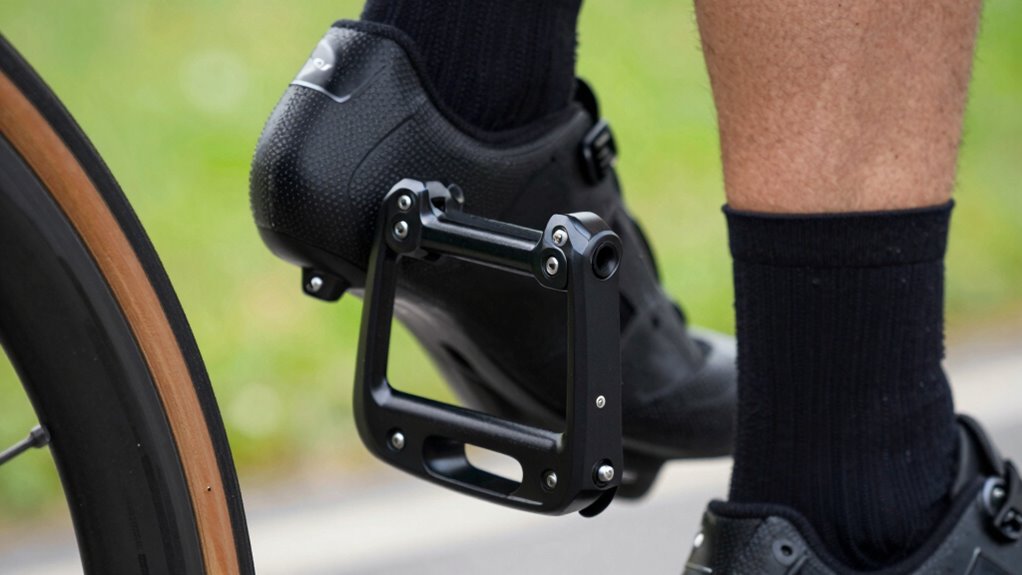
Many cyclists overlook the importance of clipless pedal float, but it plays a essential role in ensuring comfort and preventing injury. Float is the small amount of side-to-side movement your foot can make while clipped into the pedal. This movement allows your ankle mobility to work naturally, reducing stress on your knees and hips. Without enough float, your joints are forced into unnatural positions, increasing the risk of overuse injuries and discomfort during long rides.
Clipless pedal float allows natural ankle movement, reducing joint stress and preventing discomfort on long rides.
Choosing the right float setting can also improve your overall riding efficiency by maintaining proper biomechanics. When you choose the right pedal float, you help maintain proper pedal alignment, which is crucial for smooth pedaling and joint health. Pedal alignment refers to how your foot and knee track during the pedal stroke. If your foot is fixed in a position that doesn’t match your natural movement, it can cause your knee to track inward or outward, leading to pain or injury over time. Ensuring your clipless pedals have adequate float allows your foot to move slightly, aligning your knee properly and promoting a more efficient pedal stroke.
Your ankle mobility is a key factor to weigh when adjusting pedal float. If you have good ankle mobility, you can handle a bit more float, giving your joints more freedom and reducing strain. Conversely, if your ankle mobility is limited, opting for a pedal with less float might be better to prevent excessive movement that could lead to instability or discomfort. Understanding your own flexibility helps you select the pedal float that best supports your riding style and body mechanics.
Proper pedal alignment begins with setting your cleats correctly. Misaligned cleats can negate the benefits of float by forcing your foot into an unnatural position, leading to discomfort regardless of float settings. Take the time to position your cleats so that your foot is aligned with your knee joint and your pedal stroke feels smooth. Adjusting your cleat angles and float settings can help you find a balance between stability and freedom of movement, minimizing undue stress on your joints.
Being aware of pedal float options can help you customize your setup for optimal comfort and injury prevention.
Frequently Asked Questions
Can Adjusting Float Improve Cycling Performance?
Adjusting float can definitely improve your cycling performance by optimizing pedal alignment and enhancing rider comfort. When your float is set correctly, it reduces stress on your knees, allowing you to pedal more efficiently and with less fatigue. Properly adjusted float helps you maintain better alignment, which can prevent injuries and boost overall comfort. This means you can ride longer and stronger, making your cycling experience more enjoyable and effective.
Is Clipless Pedal Float Suitable for Beginners?
Yes, clipless pedal float is suitable for beginners. It helps prevent knee strain and improves comfort, making your first rides smoother. When setting up your clipless pedals, focus on a knee-friendly clipless pedal setup with proper float adjustment. As a beginner, follow cycling tips that emphasize correct pedal alignment and gradual adjustment to find your ideal float, ensuring a more comfortable and efficient cycling experience.
How Often Should I Check My Pedal Float Settings?
You should check your pedal float settings regularly, ideally every few rides or at least once a month, to guarantee proper pedal alignment. During each check, perform a float adjustment if needed to maintain knee-friendly positioning. Frequent inspections help you catch any changes early, preventing discomfort or injury. Remember, maintaining the correct pedal float ensures your knees stay aligned, making your rides safer and more comfortable over time.
Does Pedal Float Affect Pedaling Efficiency?
You might notice that pedal float does affect pedaling efficiency, especially if your knee alignment isn’t ideal. When float is properly set, it allows your knee to move naturally, reducing strain and improving pedal stability. Conversely, if float is too limited or too much, it can hinder your efficiency and cause discomfort. Adjusting your float to match your knee alignment guarantees smoother pedaling and better overall performance.
Are There Different Types of Pedal Float for Various Cycling Disciplines?
Yes, there are different types of clipless pedal types designed for various cycling disciplines, each with unique pedal float mechanisms. For example, road pedals often offer minimal float for efficiency, while mountain biking pedals feature increased float for better maneuverability. Choosing the right pedal float mechanism depends on your riding style, with some models allowing customizable float settings to optimize comfort, reduce knee strain, and enhance overall performance across disciplines.
Conclusion
Choosing the right clipless pedal float is like finding the perfect dance partner—allowing your knees to move freely and naturally. When you set your float correctly, you’re not just riding; you’re dancing effortlessly with your bike, reducing strain and preventing injury. Imagine your joints gliding smoothly through each pedal stroke, as if guided by an invisible hand. With the right float, every ride becomes a graceful, knee-friendly journey you’ll want to take again and again.