
Choosing the right shoe stiffness helps improve your running efficiency and reduces injury risk. Stiffer shoes can boost energy transfer, support faster performance, and reduce fatigue on hard surfaces. But if shoes are too stiff, they might cause discomfort, restrict natural foot motion, and lead to overuse injuries. On the other hand, overly flexible shoes may lack support, increasing strain on your joints. Understanding your terrain and personal needs guarantees proper fit—more insights await to guide your perfect fit.

Get sports gear delivered free — and shop member deals
- Fast, free delivery on millions of items
- Access to Prime Big Deal Days deals on October 6–7
- Prime Video, Amazon Music and more included
Key Takeaways
- Optimal shoe stiffness improves energy transfer and running efficiency but excessive stiffness can restrict natural foot motion.
- Proper stiffness supports injury prevention by balancing stability and flexibility based on terrain and running distance.
- Very flexible shoes may lack support, increasing injury risk; overly stiff shoes may cause discomfort and impair natural gait.
- Tailoring shoe stiffness to individual gait, foot type, and activity enhances comfort, performance, and reduces injury risk.
- The ideal stiffness level varies; testing different options helps runners find what best suits their needs and running conditions.
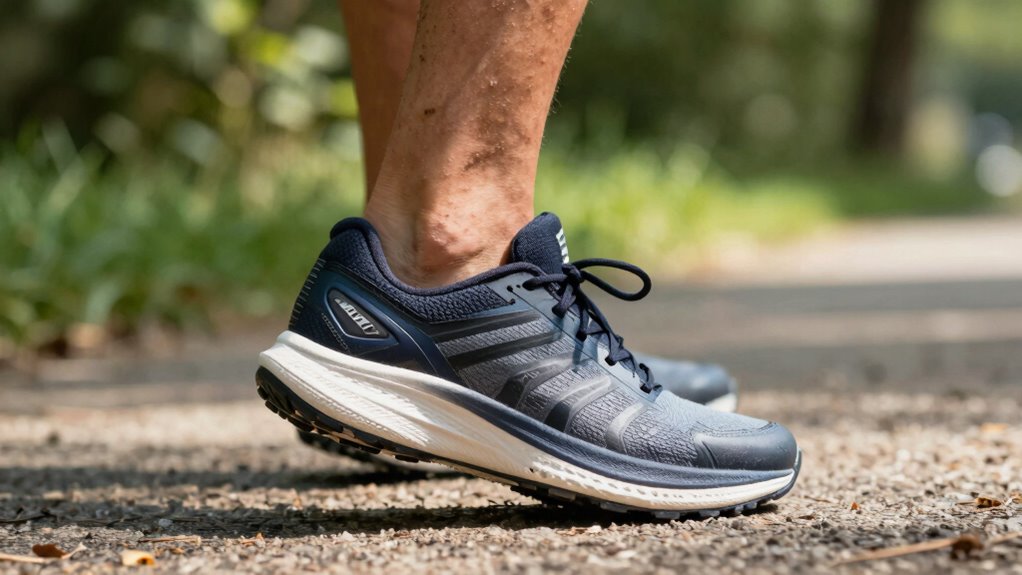
Have you ever wondered how the stiffness of your shoes affects your comfort and performance? It’s a question worth considering, especially if you’re serious about your running or athletic activities. Shoe stiffness plays a crucial role in both running efficiency and injury prevention. When shoes are too stiff, they can provide excellent support and responsiveness, helping you transfer energy more effectively with each stride. This can boost your running efficiency because less energy is lost in the shoe, allowing you to move forward more smoothly and with less fatigue. On the flip side, if your shoes are overly stiff for your foot type or running style, they might restrict natural foot movement, leading to discomfort and even overuse injuries over time.
Conversely, shoes that are too flexible might feel more comfortable initially, but they may lack the necessary support to stabilize your foot during high-impact activities. Without adequate support, your foot might overpronate or supinate, increasing stress on your ankles, knees, and hips. This can compromise injury prevention efforts because your body has to compensate for the lack of stability, which often results in strain or injury. The key is finding a balance where the shoe provides enough stiffness to support your foot during running while still allowing natural motion. For runners with a neutral gait, moderate stiffness often works best, helping maintain proper alignment and reducing the risk of injuries like plantar fasciitis or shin splints.
Your choice of shoe stiffness should also consider your running terrain and distance. For long-distance runs on hard surfaces, a slightly stiffer shoe can absorb impact better and improve your running efficiency by reducing fatigue. On softer trails, more flexible shoes might be preferable, offering better grip and adaptability. If you’re pursuing speed or racing, stiffer shoes may help you conserve energy, but only if they suit your foot and running style. It’s essential to test different stiffness levels and listen to how your body responds. Remember, no single stiffness level works for everyone, so tailoring your footwear to your specific needs is vital for optimal performance and injury prevention.
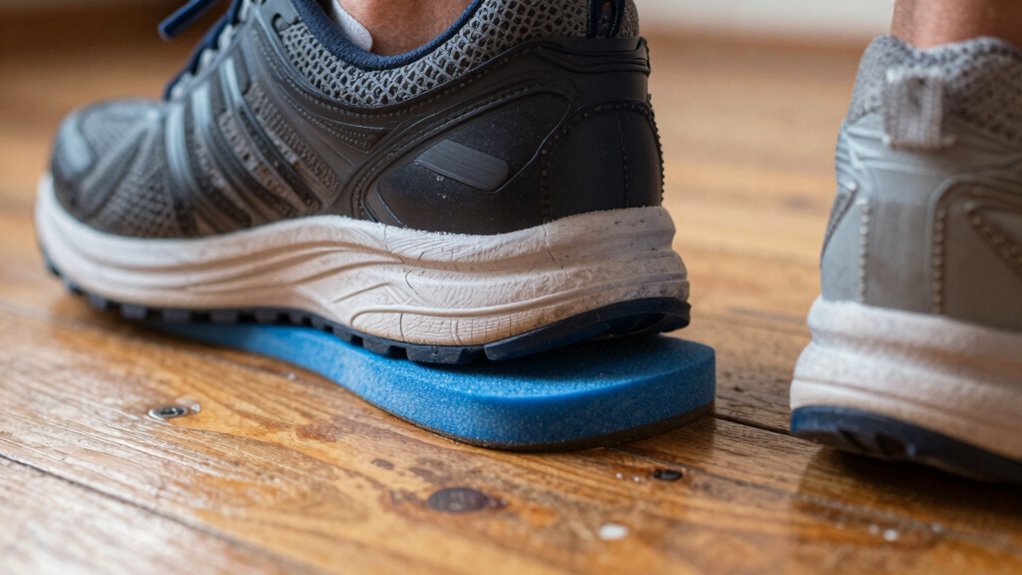
running shoes with adjustable stiffness
As an affiliate, we earn on qualifying purchases.
As an affiliate, we earn on qualifying purchases.
Frequently Asked Questions
How Does Shoe Stiffness Affect Different Running Terrains?
Shoe stiffness impacts your performance across terrains by influencing terrain adaptation and stiffness variability. On smooth roads, stiffer shoes provide stability and energy transfer, while on uneven trails, more flexible shoes allow better adaptation to terrain irregularities. Adjusting stiffness based on terrain helps prevent injury and enhances comfort. So, choose your shoe stiffness wisely to match the terrain you’re running on, optimizing your efficiency and safety.
Can Stiff Shoes Improve Performance for Marathon Runners?
Stiff shoes can improve your marathon performance by enhancing ankle stability and energy return. When you wear stiffer shoes, you may find it easier to maintain proper form and reduce fatigue over long distances. This can translate into better endurance and faster times. However, if shoes are too stiff, they might cause discomfort or restrict movement, so it’s essential to find a balance that supports your running style and needs.
What Materials Are Used to Adjust Shoe Stiffness?
Did you know that carbon fiber plates can increase shoe stiffness by up to 50%? These plates are made from rigid, lightweight carbon fiber composites that boost performance. To adjust shoe stiffness, manufacturers also use materials like thermoplastic polymers and TPU, which balance material flexibility and component durability. By choosing these materials, you get the perfect mix of support and longevity, helping you run more efficiently.
Are There Specific Foot Types That Benefit From Stiff Shoes?
If you have a high arch or limited arch flexibility, stiff shoes can offer the support you need, helping to stabilize your foot and reduce fatigue. They’re ideal if you require extra arch support, especially during high-impact activities. However, if your arches are more flexible or you have flat feet, overly stiff shoes might cause discomfort or restrict natural movement. Choose footwear that balances support with your foot’s unique arch dynamics.
How Does Shoe Stiffness Influence Injury Risk Over Time?
Think of your running gait as a delicate dance—shoe stiffness guides or stumbles it over time. Too stiff, and your joints face extra strain, increasing injury risk, while overly flexible shoes may wear out faster, compromising durability. Over time, improper stiffness can lead to stress fractures or joint pain, especially if your shoes don’t support your gait properly. Choose shoes that balance stiffness and flexibility for lasting injury prevention.
Conclusion
So, remember, choosing the right shoe stiffness depends on your activity and goals. Too stiff, and you might feel like you’re running in armor—think medieval knight, not modern athlete. Too flexible, and you could lose power or stability. Pay attention to how your body feels and adjust accordingly. In the end, finding that perfect balance will help you perform your best without sacrificing comfort. After all, even the most legendary runners knew when to loosen their laces.
NFL season / tailgating Picks
team gear
As an affiliate, we earn on qualifying purchases.