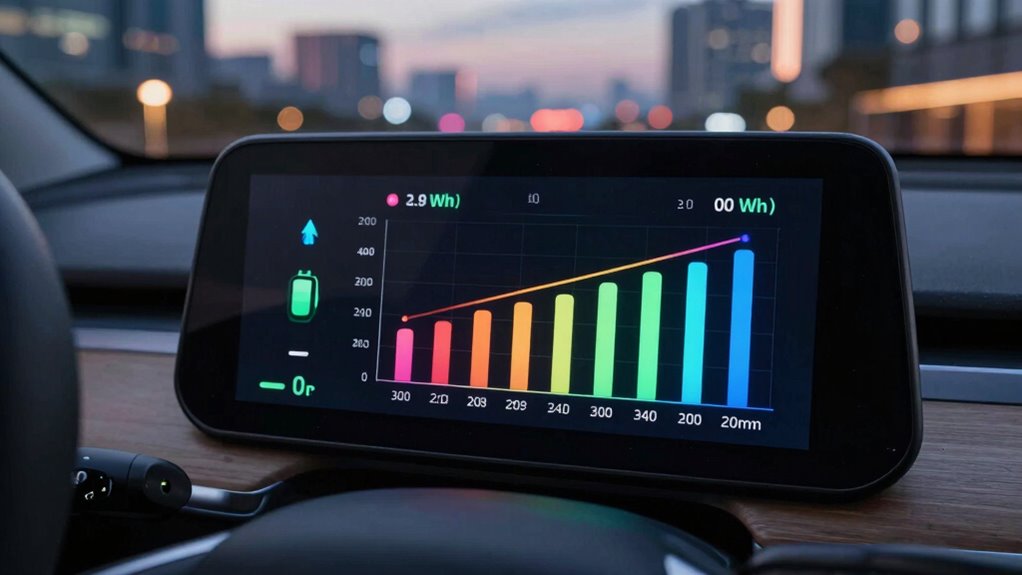

Understanding the relationship between battery watt-hours (Wh) and range helps you avoid overpaying for unnecessary capacity. While a larger Wh generally means more potential distance, many other factors like charging speed and battery lifespan influence real-world performance. Buying a battery based solely on Wh can lead to overspending on capacity you don’t need. By considering these factors, you can make smarter choices and get better value—keep going to discover how to evaluate your options effectively.
Key Takeaways
- Higher Wh capacity suggests more potential range but doesn’t guarantee real-world distance due to charging speed and battery health.
- Fast charging reduces time spent plugged in, effectively increasing usable range regardless of battery size.
- Battery lifespan and degradation impact long-term value, making larger capacity less cost-effective if it degrades faster.
- Battery chemistry influences longevity and performance, affecting how well capacity translates into reliable range over time.
- A balanced approach considers capacity, charging speed, and battery health to avoid overpaying for unnecessary capacity.
Understanding the relationship between battery watt-hours (Wh) and vehicle range is fundamental when evaluating electric cars. When you’re comparing models, it’s tempting to focus solely on the number of watt-hours, but that doesn’t tell the whole story. You need to consider how quickly the battery can charge and how its lifespan might affect your long-term costs. A larger battery with a high Wh rating might seem like a good investment, but if it takes forever to charge or degrades quickly, you could end up paying more in the long run.
A larger battery isn’t always better if charging speed and longevity aren’t considered.
Charging speed plays an indispensable role here. Even if a vehicle has a high Wh capacity, if it can only charge slowly, you’ll spend more time plugged in and less time on the road. Fast charging technology can make a big difference, allowing you to top off the battery in minutes rather than hours. This means you can take advantage of longer trips without long charging stops, effectively extending your range in real-world use. When comparing vehicles, look for models that support high-power charging stations, especially if you frequently take long drives or don’t have access to home charging. The faster you can recharge, the more flexible your range feels, even if the battery capacity isn’t the largest on the market.
Battery lifespan is another essential factor that often gets overlooked. A larger battery with higher Wh might initially offer more range, but if it doesn’t last as long or degrades quickly, you could end up replacing it sooner than expected. This replacement can be costly and diminish the value of your investment. Pay attention to the manufacturer’s claims about battery longevity and warranty coverage. A battery that maintains its capacity over many years can make a smaller Wh capacity more economical because it retains higher range over time. Conversely, a battery that rapidly loses capacity will require earlier replacement, which can negate the initial savings from a larger capacity.
Additionally, understanding how battery chemistry affects longevity can help you make better long-term decisions, as different chemistries have varied degradation rates and maintenance needs.
In essence, understanding how Wh relates to range isn’t just about the size of the battery. It’s about how well the car manages charging and preserves battery health. A balanced approach considers not just the raw watt-hour figure but also the charging speed and expected lifespan of the battery. This way, you avoid overpaying for capacity you might not need or investing in a battery that won’t last as long as you’d like. Ultimately, smart evaluation of these factors ensures you get the most value from your electric vehicle, both now and in the future.
Frequently Asked Questions
How Does Battery Chemistry Affect Wh and Range?
Battery chemistry directly influences your vehicle’s battery capacity and chemical stability, which in turn affects Wh and range. Advanced chemistries like NMC or LFP offer higher energy densities, increasing capacity and driving range. Stable chemistries ensure safety and longevity, helping you get the most out of your battery. When choosing a battery, consider the chemistry because it influences both performance and how much you pay over time.
What Role Does Driving Style Play in Battery Efficiency?
Your driving style considerably impacts battery efficiency. By adopting smooth driving habits and gentle acceleration techniques, you reduce energy consumption and extend your range. Rapid acceleration and hard braking drain more power, decreasing overall efficiency. So, if you want to maximize your vehicle’s range, focus on consistent speeds and avoid aggressive driving. These simple adjustments can make a notable difference in your battery’s performance and longevity.
Can Weight Differences Impact Wh to Range Conversion?
Yes, weight differences can impact your Wh to range conversion. Heavier vehicles generally have more battery weight, which can reduce efficiency because your vehicle needs more energy to move. When comparing different cars, consider battery weight as it influences vehicle efficiency. A lighter battery typically delivers better range for the same watt-hour capacity, helping you avoid overpaying for unnecessary capacity. Keep weight in mind to optimize your vehicle’s efficiency and cost-effectiveness.
How Do Climate Conditions Influence Battery Performance?
Did you know that extreme temperatures can reduce your EV’s range by up to 40%? Climate conditions considerably influence battery performance, mainly due to temperature effects. Cold weather decreases chemical activity, while hot weather risks overheating. Solar efficiency also drops in high temps, further impacting range. To get the most out of your battery, keep it within ideal temperature ranges and consider climate-adaptive charging strategies.
Are There Industry Standards for Measuring Wh and Range?
Yes, industry standards exist for measuring Wh and range, helping you compare EVs accurately. Charging standards like CCS and CHAdeMO specify how batteries are charged and tested, ensuring consistent measurement units. Manufacturers typically report battery capacity in watt-hours (Wh) and range in miles or kilometers. These standards make it easier for you to evaluate and choose the right EV, ensuring you’re not overpaying for features that don’t meet your driving needs.
Conclusion
Now that you understand the math behind battery Wh and range, you’ll avoid paying for more than you need—like buying a sword when a dagger suffices. Remember, bigger isn’t always better; it’s about finding the right fit for your journey. Think of your EV as a trusty steed, not a dragon’s hoard. With this knowledge, you can ride into the future, wallet intact, and avoid the pitfalls of overpaying.