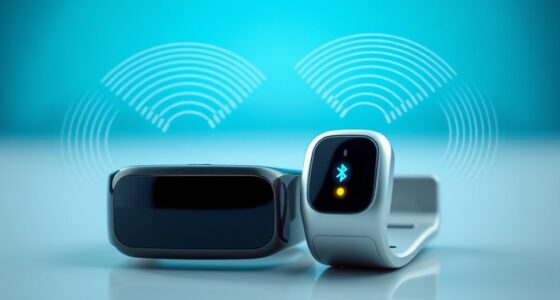
When choosing between chest, arm, or wrist heart rate sensors, consider your activity level and comfort. Chest sensors offer the highest accuracy, especially during intense workouts, but can feel bulky. Arm sensors strike a balance, providing good precision with greater comfort. Wrist devices are lightweight and convenient for daily use but may lose accuracy during high-movement moments. To find the best fit for your needs, explore the details ahead—there’s more to discover.
Key Takeaways
- Chest sensors provide the highest accuracy, especially during high-intensity workouts, due to direct electrical signal detection.
- Wrist sensors are the most convenient and comfortable for daily wear but may have reduced accuracy during intense activities.
- Arm sensors offer a balance of good accuracy and comfort, suitable for vigorous exercise and everyday use.
- Placement and fit significantly influence the accuracy of arm and wrist sensors, while chest sensors rely on proper electrode contact.
- The choice depends on activity level and priority: high precision favors chest sensors, while convenience favors wrist sensors.
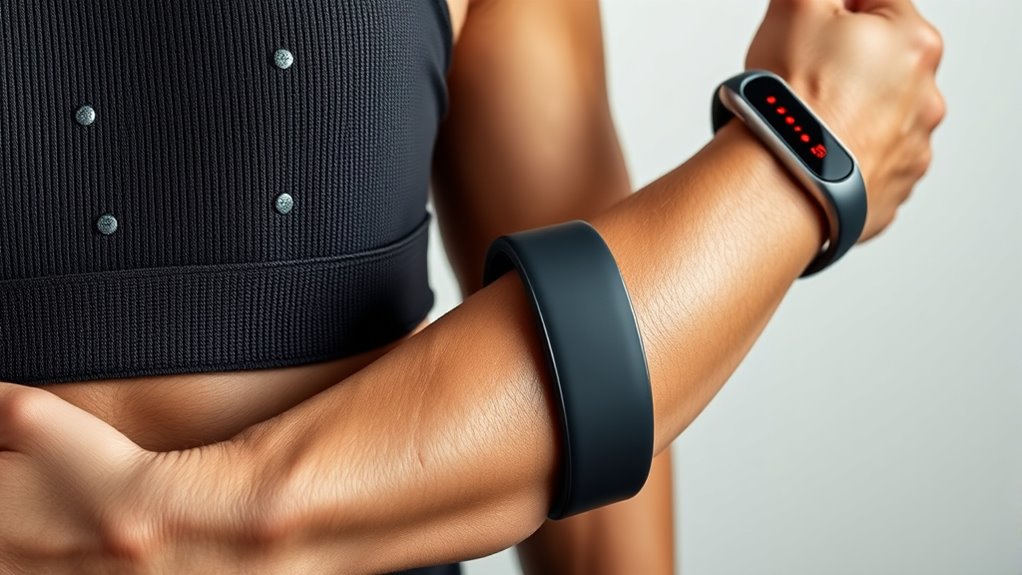
Heart rate sensors have become essential tools for monitoring your cardiovascular health and tracking physical activity. When choosing between chest, arm, or wrist sensors, understanding how each type performs in terms of sensor accuracy and user comfort is vital. Your goal is to find a device that provides reliable data without sacrificing comfort during your workouts or daily routines. Chest sensors, often using electrodes or optical sensors, are known for their high sensor accuracy. They detect electrical signals directly from your heart, making them highly precise, especially during intense exercise. However, their design can sometimes feel intrusive or uncomfortable, particularly during long wear or high-movement activities. Some users find them bulky or restrictive, which can hinder consistent use, especially if you prefer a more discreet device.
Heart rate sensors vary in accuracy and comfort; choose based on your activity level and personal preference.
On the other hand, arm sensors, typically worn on the upper arm or forearm, strike a balance between accuracy and comfort. These sensors often employ optical technology similar to wrist devices but are positioned to reduce interference from movement. They tend to stay securely in place, which helps maintain sensor accuracy during vigorous activity. Many users appreciate their ergonomic design, as they’re less constrictive than chest straps, and they often feel more comfortable for extended periods. Still, their accuracy can vary depending on placement and activity level, so it’s worth trying different models to find one that offers reliable readings without causing discomfort. Additionally, some models incorporate multi-functionality like connectivity with smartphones and health apps to improve data tracking.
Wrist-based sensors, often integrated into fitness trackers and smartwatches, are the most convenient and popular choice for everyday use. They excel in user comfort, as they’re lightweight, unobtrusive, and easy to wear all day. The trade-off, however, is that their sensor accuracy can sometimes lag behind chest or arm sensors, especially during high-intensity workouts or when your wrist isn’t perfectly aligned. Factors such as skin tone, movement, and tightness of the device can influence the readings. Despite this, advancements in optical sensor technology have improved their reliability markedly. For many users, the ease of wearing a wrist sensor outperforms slight compromises in accuracy, making it a practical choice for general fitness tracking and casual monitoring.
Ultimately, selecting the right heart rate sensor depends on your specific needs. If you prioritize the highest sensor accuracy for rigorous training or medical purposes, a chest strap might be your best bet, despite potential discomfort. If you want a comfortable, everyday device that still offers decent accuracy, a wrist or arm sensor could be ideal. Remember, trying different options and considering how each feels during your activities will help you find the perfect balance between sensor accuracy and user comfort.
Frequently Asked Questions
How Do Heart Rate Sensors Perform During High-Impact Activities?
During high-impact activities, your heart rate sensors may face challenges with impact sensor durability, potentially affecting accuracy. Chest straps often provide the most reliable readings thanks to close skin contact, but they can be less comfortable. Wrist and arm sensors are more comfortable and user-friendly, yet impact from vigorous movement can cause readings to fluctuate. Consider your activity intensity and comfort levels when choosing the best sensor for high-impact workouts.
Are There Any Health Risks Associated With Wearing Heart Rate Sensors?
Wearing heart rate sensors generally poses minimal health risks, but you should watch for skin sensitivity or allergic reactions, especially if you have sensitive skin or allergies. Prolonged use or wearing sensors too tightly can cause irritation or discomfort. To reduce risks, choose hypoallergenic materials and make certain of a comfortable fit. If you notice redness, itching, or swelling, remove the device and consult a healthcare professional.
How Long Do Battery Lives Typically Last on Different Sensors?
Sensor battery longevity varies based on sensor type and usage. Chest sensors generally last longer, often 20-30 hours, due to lower sensor power consumption. Wrist and arm sensors typically have shorter battery lives, around 5-15 days, since they require more power for continuous monitoring. To optimize sensor battery longevity, turn off features you don’t need and follow manufacturer recommendations. Regular charging or battery replacement helps ensure consistent performance.
Can Sensors Accurately Measure Heart Rate During Sleep?
Ever wonder if your sensors can truly measure your heart rate during sleep? Yes, they can, but accuracy depends on sensor placement and sleep tracking technology. Chest sensors often provide the most precise readings, while wrist and arm sensors can be less accurate due to movement or poor contact. For reliable sleep monitoring, choose devices designed for consistent sensor contact and quality sleep tracking features.
Do Different Skin Tones Affect Sensor Accuracy?
Different skin tones can affect sensor accuracy because darker skin may absorb more light, impacting readings. To guarantee skin tone accuracy, manufacturers often calibrate sensors to accommodate diverse skin colors. You should check if your device has been tested on various skin tones and offers proper calibration options. This helps improve measurement reliability regardless of your skin tone, giving you more consistent heart rate data during activity or sleep.
Conclusion
When choosing a heart rate sensor, think of it like selecting the right tool for your workout. Chest sensors offer accuracy like a finely tuned instrument, while wrist and arm sensors provide convenience, though sometimes sacrificing precision. Consider your activity level and comfort preferences. Ultimately, finding the right sensor is like finding a trusted partner—helping you stay in sync with your fitness goals. Pick what works best for you and keep pushing forward with confidence.