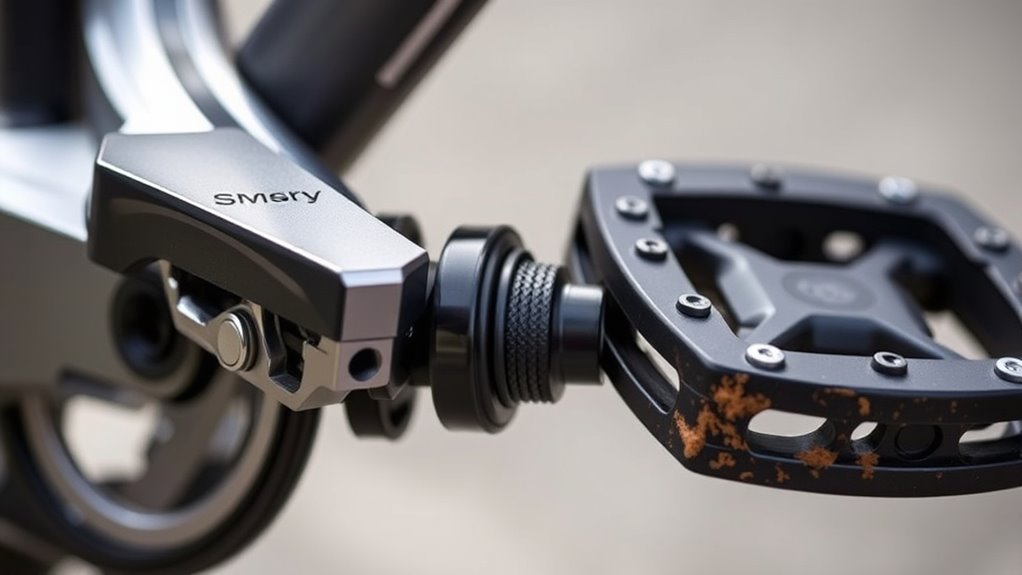

Choosing between clipless and flat pedals depends on your riding style, terrain, and experience. Clipless pedals offer a secure connection to maximize power transfer and control, ideal for racing, long rides, or technical terrain. Flat pedals provide quick foot release, making them great for casual riding, tricks, or beginners. Understanding when to use each can boost your confidence and performance. If you want to explore detailed tips on switching and optimizing your setup, keep exploring further.
Key Takeaways
- Clipless pedals provide a secure connection for efficient power transfer, ideal for long rides and competitive cycling.
- Flat pedals offer easy foot repositioning, suitable for casual riding, technical terrain, or beginner cyclists.
- Use clipless pedals for improved control on challenging trails and high-speed descents; opt for flat pedals for quick stops.
- Pedal choice depends on rider skill, riding style, and terrain; beginners often start with flat pedals before transitioning.
- Regular maintenance and proper adjustment enhance safety and performance for both pedal types.
Understanding the Basics of Pedal Types

Have you ever wondered how different pedal types can affect your cycling experience? Understanding the basics of pedal types starts with knowing how they function and their installation process. Proper pedal installation ensures a secure fit and peak performance, so always follow manufacturer instructions. When it comes to pedal maintenance, regularly check for wear and tighten any loose parts to keep your pedals functioning smoothly. Flat pedals are straightforward, easy to install, and require minimal upkeep—perfect for casual riding. Clipless pedals, on the other hand, need precise installation and periodic maintenance to keep the cleats and mechanisms working correctly. Knowing how to care for and install your pedals will help you avoid common issues and enjoy a safer, more efficient ride. Additionally, staying informed about automation in business can help you understand how technology advancements may influence cycling gear manufacturing and sales in the future. Considering the development of electric bikes, understanding different pedal types can also enhance your riding experience by complementing the bike’s features. Proper pedal choice and maintenance can also improve your overall cycling efficiency and comfort, especially as new innovations continue to emerge in the cycling industry.
Key Features of Clipless Pedals
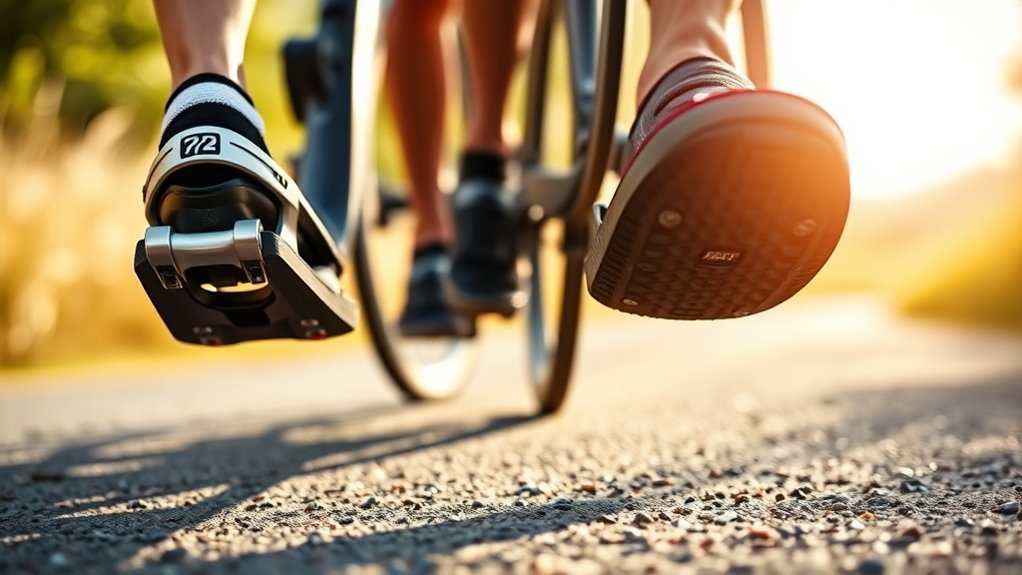
Clipless pedals offer a secure foot connection that keeps your feet in place while riding. You can adjust the release tension to match your comfort level, ensuring safe and confident disengagement. Additionally, advanced neural networks are being integrated into pedal systems to optimize performance and safety features. Plus, they promote efficient power transfer, helping you pedal more effectively. Understanding real couples and their relationships can also inspire trust and confidence in your riding partnerships. Moreover, the popularity of grocery savings strategies highlights the importance of making cost-effective choices, which can extend to selecting the right pedal type based on your riding needs. As bike technology advances, features like suspension upgrades are increasingly incorporated into pedal systems to improve comfort and control during rides. Staying informed about bike component innovations can help you choose the best setup for your cycling experience.
Secure Foot Connection
Ever wondered how riders keep their feet firmly attached during intense cycling sessions? It’s all about the secure foot connection that clipless pedals provide. These pedals lock your shoes in place, ensuring superior foot security and pedal stability. The connection is like an extension of your body, giving you confidence on rough terrains or sprints. Imagine this setup:
| Foot Position | Pedal Engagement | Lock Mechanism |
|---|---|---|
| Centered | Fully clipped in | Spring-loaded |
| Slightly off | Partially engaged | Quick-release |
| Correct fit | Secure lock | Tensioned clip |
| Slipped | Loose connection | Easy to detach |
| Proper clip | Firm attachment | Enhanced control |
This secure connection minimizes foot slippage, improves power transfer, and keeps you in control, especially during high-intensity rides. Additionally, understanding the pedal engagement mechanism can help optimize your riding experience. Using the right clipless pedal setup can also reduce fatigue and increase comfort over long distances. Proper adjustment and maintenance of clipless pedals are essential to ensure consistent performance and safety. Regularly checking your clip mechanism ensures reliable engagement and release during rides. Moreover, maintaining the cleanliness of the locking mechanism can prevent unexpected disengagements and prolong the lifespan of your pedals.
Adjustable Release Tension
Adjustable release tension is a crucial feature that allows you to customize how easily your shoes detach from the pedals. This adjustment helps you find the perfect balance between security and quick release, especially during rides that require frequent pedal engagement or emergency dismounts.
To maintain ideal performance, you should regularly check and perform pedal maintenance, ensuring the tension settings stay consistent.
Many clipless pedals offer options for pedal customization, letting you tighten or loosen the tension to suit your riding style and comfort level.
Properly adjusted release tension reduces the risk of accidental releases or difficulty clipping in, making your rides safer and more enjoyable.
Keep this feature in mind when choosing or maintaining your pedals for a personalized cycling experience.
Efficient Power Transfer
Efficient power transfer is a fundamental benefit of clipless pedals, as they maximize the energy you put into each pedal stroke. With a secure connection, your power goes directly from your legs to the bike, reducing energy loss.
To maintain this efficiency, make certain your pedals are compatible with your gear setup, avoiding any compatibility issues that could diminish performance.
Regular pedal maintenance is essential; clean and lubricate the cleats and mechanisms to keep engagement smooth and secure. Properly maintained pedals also prevent unnecessary wear, ensuring consistent power transfer over time.
Advantages and Uses of Flat Pedals
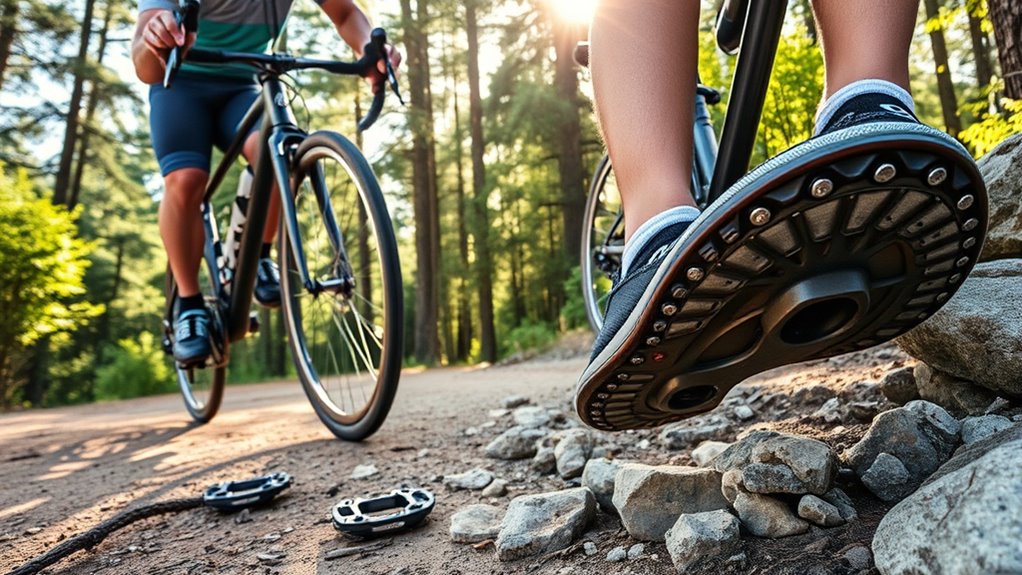
Are flat pedals the right choice for your riding style? They’re ideal if you enjoy trick riding or casual commuting.
Flat pedals give you quick foot placement, making it easier to hop on and off, which is essential for tricks or maneuvering busy streets. They also offer better control, so you can shift your foot instantly if needed. Additionally, they provide a more natural riding position, which can reduce fatigue during longer rides. This comfort can be especially beneficial for long-distance rides where sustained ease matters. Flat pedals also tend to be more accessible for beginners, offering a straightforward setup that doesn’t require mastering clip-in mechanisms.
For beginners or those who prefer a relaxed ride, flat pedals provide comfort without the hassle of clipping in. Plus, they’re versatile and compatible with most shoes, saving you money and hassle.
If you value freedom of movement and quick access for stops or tricks, flat pedals are a smart choice. They’re perfect for riders who prioritize convenience, agility, and fun over maximum efficiency.
Using the right pedal type can enhance your overall riding experience and safety.
Comparing Performance: Clipless vs. Flat
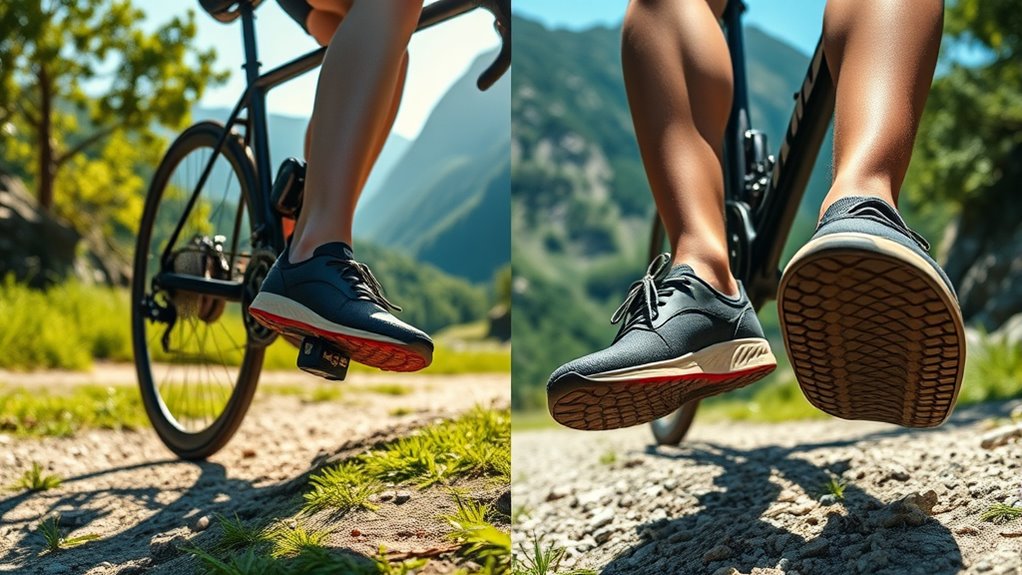
When choosing between clipless and flat pedals, you’ll notice differences in power transfer efficiency, with clipless pedals often providing a more direct connection. Pedal control precision varies too, as clipless systems lock your foot in place, while flats offer more freedom. Ease of engagement is another factor—clipless pedals can take some practice to clip in quickly, unlike flats that are ready to ride immediately. Incorporating pedal engagement techniques into your setup can also enhance comfort and overall riding experience. Additionally, understanding emotional support can be beneficial when adjusting to new gear setups or riding styles.
Power Transfer Efficiency
Comparing power transfer efficiency between clipless and flat pedals reveals notable differences in how effectively each system transmits your pedaling force. Clipless pedals secure your foot firmly, increasing foot stability, which allows you to apply force more directly and consistently. This secure connection minimizes energy loss caused by foot slipping or shifting, making your pedaling more efficient.
Flat pedals, on the other hand, tend to be lighter and often have a larger surface area, but they may compromise foot stability, leading to less efficient force transfer. The pedal weight also plays a role; heavier clipless pedals can slightly reduce efficiency during acceleration, but the secure fit generally outweighs this.
Pedal Control Precision
Pedal control precision considerably influences your ability to maintain balance and execute smooth, accurate movements on your bike. With clipless pedals, your pedal control improves because your feet stay securely in place, giving you more rider confidence during technical maneuvers. Active listening and empathy are essential skills that can enhance your connection and coordination with your bike, leading to better control. Flat pedals, however, offer more freedom of movement, which can be beneficial for quick adjustments or casual riding. Consider these points:
- Clipless pedals provide better pedal control for power transfer.
- Flat pedals allow easier foot repositioning.
- Improving pedal control boosts rider confidence in challenging terrain.
- Your choice affects how precisely you can modulate your pedal force.
Ultimately, your skill level and riding style determine which pedal type enhances your control most effectively.
Ease of Engagement
Ease of involvement is a key factor that influences how quickly and confidently you can clip into your pedals or step onto flat pedals. Clipless pedals often provide a secure connection, making engagement smoother once you’re accustomed to the mechanism. They tend to have durable construction, ensuring pedal durability over time, even with frequent use. Additionally, understanding the tax implications of your choice can help you make more informed decisions about your cycling gear investments. The industry trends also influence the availability and features of different pedal types, helping riders stay updated with the latest innovations. Flat pedals, on the other hand, offer quick, instinctive engagement since you simply step down, which is ideal for beginners or casual rides. The pedal aesthetic also plays a role; clipless pedals typically look sleeker and more streamlined, while flat pedals come in various styles and colors.
Ultimately, your choice depends on your comfort with involvement and the riding context, but both types have their advantages in terms of ease of use.
Choosing the Right Pedal for Your Riding Style
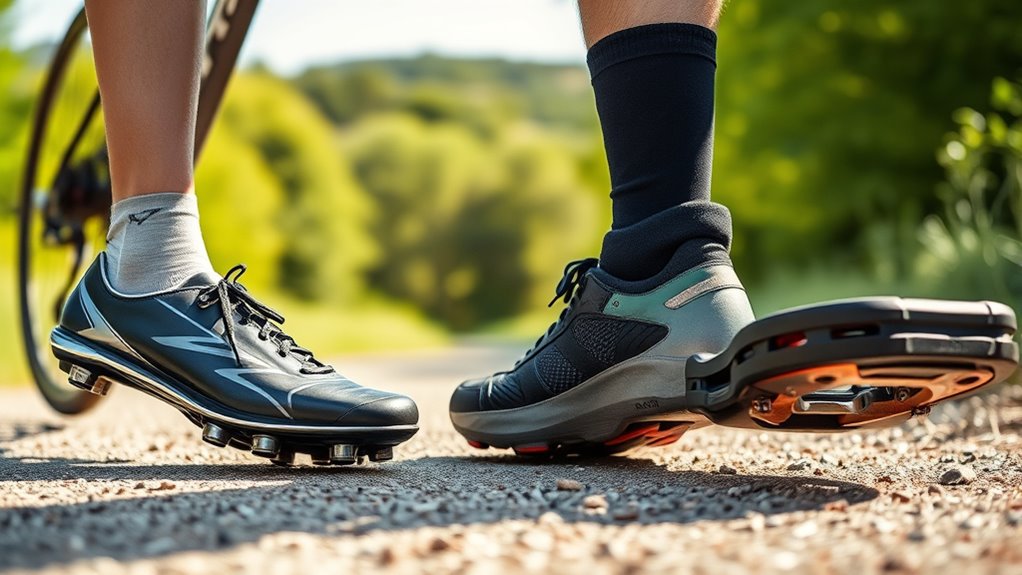
Choosing the right pedal depends heavily on your riding style and the type of terrain you’ll encounter. If you prefer long-distance rides or rough trails, lightweight pedals can reduce fatigue and improve control.
For city commuting or casual rides, durability and ease of pedal maintenance might be more important. Consider these factors:
- Pedal weight: lighter pedals are easier to handle during climbs, but heavier ones often last longer.
- Pedal type: clipless pedals provide better power transfer, flat pedals offer quick foot release.
- Terrain demands: rugged trails benefit from sturdy, rugged pedals; smooth roads call for sleek options.
- Riding frequency: frequent riders might prioritize durability and ease of pedal maintenance over weight.
Matching your pedal choice to your riding style ensures comfort, efficiency, and safety.
Tips for Transitioning Between Pedal Types
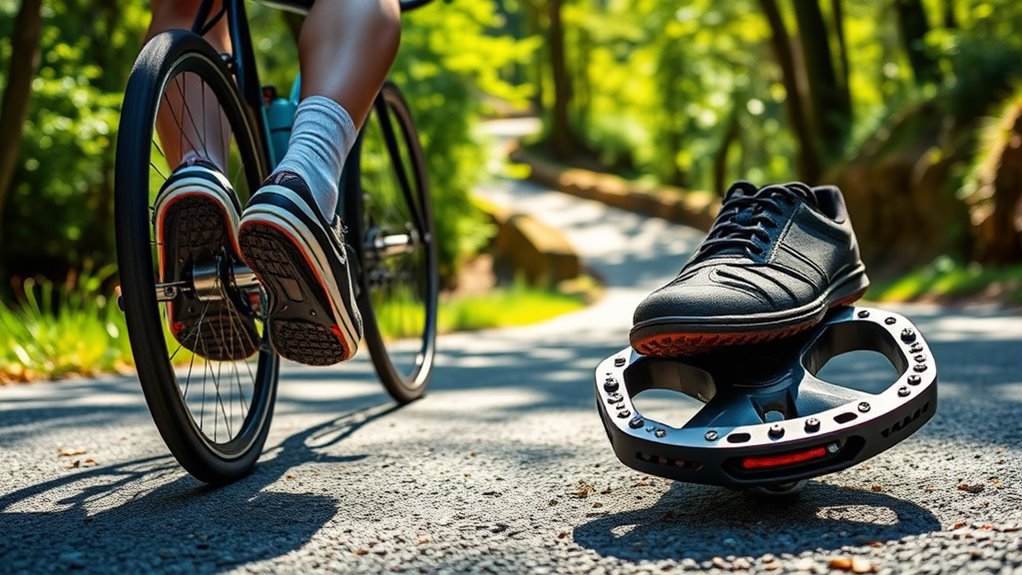
Switching between pedal types can feel intimidating at first, but with some preparation, the changeover becomes smoother and safer. Start by inspecting your pedals and performing regular pedal maintenance to guarantee they function properly.
Practice clipping in and out of clipless pedals in a controlled environment to build confidence. When shifting, consider footwear considerations; you’ll need appropriate shoes for each pedal type, so plan accordingly.
If you’re progressing to clipless pedals, choose shoes with the right cleat compatibility and adjust the tension for easier disengagement. Gradually increase your riding time on the new pedal system to build comfort.
Frequently Asked Questions
Can I Switch Between Clipless and Flat Pedals Easily?
You can switch between clipless and flat pedals, but pedal compatibility and changeover challenges matter.
Make certain your shoes are compatible with your chosen pedals, and get used to the different clip-in and release mechanisms.
Expect some practice to master the transition smoothly. It’s best to start on familiar terrain and take your time, so you build confidence and minimize the risk of falls during the switch.
Are Clipless Pedals Suitable for Beginner Cyclists?
Thinking about clipless pedals is like stepping into a new dance move—you might stumble at first. Clipless pedals offer advantages like better power transfer and control, making them suitable for beginners enthusiastic to improve.
However, flat pedal benefits include easy foot placement and quick dismounts, ideal for casual riding. If you’re just starting, consider trying both to see which feels more comfortable before fully committing.
How Do Pedal Types Affect Riding Safety?
You should consider how pedal types affect riding safety by focusing on pedal grip and accident prevention. Proper pedal grip guarantees you stay connected to your bike, reducing the risk of slips or falls.
Flat pedals offer easier footing, ideal for quick stops or beginners. Clipless pedals secure your feet for efficient pedaling.
Choosing the right pedal type enhances safety by preventing accidents caused by loose footing or slipping.
What Maintenance Is Required for Each Pedal Type?
Oh, the joys of pedal maintenance—because nothing says adventure like inspecting cleats or lubricating pedals, right? You should regularly check cleats for wear and tear on clipless pedals, ensuring they clip in smoothly.
Flat pedals benefit from periodic lubrication of moving parts to prevent squeaks. Skipping these steps might cause surprises mid-ride, but hey, who doesn’t love a little maintenance drama to spice up cycling?
Are There Hybrid Pedals Combining Features of Both Types?
You’ll find hybrid pedal designs that combine features of both clipless and flat pedals, offering versatile riding options. These combined pedal features let you switch easily between riding styles, providing clip-in security and flat pedal comfort.
Hybrid pedals are perfect if you want flexibility, whether you’re commuting or hitting the trails. They give you the benefits of both worlds, making your ride more adaptable without sacrificing convenience or performance.
Conclusion
Choosing the right pedal depends on your riding style, but did you know that nearly 70% of mountain bikers prefer clipless pedals for better control? Whether you opt for clipless or flat, understanding their features helps you ride confidently. Experimenting with both can boost your skills and comfort. So, try switching up your pedals and see which type enhances your performance and enjoyment on the trail. Your perfect ride is just a pedal away!