To attach racks and fenders, check if your bike has eyelets on the seat stays, fork, or rear dropout, as these are standard mounting points. If your frame lacks eyelets, consider clamp-on or strap-mounted options that suit your bike’s material and design. Make sure your hardware matches your frame—aluminum, steel, or carbon—and choose secure mounting methods. Continuing will help you understand how to select the right mounts for your bike’s specific frame and needs.
Key Takeaways
- Check for existing eyelets on seat stays, fork, or rear dropout before mounting racks or fenders.
- Mount racks and fenders securely using bolts or screws into designated eyelets for stability.
- For bikes without eyelets, use clamp-on mounts, straps, or adjustable brackets designed for versatile installation.
- Aluminum racks are lightweight and compatible with most frames; steel racks offer extra strength but are heavier.
- Avoid hardware that may damage delicate carbon fiber frames; prefer clamp or strap mounting options.
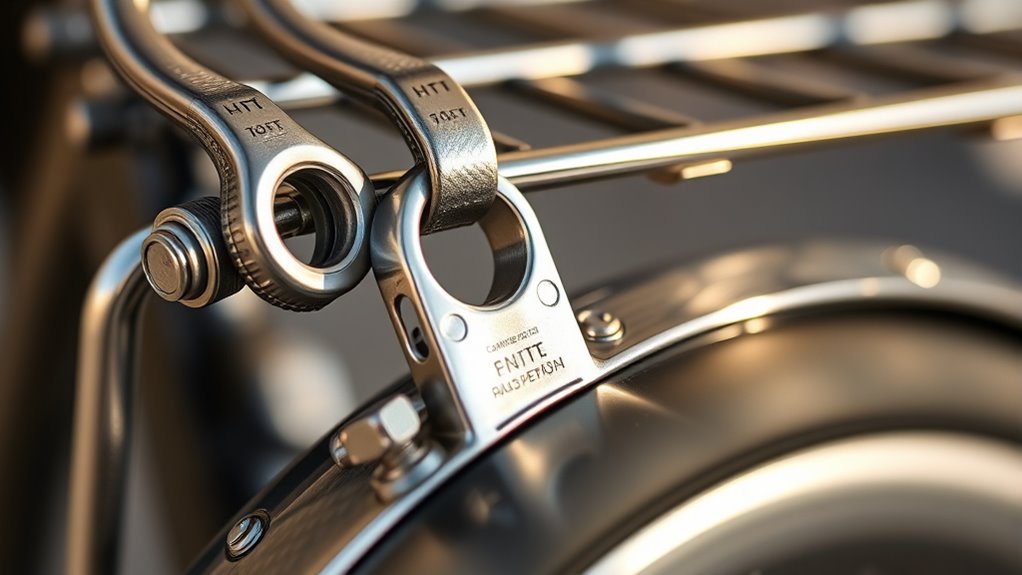
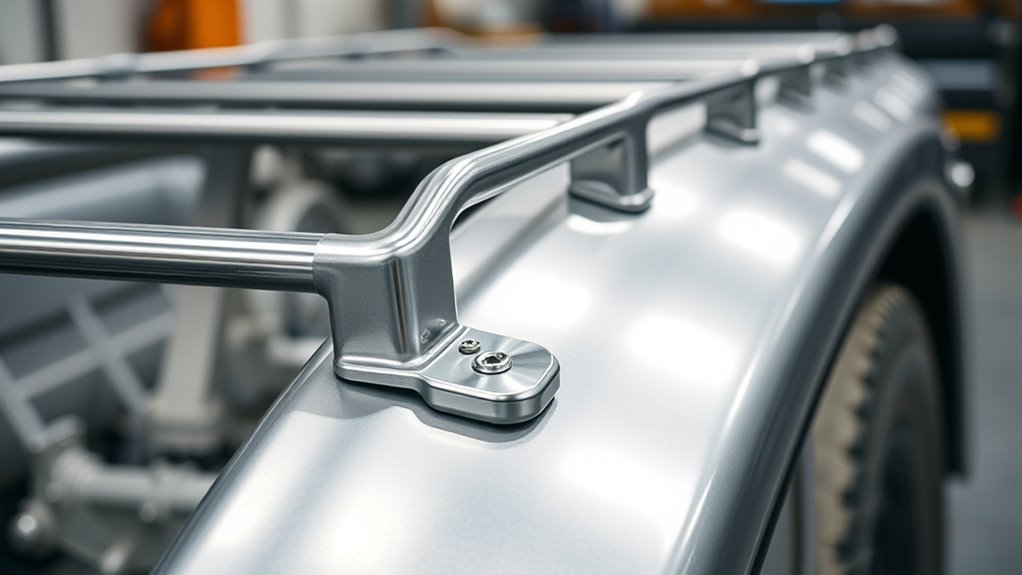
Racks and fenders are essential accessories that enhance your bike’s functionality and protect you from the elements. When it comes to installing these accessories, understanding mounting options is key. Racks typically attach to designated eyelets or mounts on your bike frame, but not all bikes come with these pre-installed. You’ll need to verify whether your bike has eyelets on the seat stays, fork, or rear dropout, as these are common mounting points. Some racks come with adjustable brackets or clamp-on designs, offering versatile options if your bike lacks mounting eyelets. This flexibility allows you to choose the best mounting method based on your bike’s frame and your riding needs.
Material compatibility is another crucial factor. Not all racks and fenders are designed for the same frame materials. For example, aluminum racks are lightweight and durable, making them suitable for most bikes, but they require specific mounting hardware compatible with aluminum frames. Steel racks tend to be heavier but offer excellent strength and compatibility with a wide range of bikes. Plastic or composite fenders are lighter and resistant to corrosion, yet their mounting options might be limited to certain frame types or require additional adapters. Before purchasing, check whether the mounting hardware is compatible with your bike’s material to guarantee a secure fit and avoid damage.
If you own a carbon fiber frame, be especially cautious. Many carbon frames lack eyelets altogether, so you might need clamp-on mounts or specialized straps that won’t damage the delicate material. Always verify whether the mounting options are suitable for your bike’s construction. Some fenders and racks come with universal mounting kits that include various brackets, straps, and adapters, making them versatile across multiple bike types. However, it’s wise to double-check compatibility to prevent issues down the road.
Installation is easier when you understand your options. For bikes with eyelets, you simply attach the hardware with bolts or screws, ensuring everything is tight and secure. For frames without eyelets, you’ll rely on clamps, zip ties, or strap mounts, which might require extra care to avoid slipping or damaging your paint. In all cases, selecting the right mounting options guarantees your rack or fender stays put, even on rough terrains or long rides. Taking the time to verify material compatibility and available mounting options saves you frustration and guarantees that your accessories serve their purpose reliably, keeping you comfortable and protected no matter where you ride.
Frequently Asked Questions
What Materials Are Best for Eyelets and Mounts?
For eyelets and mounts, you should choose materials with metal durability and corrosion resistance. Stainless steel is an excellent choice because it’s strong, long-lasting, and resists rust, making it perfect for outdoor use. Aluminum is lightweight and also resists corrosion, but it may not be as durable as stainless steel. Avoid cheaper metals like zinc or plated options, as they can corrode quickly and fail over time.
How Do I Prevent Rust on Eyelets?
You might find it surprising, but rust prevention starts with regular eyelet maintenance. To keep rust at bay, clean your eyelets after riding and dry them thoroughly. Apply a thin coat of rust-inhibiting lubricant or paint designed for metal. Avoid moisture buildup and store your bike in a dry, sheltered space. Consistent care not only prevents rust but also prolongs the lifespan of your eyelets, ensuring they stay strong and functional.
Can Racks and Fenders Be Customized?
Yes, you can customize racks and fenders to match your style. You can choose custom colors to make them stand out or blend in seamlessly. Decorative options like decals, patterns, or engraved designs are also available to personalize your bike. Many manufacturers offer these features, allowing you to create a unique look. Just check with your supplier for specific customization options and verify they’re compatible with your bike.
What Weight Can Mounts Typically Support?
Most mounts can support between 10 to 50 pounds, depending on their mount strength and material durability. You should check the manufacturer’s specifications for your specific setup. Stronger mounts made from durable materials like steel or reinforced aluminum tend to support more weight safely. Always make certain the mounts are properly installed and rated for your intended load to prevent damage or accidents.
Are There Universal Eyelets Compatible With All Bikes?
No, universal eyelets compatible with all bikes don’t really exist because of varying eyelet standards and frame designs. You need to check your bike’s specific eyelet standards, such as size and placement, to make certain of compatibility. While some mounts are adjustable or designed to fit multiple bikes, it’s best to verify your bike’s eyelet specifications first. This way, you’ll find the right fit without any issues.
Conclusion
Think of your bike as a trusty steed, ready for adventures. Racks and fenders are its armor, protecting you and carrying your gear like a loyal squire. When you choose the right eyelets and mounts, you’re equipping your rider for every journey, big or small. With these essentials in place, you’re set to conquer any road ahead, just like a brave knight ready to face the horizon—confident, prepared, and unstoppable.