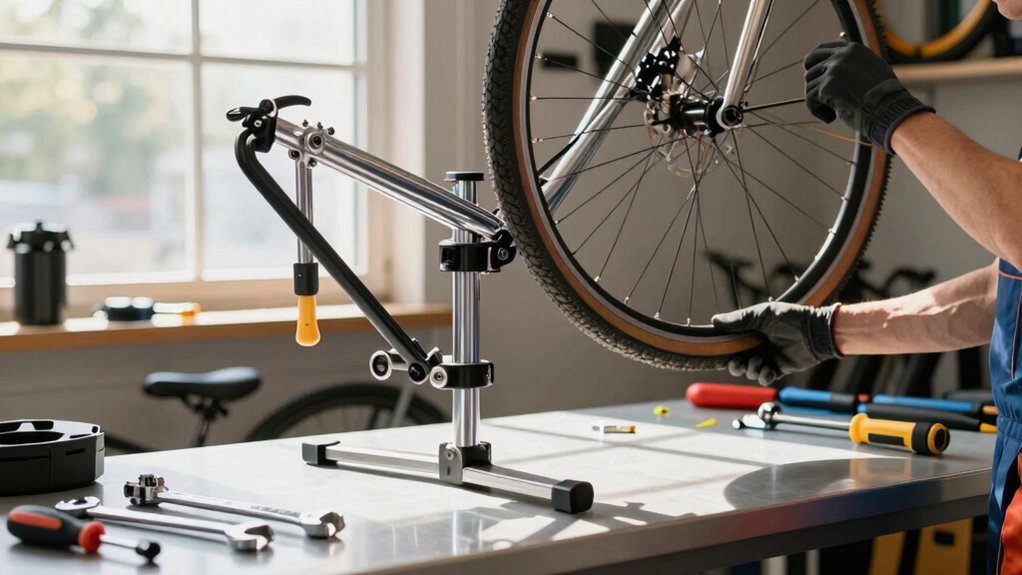
To effectively maintain your bike at home, you need a repair stand that’s compatible with your tools and bike components. Look for one with versatile mounting options, such as adjustable clamps, to prevent damage and guarantee stability. An adjustable height helps you work comfortably, while a sturdy base keeps the stand steady on uneven floors. Considering material and portability makes your repair process easier and safer. Keep exploring to discover the key features that make a repair stand perfect for you.
Key Takeaways
- Ensure the stand supports common bike tools and components with compatible mounting options.
- Choose a stand with adjustable height and a stable, wide base for safety and comfort.
- Look for versatile mounting clamps that protect bike finishes and allow easy access.
- Consider lightweight, durable materials for portability and long-term use.
- Select a stand that simplifies maintenance, improving efficiency and making repairs more enjoyable.
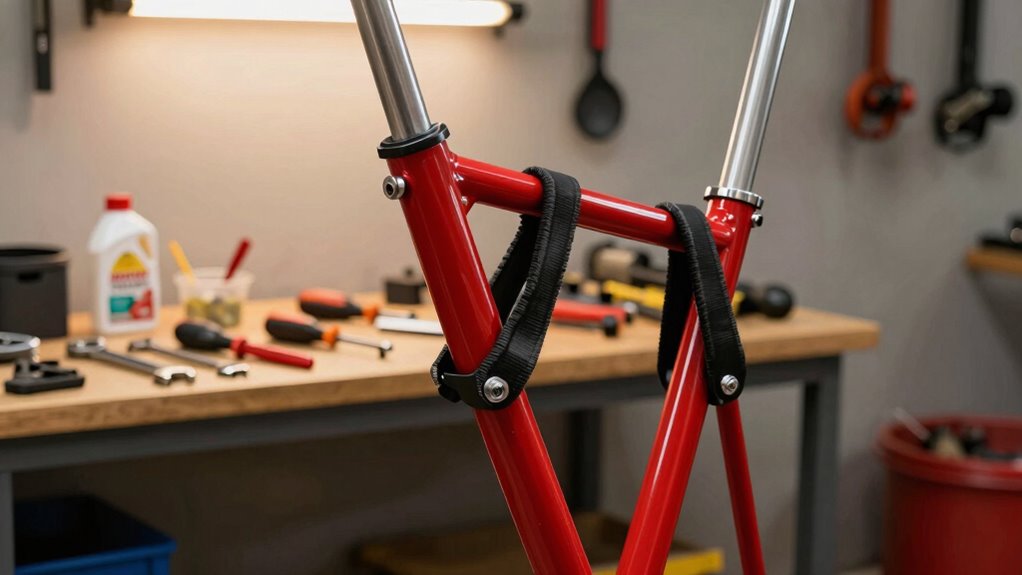
Ever wonder how to make bike repairs easier and more efficient? A good repair stand is your best ally, but understanding the basics can save you time and frustration. When choosing a stand, one of the first things to factor in is tool compatibility. Not all stands work with every tool, so you’ll want to verify your repair stand can handle the tools you plan to use regularly. For example, if you often work with different types of pedals or various bottom brackets, look for a stand that offers adjustable or versatile mounting options. Some stands feature universal clamps or quick-release mechanisms that securely hold different bike frames and components, making your work smoother. This compatibility reduces the need for constant adjustments or purchasing additional adapters, ultimately streamlining your repair process. Additionally, understanding tool compatibility can help you select a stand that accommodates your specific repair needs and tools, saving you both time and money. Being aware of material compatibility, for instance, can help prevent damage to delicate bike parts during repairs. Incorporating design considerations, such as the stand’s weight and portability, can also influence how comfortably and efficiently you perform repairs.
Mounting options are also essential because they determine how securely and comfortably you can work on your bike. Many stands offer a clamp that attaches to the seat post, seat tube, or the frame itself. The key is to find a mounting option that provides stability without risking damage to your bike’s finish. Adjustable clamps with soft padding can help protect your bike’s paint and materials while keeping it steady during repairs. Some stands even come with a versatile mounting head that can rotate or tilt, giving you better access to different parts of your bike. When selecting a stand, think about your typical repair needs—if you often work on the crankset, for instance, a stand with a rotating or pivoting mount might be more convenient.
Additionally, think about the mounting height and overall stability of the stand. A stand with adjustable height allows you to work comfortably, whether you’re seated or standing. Stability is vital—look for stands with a wide, sturdy base that won’t wobble or tip over on uneven surfaces. The right mounting options combined with compatible tools can make repairs feel less like a chore and more like a manageable task. Incorporating CAD design knowledge can also help you visualize and select the best stand configuration for your workspace. When you understand these basics, you’ll find it easier to choose a stand that fits your needs, saving you time and effort during DIY bike maintenance. In the end, a well-chosen repair stand with the right tool compatibility and secure mounting options can turn bike repairs from a hassle into a straightforward, even enjoyable, part of owning your bike.
bike repair stand with adjustable height
As an affiliate, we earn on qualifying purchases.
As an affiliate, we earn on qualifying purchases.
Frequently Asked Questions
Can I Use a Repair Stand for All Bicycle Types?
You can use a repair stand for most bicycle types, but check bike frame compatibility first. Some stands are adjustable and suit various frame sizes and styles, while others may not support certain materials like carbon or titanium securely. Always consider the repair stand materials—steel or aluminum are durable, but guarantee the stand’s clamp and support arms can handle your bike’s weight and frame design for safe, effective repairs.
How Much Weight Can a Typical Repair Stand Hold?
Imagine confidently lifting your bike onto a sturdy repair stand, knowing it won’t buckle under pressure. Most typical repair stands are made from durable materials like steel or aluminum, offering a weight capacity of around 50 to 85 pounds. This means your lightweight road bike or heavier mountain bike stays secure during maintenance. Always check the material durability and specified weight capacity to guarantee your stand safely supports your bike’s weight.
Are Portable Repair Stands as Stable as Stationary Ones?
Portable repair stands can be quite stable, but they often depend on their mounting mechanisms. If you choose one with strong clamps and secure attachments, it will offer good stability comparable to stationary stands. Look for models with stability enhancements like wide bases or adjustable clamps. While stationary stands generally provide more consistent stability, a well-designed portable stand with robust mounting features can serve your needs effectively, especially for lighter or moderate repairs.
What’s the Ideal Height Adjustment for Different Bike Sizes?
You’ll want a repair stand with height adjustments as precise as a surgeon’s scalpel. For different bike sizes, set the seat height so it’s just right—about hip level for comfort—and adjust the handlebar position to match your riding stance. An ideal height range guarantees stability without strain, making repairs easier. Remember, the perfect setup means fewer backaches and more time fixing, not fighting your stand!
How Do I Prevent My Bike From Slipping in the Stand?
To prevent your bike from slipping in the stand, focus on clamping techniques and stand stability. Use the stand’s adjustable clamp tightly around the frame or seat post, ensuring it’s secure without damaging the bike. Also, position the stand on a flat, stable surface and lock any adjustable parts. Double-check the clamp’s grip regularly during work, and consider using a rubber pad or strap for extra security if needed.
Conclusion
So, you see, a good repair stand is your trusty sidekick in the garage, much like a knight’s loyal steed. It keeps your bike steady, making repairs smoother and more efficient. Whether you’re fixing a flat or tuning up, knowing the basics keeps you ahead of the game. Don’t be like the clueless cobbler of old—arm yourself with the right stand, and you’ll be wrenching like a pro in no time.