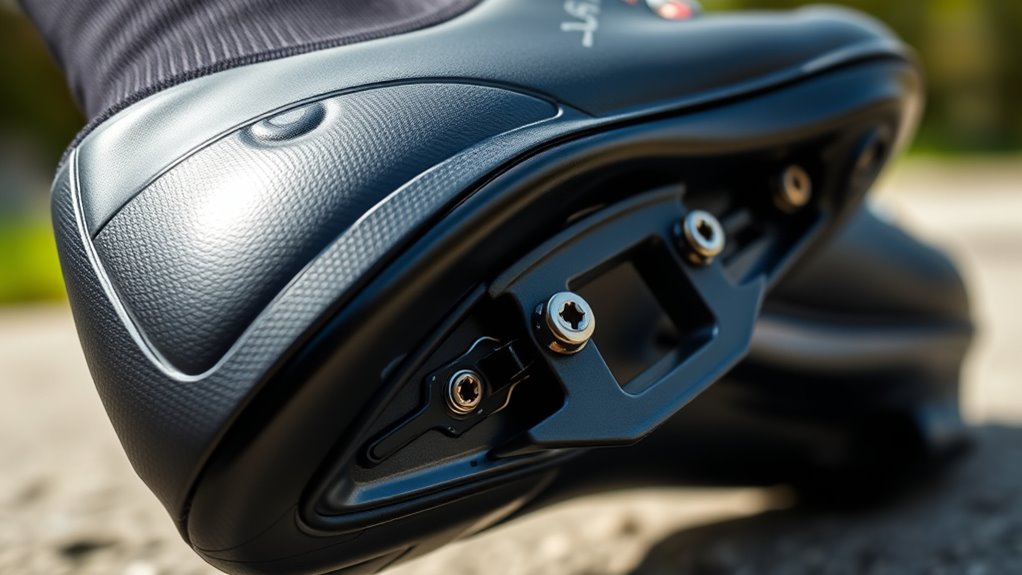

Shoe stiffness influences your power transfer and comfort, while cleat standards guarantee your shoes fit compatible pedal systems like Shimano SPD-SL, Look Keo, or SPD. Opting for the right stiffness helps customize your riding experience, whether for efficiency or comfort. Compatibility between shoes and cleats is essential for safe, reliable engagement. Knowing these standards helps you make informed choices tailored to your riding style. To get a clearer picture of how these factors work together, keep exploring further.

Get sports gear delivered free — and shop member deals
- Fast, free delivery on millions of items
- Access to Prime Big Deal Days deals on October 6–7
- Prime Video, Amazon Music and more included
Key Takeaways
- Shoe stiffness affects energy transfer, comfort, and riding efficiency, requiring proper selection based on riding style and goals.
- Standards measure and regulate stiffness levels, ensuring consistency, safety, and durability across different cycling shoes.
- Manufacturing regulations set benchmarks for shoe stiffness and safety, promoting product reliability and rider protection.
- Cleat standards define compatibility with pedal systems like Shimano SPD-SL, Look Keo, and SPD, affecting engagement and safety.
- Choosing compatible shoe and cleat standards ensures optimal power transfer, safety, and a better cycling experience.
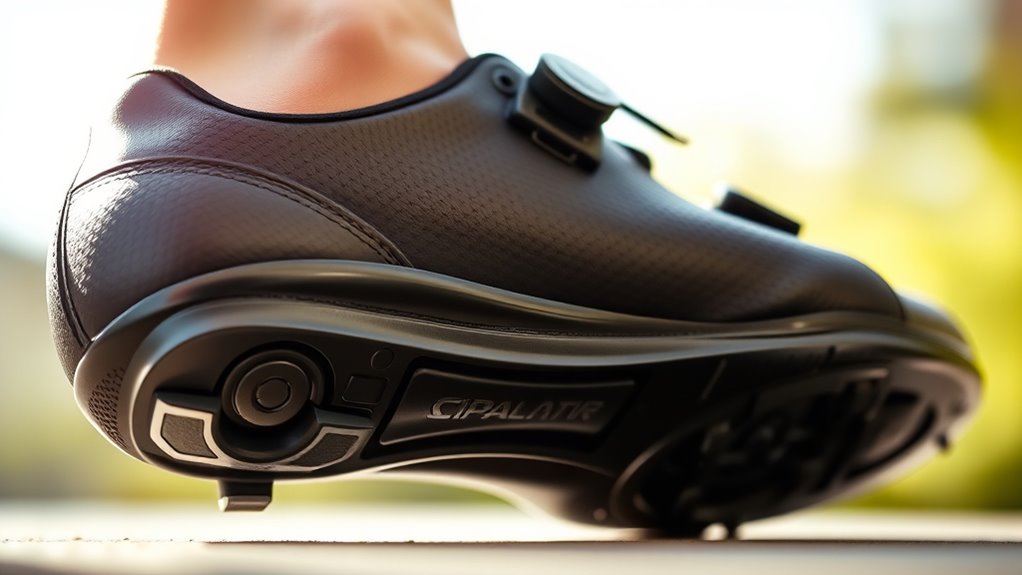
When choosing cycling shoes, understanding shoe stiffness and cleat standards is vital for enhancing performance and comfort. The stiffness of your shoes influences how efficiently power transfers from your legs to the pedals, directly impacting your riding experience. If your shoes are too soft, you’ll lose energy with each pedal stroke, making your ride less effective. Conversely, excessively stiff shoes can cause discomfort and restrict movement, especially during long rides. Knowing how stiffness levels are measured and what standards apply helps you select the right shoes for your riding style and goals. Additionally, staying informed about Glycolic Acid benefits can contribute to overall skin health and maintenance, which is important for athletes and active individuals. Manufacturing regulations play an essential role in ensuring consistency and safety across different brands and models. These regulations set the minimum and maximum stiffness levels that shoes can have, making it easier for you to compare products accurately. They also ensure that shoes meet certain durability and safety standards, so you won’t have to worry about premature wear or failure during critical moments of your ride. When shopping, look for manufacturer specifications that adhere to recognized standards, as these give you confidence that the shoes will perform as expected and won’t compromise your safety or performance. Cleat standards are equally important because they determine compatibility with your pedals and the efficiency of your power transfer. Different cleat standards, such as Shimano SPD-SL, Look Keo, or SPD, have specific mounting patterns and release mechanisms. You need to ensure that your shoes are compatible with your pedals to avoid issues like slipping, improper engagement, or inefficient pedaling. Properly matched cleats and shoes not only enhance your riding efficiency but also improve safety by providing reliable engagement and release. Many cycling shoes are designed to support multiple cleat standards, giving you flexibility to switch components or upgrade without replacing your entire shoe system. Getting familiar with these standards and regulations enables you to make informed choices based on your riding style, whether you’re a casual cyclist, a competitive racer, or a mountain biker. The right combination of shoe stiffness and cleat standard will enhance your comfort, boost your power transfer, and help you perform at your best. Remember, the ideal setup depends on your specific needs—what works for a sprinter may not suit a long-distance rider. By understanding manufacturing regulations and cleat standards, you’re better equipped to select cycling shoes that truly match your riding demands, leading to a more efficient and enjoyable cycling experience.
cycling shoes with adjustable stiffness
As an affiliate, we earn on qualifying purchases.
As an affiliate, we earn on qualifying purchases.
Frequently Asked Questions
How Does Shoe Stiffness Affect Athletic Performance?
Shoe stiffness directly impacts your athletic performance by influencing material flexibility and energy transfer. Stiffer shoes provide better performance enhancement, especially in activities requiring explosive movements, as they offer more support and efficient energy return. However, if they’re too stiff, comfort may suffer. You should choose a balance that enhances your movement, ensuring that the shoe’s stiffness complements your activity and personal comfort for ideal results.
Are There Different Cleat Standards for Various Sports?
Cleat standards vary like different uniforms for each sport. You’ll find that cleat material and shoe flexibility are tailored to meet specific sport demands, ensuring peak performance and safety. For example, soccer cleats prioritize lightweight design, while baseball cleats focus on stability. These standards help you choose the right footwear, providing the necessary support and grip for each activity, so you can perform confidently and comfortably on any field.
Can Shoe Stiffness Influence Injury Risk?
Yes, shoe stiffness can influence injury risk. When your shoes are too stiff or too flexible, it affects how your foot moves and absorbs impact. Using shoe material that offers appropriate stiffness helps prevent injuries by promoting proper support and stability. You should choose footwear that balances stiffness for your activity, as this aids in injury prevention and keeps your feet comfortable during movement.
How Do I Choose the Right Cleat Standard for Me?
Think of it as finding the perfect fit for a puzzle piece. To choose the right cleat standard, consider your sport, playing surface, and comfort needs. Look for options that reflect materials innovation and comply with manufacturing regulations, ensuring safety and performance. Don’t be swayed by trends alone; instead, prioritize what feels right and supports your movement. This way, you stay confident and ready to conquer the game.
Are There Environmental Impacts Related to Cleat Manufacturing Standards?
Yes, manufacturing standards for cleats can impact the environment. Stricter standards often require sustainable materials and eco-friendly production processes, reducing waste and pollution. When choosing cleats, look for brands committed to environmentally responsible manufacturing standards, as they typically use recycled or biodegradable materials and minimize energy consumption. By supporting these standards, you help lessen environmental impact, promote sustainability, and encourage the industry to adopt greener practices.
Conclusion
Think of your shoes as the steering wheel of your ride—stiffness and cleat standards guide your control. Just like a finely tuned ship needs the right sails, your bike needs the right shoes to navigate smoothly. When you choose the right stiffness and standards, you steer with confidence and efficiency. Remember, your footwear is your vessel—equip it wisely, and you’ll sail effortlessly through every ride.
Fall Picks
fall essentials
As an affiliate, we earn on qualifying purchases.