
A stable and safe repair stand relies on a sturdy base with good weight distribution, like wider, heavy bases that lower the center of gravity. You want secure mounting options that grip your bike without slipping or causing damage, and high-quality materials that withstand heavy use. Proper setup, such as locking legs evenly and placing the stand on a level surface, also improves stability. Keep reading to discover more tips for ensuring your repair stand is safe and dependable.
Key Takeaways
- A stable stand has a wide, non-slip base that prevents tipping during use.
- Secure mounting clamps and adjustable points ensure the bike remains firmly in place.
- High-quality materials and reliable locking mechanisms enhance overall safety and durability.
- Proper weight distribution and balanced setup prevent wobbling or collapse.
- Locking adjustable legs and a level surface ensure an even, secure workspace.
A stable repair stand is essential for safe and efficient bike maintenance. When you’re working on your bike, the last thing you want is for the stand to wobble or tip over, risking injury or damage. The stability of your repair stand hinges on several factors, including mounting options and weight distribution. Understanding these elements helps you choose the right stand and set it up properly, ensuring a secure and steady workspace. Proper mounting options ensure that the bike is securely held in place, reducing movement during repairs.
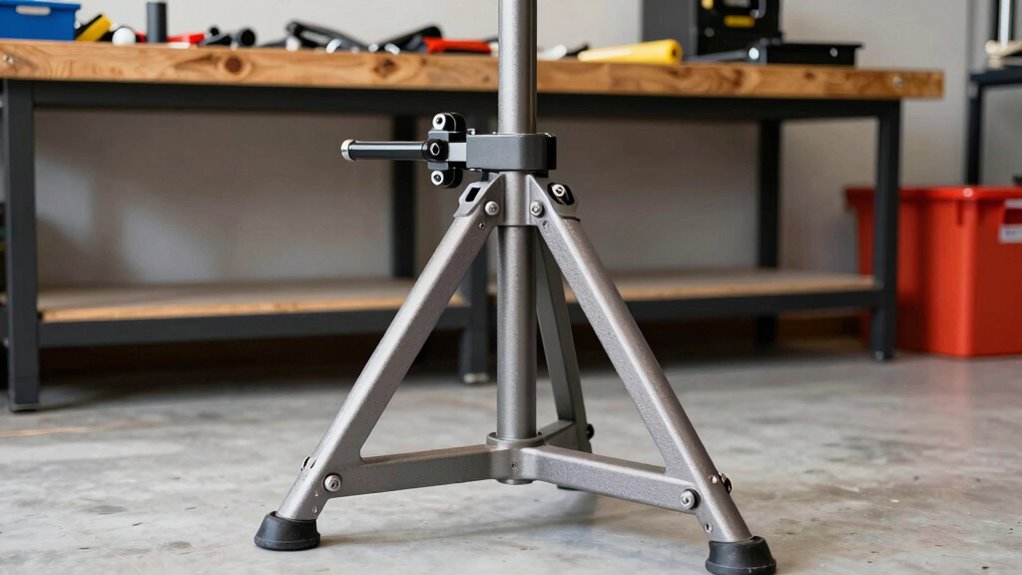
Mounting options play a crucial role in the stability of your repair stand. Some stands clamp onto the bike frame, while others use a tray or a pin system to hold the bike by the seat post or bottom bracket. The choice of mounting method affects how well the bike is secured and how stable it remains during repairs. A stand with adjustable mounting points allows you to customize the grip, preventing slips and reducing the risk of falling over. When you select a stand, look for one with a solid, non-slip clamp or fixture that grips the bike firmly without damaging it. Proper mounting guarantees the bike remains balanced, especially when you’re applying force or working on components like the drivetrain or wheels. Additionally, choosing a stand with adjustable features can enhance overall stability and convenience during different types of repairs. The material quality of the stand also influences its durability and safety, making it a vital consideration. Ensuring that the stand is made of sturdy materials contributes significantly to its durability and safety. Furthermore, selecting a stand with reliable locking mechanisms helps prevent accidental collapses during use.
Choose stands with adjustable, non-slip clamps for secure, damage-free bike mounting during repairs.
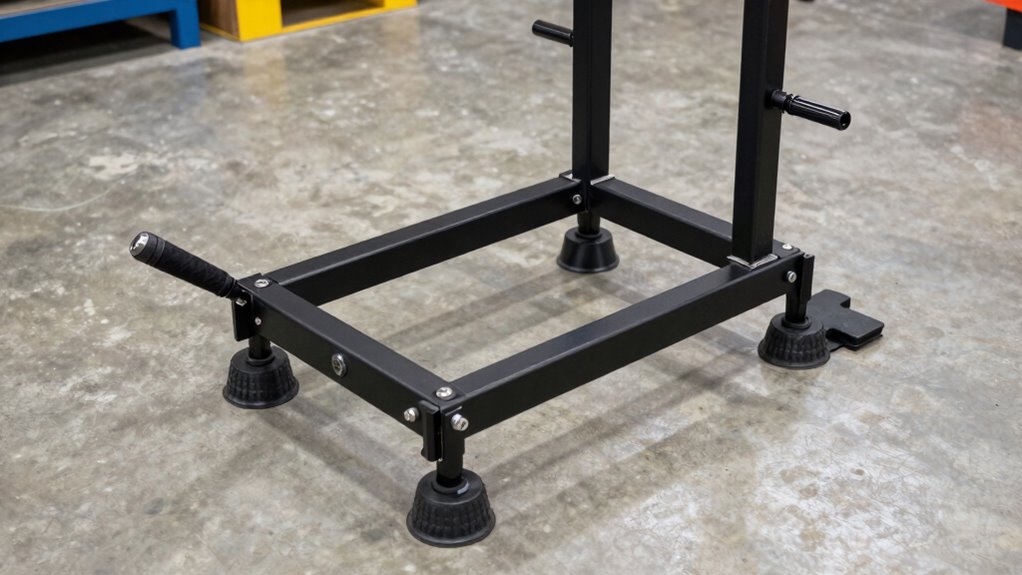
Weight distribution is equally essential to maintaining stand stability. A well-designed stand distributes the bike’s weight evenly across its base, preventing tipping. You’ll notice that stands with wider, heavier bases provide greater stability because they lower the center of gravity and resist lateral movement. When you set up your stand, position the bike so that the weight is balanced—avoid hanging too much weight on one side, which can cause instability. Many stands feature adjustable height and rotation, allowing you to fine-tune the position for maximum balance. Ensuring the stand’s base is on a level, non-slip surface further enhances stability. If the stand has adjustable legs, make sure they’re locked securely and evenly extended to keep the base steady. Proper setup combined with attention to mounting choices and balanced weight distribution makes a significant difference in how safe and steady your workspace remains during bike repairs. This not only protects your bike but also keeps you safe from potential accidents caused by unstable equipment.
bike repair stand with wide non-slip base
As an affiliate, we earn on qualifying purchases.
As an affiliate, we earn on qualifying purchases.
Frequently Asked Questions
Can Repair Stands Be Used Outdoors Reliably?
Yes, repair stands can be used outdoors reliably if you choose one with weather resistance and portability features. Look for stands made from rust-proof materials and with sealed joints to withstand rain or humidity. Portable stands with foldable legs and lightweight frames make outdoor work easier, allowing you to set up securely on uneven ground. Properly maintaining and storing your stand when not in use also helps guarantee safety and durability outdoors.
How Do Weight Limits Affect Stand Stability?
Did you know most repair stands are tested to hold at least 50% more than their rated weight? When you respect weight limits, you help maintain stand stability. Proper weight distribution keeps the center of gravity low and balanced, preventing tipping. Exceeding limits makes the stand wobbly or unsafe, risking damage or injury. Always check your stand’s weight capacity and distribute weight evenly for maximum stability and safety.
Are There Specific Materials That Enhance Stand Safety?
Yes, certain materials enhance stand safety. You should look for repair stands made from durable materials like high-strength steel or reinforced aluminum, which provide better stability and longevity. Additionally, verify the stand has safety certifications, confirming it meets industry standards for strength and reliability. These materials and certifications help prevent accidents, giving you confidence that your repair stand is both sturdy and safe during use.
How Often Should I Inspect My Repair Stand for Safety?
You should inspect your repair stand regularly—at least once a month—to guarantee it remains reliable. Over time, material durability can diminish, and some wear might be subtle, like a whisper of concern. User maintenance, such as tightening bolts and checking for rust, keeps the stand in top shape. By staying vigilant, you’ll maintain a safe, sturdy environment for your projects, preventing issues before they become problems.
Do Repair Stands Require Professional Assembly for Stability?
Repair stands generally don’t require professional assembly if you follow the manufacturer’s instructions carefully. Focus on proper mounting techniques and guarantee the weight distribution is balanced to enhance stability. Tighten all bolts securely and double-check connections. While professional assembly isn’t mandatory, if you’re unsure about the mounting process or how weight is distributed, consulting a professional can help prevent accidents and ensure your stand remains stable and safe during use.
Conclusion
Now that you understand the key factors behind a repair stand’s stability and safety, imagine what could happen if one detail is overlooked. Will your stand hold firm during that critical repair, or could it unexpectedly shift and cause trouble? Pay close attention to every aspect, because the difference between a smooth fix and a mishap is often just a small oversight. Stay vigilant—your safety depends on it, and the next moment could change everything.