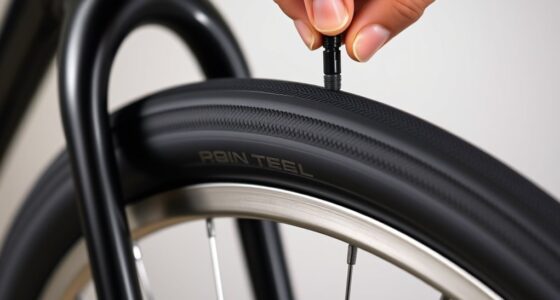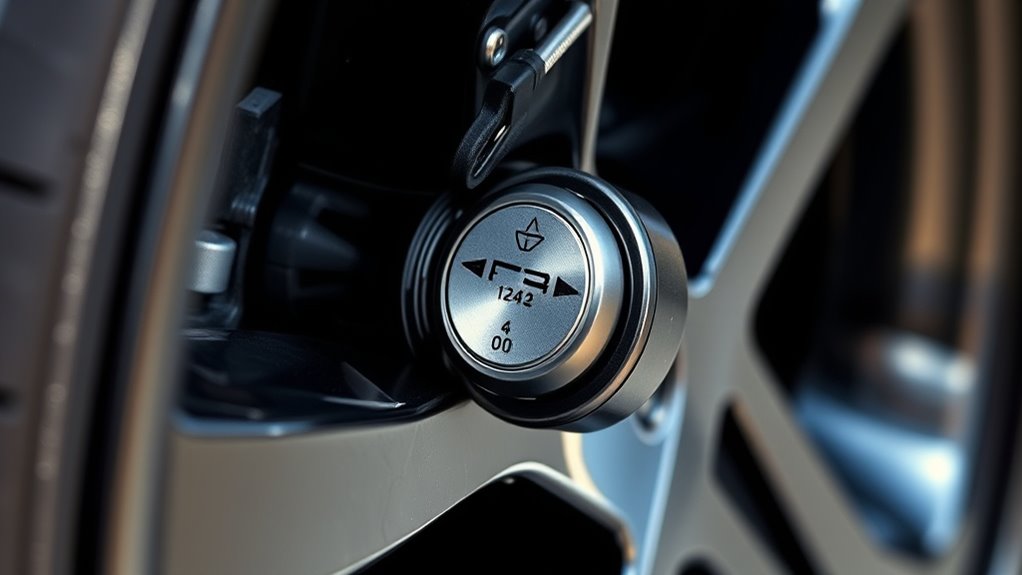
Tire pressure sensors constantly monitor the air pressure inside your tires and send data to your vehicle’s system. If the pressure drops below the recommended level, they trigger an alert to warn you of a potential issue. Proper calibration and maintenance guarantee the sensors work accurately. Regularly checking your tire pressure helps keep the system reliable and your vehicle safe. Keep exploring, and you’ll discover how to keep your system in top shape.
Key Takeaways
- Tire pressure sensors detect changes in air pressure and transmit data to the vehicle’s monitoring system.
- They use internal sensors to measure pressure and sometimes temperature within each tire.
- The system compares sensor readings to preset thresholds to identify low or high pressure.
- When pressure issues are detected, the sensors trigger warning lights or alerts on the dashboard.
- Proper calibration and maintenance ensure sensors provide accurate data and reliable tire pressure monitoring.
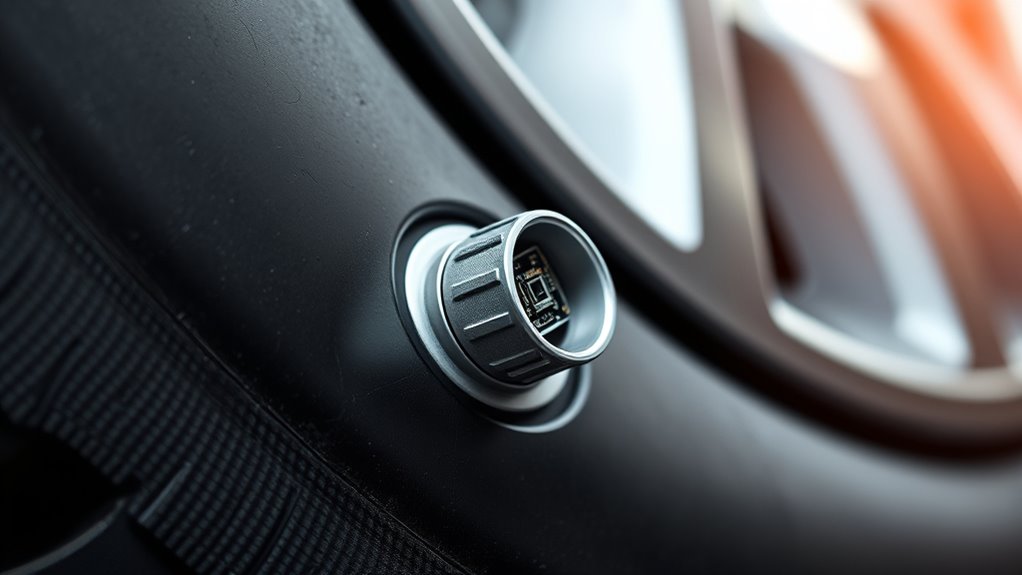
Tire pressure sensors are essential components of modern vehicles, providing real-time data to help you maintain ideal tire pressure. These sensors are part of a sophisticated system designed to monitor your tires constantly and alert you when something’s amiss. When the tire pressure drops below the recommended level, the sensor triggers a warning system on your dashboard, prompting you to check and inflate your tires accordingly. This immediate feedback helps prevent issues like uneven tire wear, poor fuel economy, and even dangerous blowouts.
To guarantee these sensors work accurately, sensor calibration plays a vital role. Proper calibration involves setting the sensors to correctly interpret pressure levels, which often requires a precise process during installation or after tire repairs. If calibration is off, you might receive false warnings or, worse, miss critical alerts. That’s why regular checks and recalibration are recommended, especially if you notice inconsistent readings or warning lights that stay on even when your tires seem fine. Many modern vehicles have built-in procedures for calibration, making it easier for you to maintain the system’s accuracy. In some cases, calibration can be done yourself following the manufacturer’s instructions, but more complex calibrations might require professional assistance.
Proper sensor calibration ensures accurate tire pressure readings and safety. Regular checks and professional assistance when needed are recommended.
The warning system integrated with tire pressure sensors is a crucial safety feature. It constantly compares the sensor data to preset pressure thresholds, and if the pressure falls outside the acceptable range, it activates a visual or auditory alert. These warnings are designed to catch issues early, giving you the chance to address problems before they escalate. For example, a gradual leak might not be immediately obvious, but the warning system ensures you’re alerted before tire damage becomes severe or driving becomes unsafe. Regularly checking your tire pressure with a gauge, especially if you see a warning light, helps verify sensor accuracy and guarantees your safety. If your warning system activates unexpectedly or you suspect calibration issues, it’s wise to have the system inspected and calibrated professionally. Doing so guarantees that your tire pressure monitoring system remains reliable, helping you prevent costly repairs, improve fuel efficiency, and most importantly, keep you safe while driving.
Additionally, selecting vetted security systems or high-quality sensors can enhance the overall reliability and performance of your vehicle’s safety features.
Frequently Asked Questions
How Long Do Tire Pressure Sensors Typically Last?
Your tire pressure sensors typically last between 5 to 10 years, depending on sensor durability and driving conditions. Most sensors have a lifespan estimation based on factors like temperature fluctuations and road conditions. To guarantee they work properly, you should regularly check their performance and replace them if you notice any warning signals or after the recommended lifespan. Proper maintenance helps extend the sensor’s life and keeps you safe on the road.
Can Tire Pressure Sensors Be Repaired or Only Replaced?
You might wonder if tire pressure sensors can be repaired or only replaced. In most cases, they’re not repairable because they’re sealed units, but sometimes sensor calibration can fix minor issues. However, if the sensor’s lifespan is over or it’s damaged, replacement is your best option. Keep in mind that proper calibration helps extend sensor life, ensuring your TPMS functions accurately and reliably.
Do All Vehicles Have the Same Type of Pressure Sensors?
Not all vehicles have the same type of pressure sensors; it varies based on sensor types and vehicle compatibility. You’ll find some sensors are direct, measuring tire pressure with sensors inside each tire, while others are indirect, using wheel speed data. Always check your vehicle’s specifications to guarantee you get the right sensor type, as compatibility depends on your car’s make, model, and year.
How Accurate Are Tire Pressure Sensors Compared to Manual Checks?
You might find tire pressure sensors quite reliable, but they aren’t flawless. Their accuracy can vary with sensor calibration and pressure fluctuation over time. While they give a good general idea, manual checks with a gauge are still your best bet for precise readings. Sensors tend to detect issues early, but for pinpoint accuracy, you should verify with a traditional pressure gauge, especially if you notice inconsistent readings.
Are Wireless Tire Pressure Sensors More Reliable Than Wired Ones?
Wireless tire pressure sensors are generally more reliable than wired ones because they offer better wireless durability, reducing the risk of damage or disconnection. You’ll find that they often have improved sensor compatibility, making them easier to install across different vehicle models. However, verify your vehicle supports wireless systems, and consider the quality of the sensor to maximize reliability and longevity. Overall, wireless sensors tend to provide consistent, hassle-free monitoring.
Conclusion
Knowing how tire pressure sensors work helps you stay safe on the road. Did you know that under-inflated tires can increase fuel consumption by up to 3%? With sensors providing real-time data, you can maintain ideal pressure, saving money and preventing accidents. By understanding these sensors, you empower yourself to keep your tires in top shape. Stay proactive, check your tire pressure regularly, and enjoy a smoother, safer drive every time.