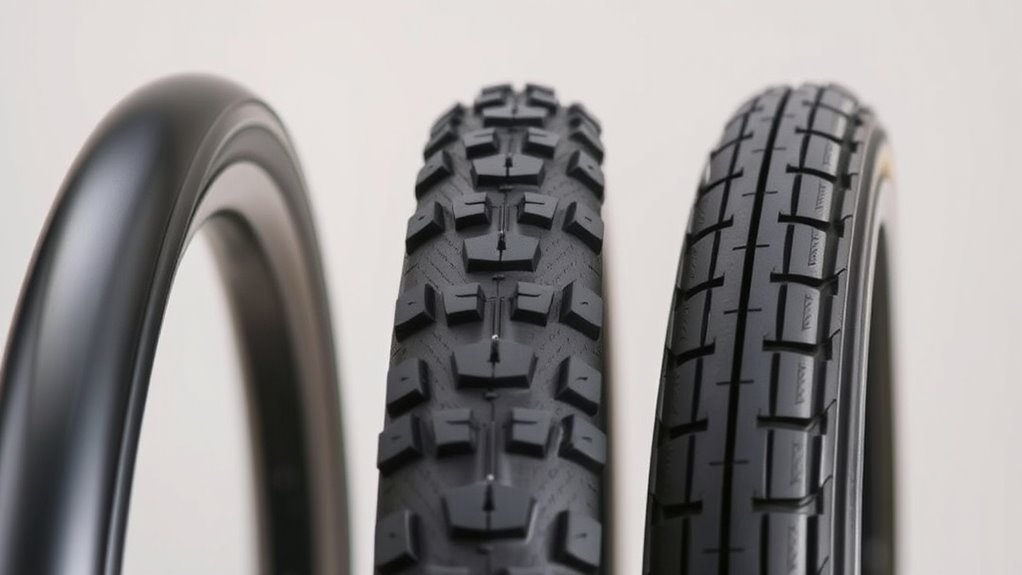
Tubular, clincher, and tubeless tires each have unique benefits for cycling and vehicles. Tubular tires are lightweight and great for racing, but they need careful handling and frequent repairs. Clincher tires are most common and easy to repair, making them ideal for everyday use. Tubeless tires offer better puncture resistance and easier maintenance, with fewer blowouts. To discover how each type suits your needs, explore the detailed features and upkeep tips that follow.
Key Takeaways
- Tubular tires are sewn around an inner tube, ideal for racing but require careful handling and frequent repairs.
- Clincher tires are most common, featuring a bead that hooks onto the rim, making them easier to mount and repair.
- Tubeless tires rely on a tight seal with the rim, reducing punctures and simplifying maintenance with patch or plug repairs.
- Proper tire maintenance, including regular inspections and correct inflation, is essential for safety and optimal performance across all types.
- Each tire type has distinct advantages: tubulars are lightweight, clinchers are user-friendly, and tubeless offer lower risk of sudden flats.
Have you ever wondered what keeps your vehicle moving smoothly on the road? It all comes down to your tires. Proper maintenance, including checking tire pressure regularly, is vital to ensure safety, efficiency, and longevity. When your tires aren’t properly inflated, you risk uneven wear, reduced fuel efficiency, and even dangerous blowouts. Maintaining correct tire pressure is especially important for preventing issues like puncture repair emergencies, which can be both costly and inconvenient. If you notice a sudden loss of pressure or a slow leak, addressing it promptly can save you from bigger problems down the line. Punctures can often be repaired if caught early, but you should always check the tire’s condition afterward to prevent future issues. Regularly inspecting your tires and promptly fixing punctures keeps your vehicle running smoothly and safely. Developing a routine for tire maintenance enhances overall safety and vehicle performance.
Understanding different tire types—tubular, clincher, and tubeless—can also influence your maintenance routine. Tubular tires are sewn around an inner tube, and while they’re mostly used in racing because of their lightweight design, they require careful handling and frequent puncture repair. Clincher tires are the most common for everyday vehicles; they feature a bead that hooks onto the rim, making them easier to mount and repair. If you get a puncture on a clincher, repairing the inner tube is usually straightforward, but you should always check the tire’s condition afterward to prevent future issues. Tubeless tires, on the other hand, don’t have an inner tube. Instead, they rely on a tight seal with the rim to hold air pressure. These tires are popular for their lower risk of punctures and easier maintenance. When a tubeless tire gets a puncture, often a simple patch or plug can fix it without removing the tire, saving you time.
No matter what type of tire you use, keeping the right tire pressure is vital. It affects handling, safety, and even how long your tires last. Properly inflated tires also reduce the chances of flats or damage that might require puncture repair. Remember, maintaining your tires isn’t just about tire pressure; it’s about inspecting for cuts, embedded objects, or sidewall damage regularly. If you get a puncture, don’t ignore it—address it quickly with a proper repair to keep your ride smooth and safe. Staying on top of tire maintenance means fewer surprises on the road and a safer driving experience overall. Incorporating attention and routine checks into your maintenance can significantly improve your vehicle’s lifespan and safety.
Frequently Asked Questions
How Do I Choose the Right Tire Type for My Riding Style?
To choose the right tire type for your riding style, consider where and how you ride most often. If you prioritize speed on smooth surfaces, go for lightweight tires that offer low rolling resistance. If you ride rough terrain, select tires with better traction and durability. Your riding style influences tire selection, so pick tires that match your terrain, riding intensity, and comfort preferences to enhance your overall cycling experience.
What Are the Best Maintenance Tips for Different Tire Types?
Imagine your tires rolling smoothly over rough roads, each turn effortless. To keep that feeling, regularly check your valve maintenance to prevent leaks and maintain proper tire pressure. Inspect for cuts, embedded debris, or worn tread, and keep your tires clean and dry. Properly inflated tires ensure ideal grip and longevity, so make a habit of quick visual checks before rides, and top off the pressure as needed for a safe, smooth journey.
Can I Convert Between Clincher, Tubular, and Tubeless Tires?
You can attempt tire conversion, but be aware of compatibility challenges. Switching between clincher, tubular, and tubeless tires often requires different rims, valves, and sometimes new inner tubes or sealants. Not all wheels support every type, so check your rim’s specifications first. If compatibility challenges arise, it’s best to consult your bike or wheel manufacturer or visit a professional mechanic to guarantee safe and effective conversions.
What Are Common Issues Specific to Each Tire Type?
You’ll encounter specific issues with each tire type. For puncture repairs, clinchers often need tire levers and added sealant, while tubeless tires self-seal but can lose pressure if the sealant dries out. Rim compatibility is essential; mismatched rims can cause poor sealing or unsafe riding. Tubulars rarely need repairs in the field but require precise gluing, and rim compatibility is critical for proper installation and safety.
How Do Tire Types Affect Overall Bike Performance?
Your tire type directly impacts bike performance by influencing tire pressure and rolling resistance. Higher pressure reduces rolling resistance, making your ride faster and more efficient, especially on smooth surfaces. Tubeless tires often allow lower pressures without pinch flats, improving comfort and grip. Clincher tires are easier to inflate but may require more frequent maintenance. Understanding these differences helps you optimize performance for your riding style and terrain.
Conclusion
So, next time you’re choosing tires, remember how those different types—tubular, clincher, and tubeless—can unexpectedly fit your riding style, just like finding that perfect playlist on a long ride. Sometimes, the smallest detail makes all the difference, like discovering a new favorite route or a surprise breeze on a hot day. Whether you’re chasing speed or comfort, your choice in tires might just be the coincidence that makes your ride unforgettable.