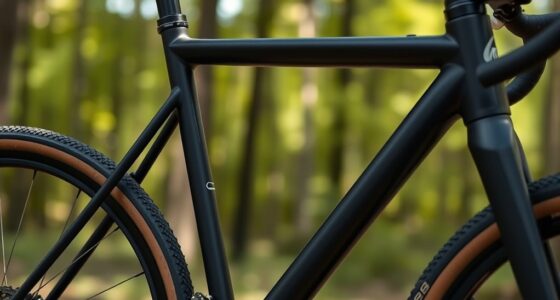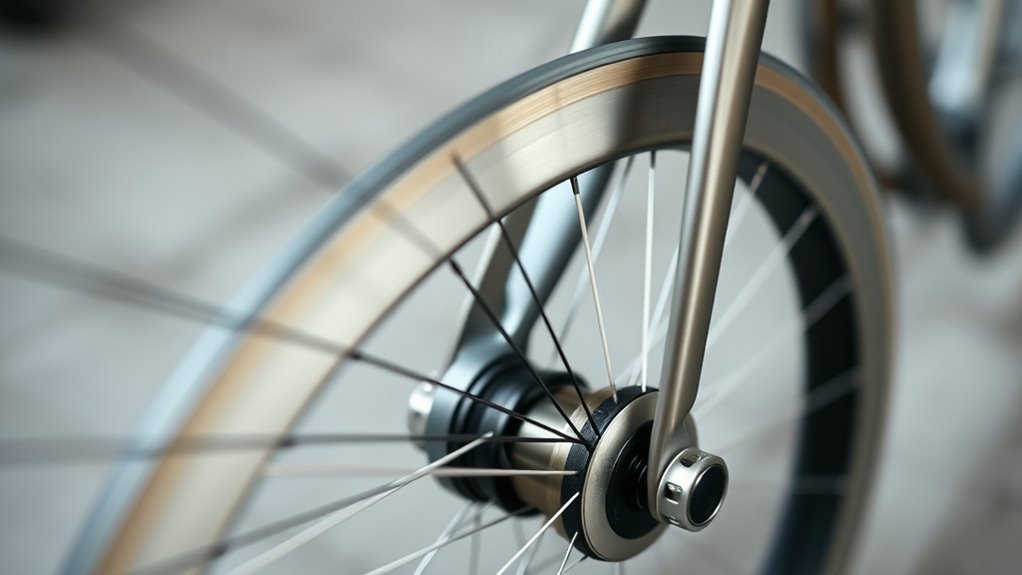

When considering wheel aerodynamics, your focus should be on rim depth and shape. Deeper rims can increase drag, especially if they create turbulent airflow, but they also help with aerodynamics if designed smoothly. The shape of the rim—more streamlined and closed profiles—reduces turbulence and airflow separation. Combining optimized rim design with the right tire profile minimizes resistance and boosts performance. Keep exploring how shape and depth work together to improve airflow and speed.
Key Takeaways
- Wheel depth influences airflow separation, with shallower rims reducing turbulence and drag at high speeds.
- Rim shape, such as flat or curved profiles, affects how smoothly air flows around the wheel.
- Deeper rims can increase aerodynamic drag but may improve structural strength and aesthetics.
- Optimized wheel shapes and depths minimize vortex formation and improve overall vehicle efficiency.
- Advanced designs, including streamlined rims and minimal spokes, enhance aerodynamics by reducing air resistance.

Wheel aerodynamics plays a essential role in optimizing a vehicle’s overall performance by reducing drag and improving efficiency. When you focus on how your wheels interact with the airflow, you’ll notice significant gains in speed, fuel economy, and handling. One of the key aspects influencing this interaction is tire drag, which occurs as air pushes against the tires during motion. To minimize this drag, you need to understand how tire shape and contact patch influence airflow. Narrower tires with smooth, rounded surfaces tend to cut through the air more effectively, lowering resistance. Additionally, the tire’s tread pattern can affect turbulence around the wheel, impacting overall aerodynamic performance. Choosing tires with optimized profiles reduces the air disturbance around the wheels, which, in turn, decreases tire drag.
Optimizing tire shape and contact patch reduces air resistance and improves vehicle efficiency.
Another essential element is rim design. The shape and structure of your rims can drastically alter how air flows around the wheels. Aero-efficient rims are typically crafted with smooth, closed surfaces that guide airflow more seamlessly, reducing vortex formation and turbulence. Deep-dish or complex-spoked rims, while aesthetically appealing, often create more drag because they disrupt airflow. Conversely, rims with aerodynamic shapes—like those with a flat or slightly curved profile—cut through the air with less resistance. This is particularly important at higher speeds, where even minor improvements in rim shape can translate into noticeable performance gains. Also, rim width and depth influence how air moves around the wheel; narrower rims with shallow depths tend to produce less drag than wider, deeper ones.
You should pay attention to the integration of tire and rim design because their combined effect determines the overall aerodynamic profile of your wheels. Properly matched tires and rims create a smoother airflow pathway, reducing turbulence and drag. For example, a low-profile tire paired with an aerodynamic rim minimizes airflow separation and vortex formation. When you’re selecting wheels for performance, consider those designed with aerodynamic principles in mind—they often feature streamlined shapes, minimal spokes, or covers that seal the wheel’s interior, further reducing drag.
Furthermore, advancements in Next-Gen AI Chip Developments are enabling more precise aerodynamic simulations, helping engineers optimize wheel design for better performance.
Ultimately, optimizing wheel aerodynamics involves a careful balance between tire and rim design. By choosing tires with shape and tread patterns that lower tire drag and rims that promote smooth airflow, you improve not just speed but also fuel efficiency and stability. Whether you’re racing or simply looking to enhance everyday driving, understanding how shape and depth influence airflow will help you make smarter choices to achieve better vehicle performance.
Frequently Asked Questions
How Do Wheel Shape Changes Impact Overall Vehicle Efficiency?
Changing your wheel shape can markedly boost vehicle efficiency by reducing aerodynamic drag and wheel turbulence. Opting for streamlined designs minimizes air resistance, allowing your car to glide more smoothly through the air. When you choose wheels with optimized shapes, you lessen turbulence around them, which cuts down energy loss. This means your vehicle consumes less fuel and performs better, especially at higher speeds, making your driving more efficient overall.
What Materials Optimize Aerodynamics in Wheel Design?
Materials like lightweight aluminum alloys and carbon fiber composites optimize aerodynamics by reducing surface friction and material weight. These materials enhance efficiency because they’re durable, smooth, and easy to shape, minimizing drag. By choosing lightweight, low-friction materials, you improve wheel performance, reduce energy consumption, and increase vehicle agility. Material efficiency paired with sleek surface finishes markedly boosts aerodynamic benefits, making your vehicle more streamlined and responsive.
How Do Wheel Aerodynamics Vary at Different Speeds?
At different speeds, wheel aerodynamics change considerably, affecting turbulence effects and airflow patterns. As you increase speed, airflow becomes more turbulent around the wheel, creating more drag and reducing efficiency. At lower speeds, airflow is smoother, with less turbulence. Understanding these variations helps you optimize wheel design for better performance, especially by minimizing turbulence effects at high speeds to improve aerodynamics and overall vehicle efficiency.
Are There Specific Wheel Designs Best for Racing?
For racing, you should choose wheel designs with optimized aerodynamics, such as deeper rims and smooth surfaces, to reduce drag at high speeds. Consider wheels with a specific wheel size that balances weight and stability, enhancing performance. Keep in mind, a low rolling resistance tire tread also complements aerodynamics, ensuring better speed and efficiency. The right combination of wheel size and tread design can give you a competitive edge on the track.
How Does Tire Pressure Influence Aerodynamic Performance?
Imagine the smooth surface of a tire, where a slight change in tire pressure can dramatically alter your ride. When you reduce tire pressure, the tire deforms more, increasing aerodynamic drag and slowing you down. Conversely, higher pressure maintains a sleek profile, reducing drag. You should find the ideal tire pressure to minimize aerodynamic drag, ensuring maximum efficiency and speed during your race.
Conclusion
As you race down the road, imagine your wheels slicing through the air like sleek blades, their shape optimized for speed. Yet, beneath that smooth surface lies a complex dance of air currents and design. The contrast between a simple, rounded shape and a carefully engineered deep rim shows how small changes can make big differences. When you understand wheel aerodynamics, you harness the power of both form and function—driving faster with less effort.