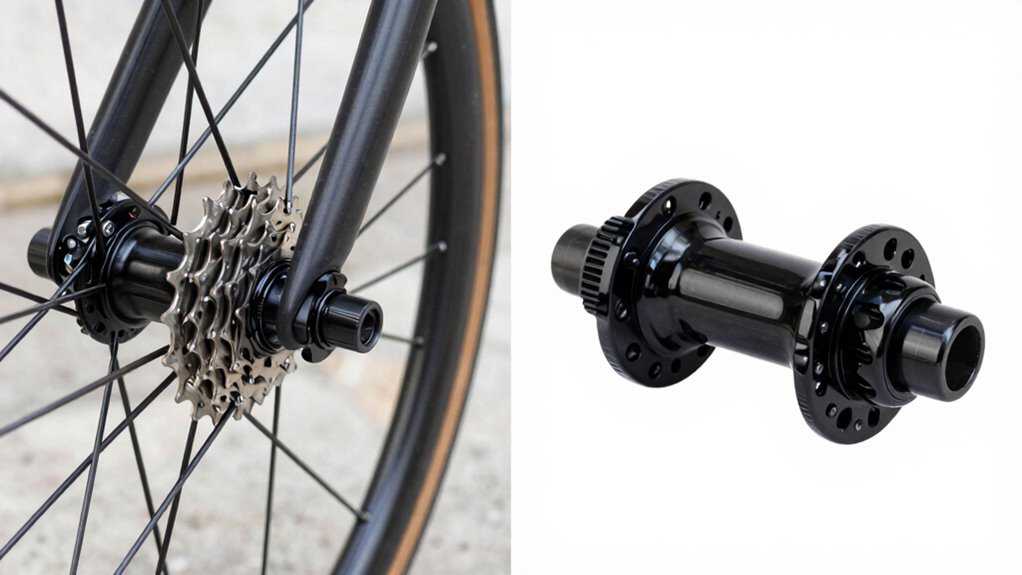

Wheel-on setups are easier to install and more affordable, making them ideal for beginners and casual racers. They connect through gears or belts, which can add some latency, but they’re durable and simple to maintain. In contrast, direct drive systems attach directly to the motor for smoother, stronger feedback, offering a more realistic experience. They’re more complex, costlier, and require careful setup, but if you stick around, you’ll discover even more details to help you decide.
Key Takeaways
- Wheel-on systems are easier and quicker to install, attaching directly to existing rigs or desks, while direct drive requires secure mounting and calibration.
- Direct drive setups offer smoother, stronger, and more realistic force feedback compared to gear or belt-driven wheel-on systems.
- Wheel-on systems are generally more durable and easier to maintain, whereas direct drive needs regular cleaning and servicing of exposed components.
- Wheel-on configurations are more affordable and accessible for casual racers, with cost gaps narrowing as technology advances in direct drive options.
- Wheel-on setups provide a user-friendly, plug-and-play experience, while direct drive offers higher realism at the expense of complexity and setup time.
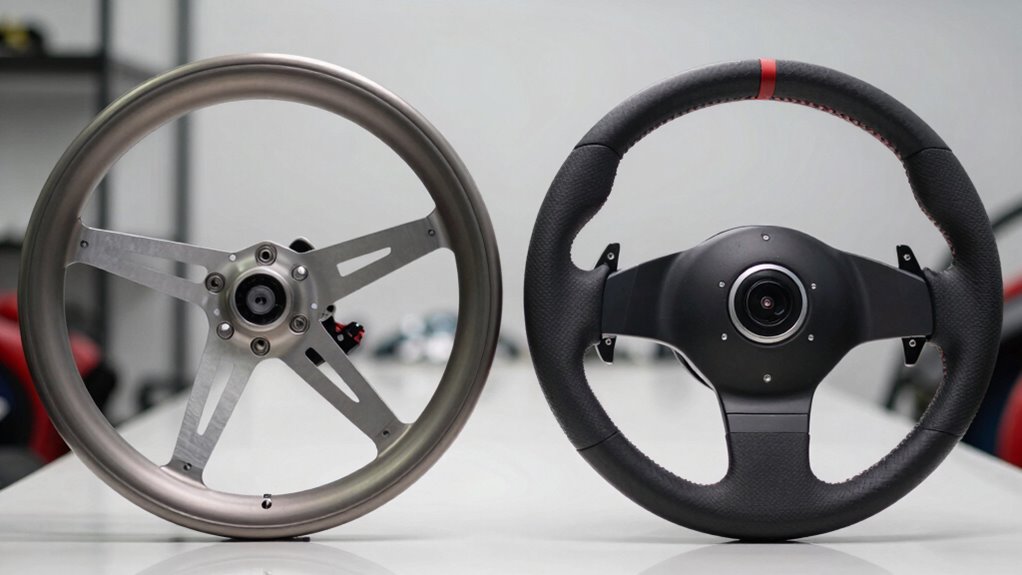
When choosing a sim racing setup, understanding the key differences between wheel-on and direct drive systems is essential. These two types of setups offer distinct experiences, and your choice impacts installation challenges, maintenance requirements, and overall performance. Wheel-on systems, which are more common and usually more affordable, attach a steering wheel to a motor via a gear or belt-driven mechanism. They tend to be easier to set up, with straightforward installation that often fits onto existing racing rigs or desks. However, they can be limited in power and realism because the force feedback is generated through gears or belts, which can introduce some latency or feel less authentic. Maintenance for wheel-on setups is generally simpler, as the components are less exposed and less prone to wear. You might need to check or replace belts or gears over time, but overall, these systems are designed for ease of use and durability. Additionally, the cost of wheel-on systems is often more accessible for beginners or casual racers. Advances in technology are continually improving the force feedback quality of wheel-on systems, narrowing the gap with more advanced setups.
On the other hand, direct drive systems eliminate the intermediate gears or belts, connecting the motor directly to the steering wheel. This design delivers a more precise, immersive experience with stronger, smoother force feedback that closely mimics real racing. But, this increased realism comes with some challenges. Installation can be more complex, often requiring mounting the motor securely to a sturdy rig or frame, which might involve drilling or specialized brackets. Setting up a direct drive system demands careful calibration to guarantee the best performance, and the initial setup can be time-consuming. Furthermore, maintenance requirements tend to be higher with direct drive setups because the powerful motor and exposed components need regular checks. You’ll want to keep the system clean, ensure connections remain tight, and occasionally service the motor to prevent overheating or wear. Additionally, understanding the force feedback capabilities of these systems can significantly influence your racing experience. As technology advances, direct drive systems are becoming more accessible and affordable, making them a viable option for many enthusiasts. While wheel-on systems are generally more user-friendly in terms of installation and upkeep, they don’t quite match the level of feedback provided by direct drive setups. If you’re looking for a plug-and-play experience with minimal hassle, a wheel-on system might be your best choice. But if you crave maximum realism and don’t mind investing more time and effort into installation and maintenance, a direct drive setup will elevate your sim racing to the next level. Ultimately, your decision hinges on your budget, space, and how deeply you want to immerse yourself in the racing experience, balancing ease of use with performance and realism.
As an affiliate, we earn on qualifying purchases.
Frequently Asked Questions
Which Setup Is More Suitable for Beginners?
For beginners, a wheel-on setup is more suitable because it’s easier to install and offers better wheel compatibility, making it more familiar if you’re used to traditional bike setups. It also provides reliable power transfer during rides. Direct drive setups, while offering smoother performance, are more complex and costly, which might be overwhelming for newcomers. Starting with wheel-on allows you to learn the basics comfortably before exploring advanced options.
How Do Maintenance Requirements Differ Between Setups?
You’ll find that maintenance differs between setups mainly in vibration stability and power consistency. Wheel-on setups require regular checks for wheel alignment, tire wear, and belt tension, which can affect vibration stability. Direct drive setups, on the other hand, need less frequent maintenance since they have fewer moving parts, offering better power consistency over time. Overall, direct drive setups tend to be more reliable and easier to maintain, especially for long-term use.
Can Wheel-On Setups Be Upgraded to Direct Drive?
Yes, you can upgrade a wheel-on setup to a direct drive, but compatibility concerns are key. You’ll need to check if your bike frame and hub are compatible with a direct drive system, as not all wheel-on components fit directly. The upgrade feasibility depends on your bike’s specifications and the compatibility of the new hub. It’s often easier to start fresh with a dedicated direct drive wheel if your current setup isn’t compatible.
What Are the Noise Level Differences?
Are you curious about noise levels? You’ll find that direct drive setups tend to be quieter with lower vibration levels, thanks to their solid, direct attachment to the motor. Wheel-on setups, however, often generate more noise and vibrations due to external components and belt drives. If you prioritize noise reduction and smoother operation, a direct drive system offers a noticeable advantage, making your experience more peaceful and immersive.
How Does Each Setup Impact Racing Performance?
You’ll notice that direct drive setups enhance racing performance by providing more precise tactile feedback and stronger force feedback, which helps you feel every detail of the track. This setup offers smoother, more consistent power delivery, improving your control and reaction times. Wheel-on systems, while more affordable, may lack the same level of tactile and force feedback, potentially limiting your ability to respond quickly to track conditions.
Conclusion
Ultimately, wheel-on setups offer affordability and simplicity, making them perfect for casual riders. But if you’re after precision, quiet operation, and smoother performance, direct drive setups stand out. It’s like choosing between a reliable, traditional bicycle and a sleek, high-performance race bike. Both get you where you want to go, but one offers a more refined ride. In the end, your choice depends on whether you prioritize ease or excellence.