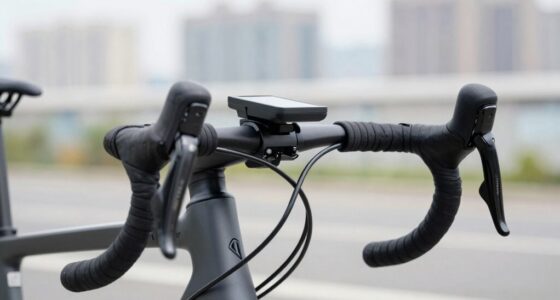
For a daily commute, the choice between a hub-drive and a mid-drive e-bike is less about which motor type is universally better and more about where the route puts strain on the bike. A hub-drive motor turns a wheel directly, making it a practical, often less expensive choice for flatter routes and predictable trips. A mid-drive motor works through the drivetrain, so it can use the bike’s gears to climb hills and respond more naturally to pedaling.

Get sports gear delivered free with Prime
- Fast, free delivery on millions of items
- Prime Video, Amazon Music and more included
- Member-only deals all year

Jasion EB5 Ultra Electric Bike with 2500W Peak Motor and 1040Wh Battery
- ✔ Motor: 2500W peak
- ✔ Battery: Removable 52V 20Ah (1040Wh)
- ✔ Stated range: Up to 70 miles

Aipas M1 Pro Step-Through Electric Bike, 26-Inch Fat Tires, 48V 17.5Ah Battery
- ✔ Motor: 1800W peak rear hub
- ✔ Torque: 110 Nm
- ✔ Battery: Removable 48V 17.5Ah

AYOLNY Electric Bike for Adults, 1000W Peak Motor, 26-Inch Mountain Ebike
- ✔ Motor: 1000W peak brushless
- ✔ Maximum speed: 20 mph
- ✔ Battery: 36V 10.4Ah (375Wh)
That difference affects more than acceleration. It changes what you pay up front, how the bike handles steep streets, how the chain and gears wear, and what to expect from the battery. Choose a hub drive if your commute is mostly level and value or simplicity comes first. Choose a mid drive if you regularly climb, carry extra weight, or want assistance that feels closely tied to your pedaling. Models vary, so compare the specific bike’s battery capacity, component quality, warranty, and service support before deciding.
At a Glance
| Criteria | Hub-drive electric bike | Mid-drive electric bike | Winner |
|---|---|---|---|
| Purchase cost | Often lower for otherwise comparable bikes | Often higher for comparable equipment | A |
| Hills and heavy loads | Can climb, but wheel-motor output does not use the bike’s gears | Uses the gears to deliver assistance effectively on climbs | B |
| Ride feel | Power comes from the wheel and may feel less connected to pedaling | Power responds through the pedals for a more integrated feel | B |
| Battery use and range | Depends on the model and route; direct wheel drive can be efficient on level ground | Depends on gearing, assist level, battery, rider, and terrain | Depends |
| Drivetrain wear | Usually places less motor force on the chain and gears | Motor assistance adds load to the chain and gears | A |
| Routine service | Generally straightforward, though a rear hub may complicate wheel removal | Drivetrain care matters; repairs may require a shop familiar with the system | A |
| Best route fit | Flat or gently rolling commutes where cost and simplicity matter | Hilly routes, frequent stops on slopes, or heavier commuting loads | Depends |
Jasion EB5 Ultra Electric Bike with 2500W Peak Motor and 1040Wh Battery
For a commute that includes broken pavement, gravel shoulders, or a bag that needs a secure place to ride, the Jasion EB5 Ultra has the most balanced equipment of this group. Its rear rack and full fenders are practical additions for daily transportation, while the removable 52V 20Ah battery gives us the option of charging indoors. The stated range is up to 70 miles, but we should plan around our route and riding conditions rather than assume the maximum.The 26-by-4-inch tires and dual suspension put Jasion in the same comfort-focused category as Aipas. Its hydraulic disc brakes give it a stopping-system advantage over Aipas’s mechanical discs, a useful distinction when a commute includes frequent stops or changing conditions. The 2500W peak motor is a headline figure, but a peak rating alone does not tell us how the bike performs in every riding situation.Its large, fat-tire format is also the tradeoff: it takes up more space than AYOLNY’s narrower-tire design, and at 330 pounds its stated payload capacity is lower than Aipas’s. Commuters who carry a heavy load should account for the rider and cargo together. We would choose Jasion for a rough or gear-heavy route, but skip it if stairs, compact storage, or a lighter-feeling bike are priorities.
Pros:
- Hydraulic disc brakes are a stronger commuting feature than the mechanical discs on Aipas.
- Removable 1040Wh battery supports charging away from the bike.
- Rear rack and full fenders are included for everyday transport.
- Fat tires and dual suspension are suited to rough roads and mixed terrain.
Cons:
- 26-by-4-inch tires make the bike bulky for narrow storage and crowded racks.
- 330-pound payload capacity is lower than Aipas’s listed 500-pound maximum.
- Up-to-70-mile range is a stated maximum that depends on riding conditions.
Best for: Commuters with rough pavement or mixed surfaces who want hydraulic brakes, a removable battery, and an included rear rack.
Not ideal for: Riders who need a lightweight bike to carry upstairs, have limited storage space, or expect to carry a combined load above its 330-pound payload capacity.
Bottom line: Jasion is our strongest all-around commute pick when comfort, cargo utility, and hydraulic braking matter more than a compact footprint.
“Jasion is our strongest all-around commute pick when comfort, cargo utility, and hydraulic braking matter more than a compact footprint.”
Aipas M1 Pro Step-Through Electric Bike, 26-Inch Fat Tires, 48V 17.5Ah Battery
The Aipas M1 Pro is the easiest bike in this lineup to approach if mounting over a high top tube is inconvenient. Its step-through frame and adjustable seat can make frequent stops and getting on or off in work clothes less awkward. Full suspension and 26-by-4-inch tires target the same rough-road comfort as Jasion, but Aipas is the one to consider when frame access and a higher stated load limit take priority.Aipas lists a removable 48V 17.5Ah battery and up to 85 miles of pedal-assist range, the highest claim among these three. That figure is conditional, and its 48V battery has less stated capacity than Jasion’s 1040Wh pack. The bike does include useful commuting basics such as lights, a horn, and an LCD display, but unlike Jasion it does not list a rear rack or full fenders.The key compromise is the 88-pound weight. That is far heavier than AYOLNY’s 50.8 pounds, so a step-through frame does not make Aipas easy to carry or store. Its mechanical disc brakes also lack the hydraulic system specified for Jasion. We would favor it for a rider who wants an accessible frame, a high listed load limit, and a cushioned ride, but choose another option if portability or stronger brake hardware is central to the commute.
Pros:
- Step-through frame makes mounting and dismounting more accessible.
- Removable battery can be charged on or off the bike.
- Full suspension and wide tires are designed for uneven roads.
- Listed 500-pound maximum load is higher than Jasion’s 330-pound payload capacity.
Cons:
- At 88 lb, it is the heaviest bike in this comparison.
- Mechanical disc brakes are less compelling than Jasion’s hydraulic setup.
- No rear rack or full fenders are listed, unlike Jasion.
Best for: Riders who want a step-through frame, full suspension, and a high listed maximum load for a comfort-focused commute.
Not ideal for: Commuters who must lift a bike onto transit or up stairs, or who want hydraulic brakes and included rack-and-fender equipment.
Bottom line: Aipas is a comfort-and-access pick for riders who can manage its substantial weight and do not need the cargo features included with Jasion.
“Aipas is a comfort-and-access pick for riders who can manage its substantial weight and do not need the cargo features included with Jasion.”
AYOLNY Electric Bike for Adults, 1000W Peak Motor, 26-Inch Mountain Ebike
AYOLNY is the most practical starting point for commuters who care about moving and storing their bike as much as the ride itself. At 50.8 pounds, it weighs substantially less than the 88-pound Aipas and avoids the bulky 4-inch tires shared by the other two. Its 26-by-1.95-inch tires are a more conventional match for paved streets, where fat tires may add width and bulk that a rider does not need.The compromise is capacity. Its 36V 10.4Ah battery is rated at 375Wh, and the stated range reaches up to 40 miles—less than the claims for Jasion and Aipas. That makes it a better fit for shorter commutes or regular access to charging. The bike has both pedal-assist and throttle assist, a seven-speed drivetrain, and an LCD with app connectivity and USB charging. Those conveniences do not replace the rack and fenders Jasion includes, so commuters carrying work gear may need to consider their setup.Dual suspension and disc brakes add versatility, though the supplied details do not specify brake type as hydraulic or mechanical. AYOLNY’s 1000W peak motor and 20 mph maximum speed also make it distinct from the higher peak-power claims on the fat-tire models, but motor peak figures alone are not a complete guide to daily ride behavior. Choose this model when the lighter frame and narrower tires suit the route; look to Jasion or Aipas for more battery capacity and a more substantial all-terrain build.
Pros:
- At 50.8 lb, it is much lighter than either fat-tire alternative.
- Narrower 1.95-inch tires suit ordinary paved routes and take up less space.
- Pedal-assist and throttle assist provide two ways to ride.
- LCD includes app connectivity and USB charging.
Cons:
- 375Wh battery and up-to-40-mile stated range are the smallest in this lineup.
- No rear rack or full fenders are listed, unlike Jasion.
- Charging takes a stated 5–6 hours.
Best for: Commuters on shorter, mostly paved routes who want a lighter bike that is easier to maneuver and store.
Not ideal for: Riders with long stretches between charging opportunities, rough mixed-terrain routes, or a need for an included rear rack and fenders.
Bottom line: AYOLNY is the sensible pick for shorter paved commutes where lower weight matters more than fat-tire comfort, cargo equipment, or extended range.
“AYOLNY is the sensible pick for shorter paved commutes where lower weight matters more than fat-tire comfort, cargo equipment, or extended range.”
As an Amazon Associate we earn from qualifying purchases.
Key Differences
The motor’s location determines how it delivers power. A hub drive propels the wheel directly, giving commuters a straightforward setup that often costs less. On a mostly flat route, that can be all the assistance needed. A mid drive turns the crank and sends power through the chain and selected gear. That lets the motor work with the bike’s gearing, which is a meaningful advantage on steep hills or when starting uphill with a loaded bag.
Those climbing benefits come with a tradeoff: mid-drive assistance puts more force through the drivetrain, so chains and gears need care and may wear sooner. Hub drives typically reduce that motor load on the chain, but some rear-wheel models make tire or wheel service less convenient. Neither motor type guarantees longer range or a more reliable bike. Battery size, assist settings, route, rider weight, tires, and the quality of the complete bike all matter. For a flat commute, paying extra for mid drive may buy little; for a demanding route, it can make the ride noticeably easier and more controlled.
Detailed Comparison
Purchase cost (Hub-drive electric bike wins — moderate)
Hub-drive commuter bikes are often less expensive than mid-drive bikes with similar equipment. That is a moderate practical advantage if you need dependable assistance on level roads and would rather reserve money for a good lock, lights, fenders, or a larger battery. Mid-drive systems can justify their higher price when their climbing and ride characteristics solve a real problem on your route. Compare complete bikes rather than motor labels alone: brakes, battery capacity, warranty, and local service can change the value calculation.
Hills and heavy loads (Mid-drive electric bike wins — major)
Mid drive wins by a major margin on steep commutes or frequent uphill starts with cargo. Because it works through the gears, the rider can select a lower gear and let the motor assist at a useful cadence. A hub motor can still handle hills, but it does not shift its drive through the bicycle’s gears. For flat routes, this gap may scarcely matter; for repeated climbs, it can determine whether the trip feels manageable.
Ride feel (Mid-drive electric bike wins — moderate)
Mid-drive assistance often feels more integrated because power is applied as the rider pedals and changes with cadence and gearing. That is a moderate advantage for riders who want the bike to feel responsive on varied terrain. Hub-drive bikes can deliver a more distinct push from the wheel, which some commuters may find perfectly comfortable and easy to use. Sensor design and tuning vary, so a test ride is the best way to judge a particular model.
Battery use and range (moderate difference)
There is no dependable winner based on motor type alone. On flat ground, a hub drive can be an efficient match, while a mid drive may benefit from suitable gearing on climbs. Battery capacity, assist level, speed, tire pressure, temperature, rider and cargo weight, and stops all affect range. The practical difference is moderate because an undersized battery can undermine either setup. Check the battery’s watt-hour rating and leave room for your real route and preferred assist level.
Drivetrain wear (Hub-drive electric bike wins — moderate)
Hub drive has a moderate advantage because motor power goes directly to the wheel instead of passing through the chain and gears. Mid-drive motors add force to those parts, so shifting under heavy power and skipping routine cleaning can speed wear. That does not make a mid drive a poor choice, but it does make drivetrain upkeep and replacement costs more relevant. Careful shifting and timely maintenance help protect either bike.
Routine service (Hub-drive electric bike wins — minor)
Hub-drive systems are often simpler in concept, but service convenience depends on the exact wheel and equipment. A rear hub motor can make a puncture repair or wheel removal more involved because of its motor cable and heavier wheel. Mid-drive bikes keep the motor away from the wheel, yet their drivetrain sees more load and some systems require specialist support. The edge is minor and depends on nearby repair options; ask a local shop whether it services the specific model.
Best route fit (major difference)
This is a genuine split. Hub drive is usually the sensible fit for flatter commutes, predictable distances, and budget-conscious buyers. Mid drive makes more sense where climbs, stop-start hills, or heavy cargo are routine. Route character matters more than a general claim that one motor type is best for commuting. Riders on rolling terrain should test both if possible and weigh the uphill benefit against the purchase price and added drivetrain care.
Hub-drive electric bike: Pros and Cons
Pros:
- Often costs less than a comparable mid-drive bike.
- Motor power generally places less added force on the chain and gears.
- A practical match for flat commutes and steady assistance.
Cons:
- Does not use the bike’s gears to optimize motor power on climbs.
- Assistance may feel less connected to pedaling, depending on the sensor and tuning.
- A rear hub can make wheel removal and some tire repairs more involved.
Mid-drive electric bike: Pros and Cons
Pros:
- Uses the bike’s gears, making steep climbs and uphill starts easier to manage.
- Often gives a more integrated pedaling feel.
- A strong fit for varied terrain and heavier loads.
Cons:
- Usually costs more upfront.
- Motor power adds wear to the chain and gears.
- Some systems need service from a shop familiar with that motor brand.
Who Should Choose What
Choose Hub-drive electric bike if:
- Your commute is mostly flat or gently rolling and you want to keep the purchase cost down.
- You prefer a straightforward setup and want to limit added motor strain on the chain.
- You would get more value from spending the price difference on a battery upgrade, quality lock, or commuting accessories.
Choose Mid-drive electric bike if:
- Your route includes sustained steep hills or repeated uphill starts.
- You carry groceries, a child seat, or other substantial cargo on climbs.
- You value assistance that works with your pedaling and gearing enough to accept a higher price and more drivetrain upkeep.
Skip both if: Neither fits if the model’s real-world range, fit, braking, warranty, or local service support is unsuitable; compare different bikes or transport options before buying.
Value for Money
For a flat commute, a hub drive is usually the better value: its lower typical price can leave budget for safety and comfort upgrades that improve every trip. Paying more for a mid drive makes sense when hills or cargo make its gearing advantage useful several days a week. If the route is only mildly rolling, compare test rides and total equipment closely; a premium motor alone does not guarantee a better commuter bike. Budget for drivetrain maintenance with either choice, especially if you ride daily in wet or gritty conditions.
Final Verdict
For most commuters with flat or gently rolling routes, choose a hub-drive bike with a battery sized for your actual round trip and strong local service support. It usually delivers the assistance needed without the extra cost and drivetrain load of a mid drive. Choose a mid-drive bike when steep climbs, uphill starts, or regular cargo are part of the commute: its ability to work through the gears is the clearest reason to pay more. The deciding factor is how demanding your route is, not the motor label by itself.
Frequently Asked Questions
Is a mid-drive e-bike always better for commuting?
No. It has a clear advantage on hills and can feel more integrated, but a hub drive is often better value for a flat route. The right choice depends on terrain, load, budget, and the specific bike.
Which motor type has longer range?
Neither type guarantees longer range. Battery capacity, assist settings, speed, terrain, stops, tires, and rider and cargo weight all affect distance. Compare watt-hour capacity and look for range estimates that reflect conditions close to your commute.
Does a mid-drive e-bike wear out its chain faster?
It can. The motor sends power through the drivetrain, adding force to the chain and gears. Regular cleaning, good shifting habits, and replacing worn parts promptly help manage that extra load.
Is a hub-drive bike suitable for hills?
It can handle hills, but the motor does not use the bicycle’s gears to deliver assistance. For occasional gentle slopes, that may be fine. For steep or frequent climbs, a mid drive is usually the more capable fit.