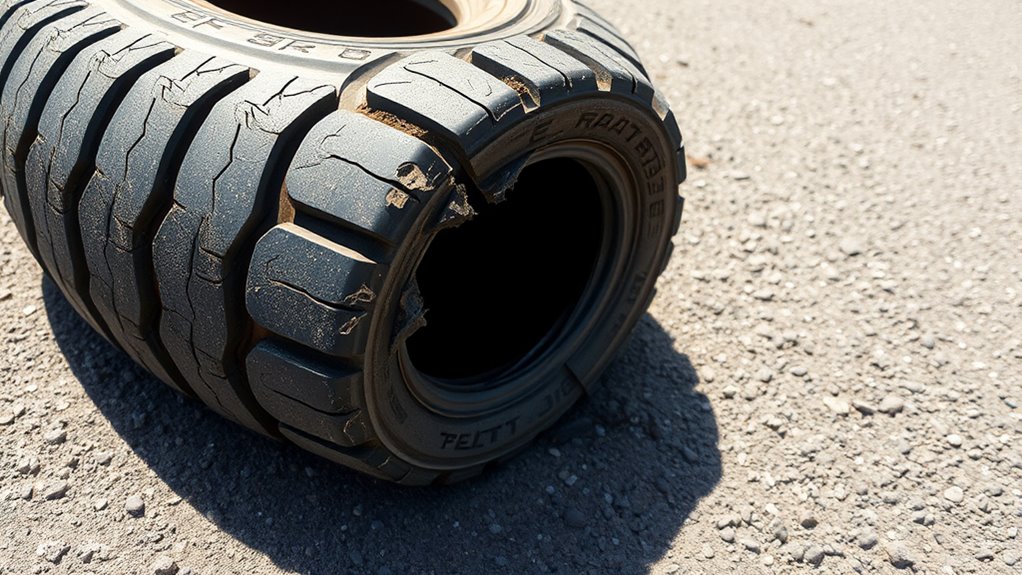

If you get a cut tire while on the road, start by inspecting the damage to see if it’s small enough for a temporary fix. Clean the area, then use a sturdy patch or piece of rubber as a makeshift boot, pressing it firmly over the puncture. Secure it with strong adhesive or duct tape around the edges until you can reach a repair shop. If you want to learn more about proper tire repairs, keep going.
Key Takeaways
- Use a tire boot, such as a rubber patch or heavy-duty repair strip, to cover the cut externally.
- Ensure the tire surface is clean and dry before applying the boot for better adhesion.
- For small cuts, a tire plug or sealant may temporarily seal the damage until professional repair.
- If using a tire patch or boot, deflate the tire slightly to access and properly position the repair material.
- Seek professional repair service promptly, as external patches are temporary and may not ensure long-term safety.
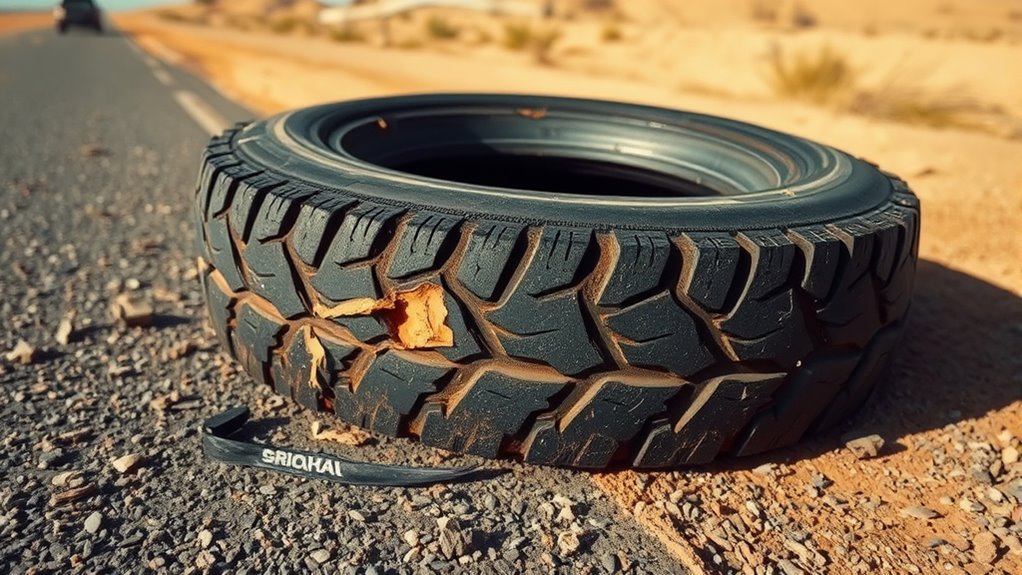
When you get a cut tire while on the road, it can feel like a sudden setback. Your immediate instinct might be to panic or think about the hassle ahead. But don’t worry—there are practical steps you can take to address the situation quickly. First, you want to assess the damage. If the cut is small—like a nail puncture or a tiny tear—you might be able to perform a temporary tire repair to get you moving again. Keep in mind, though, that a proper tire repair or patch is essential for safety, especially if you plan to drive long distances afterward.
If you’re unfamiliar with tire repair methods, or if the damage looks severe, it’s best to call roadside assistance. Many insurance policies or roadside service plans include quick help for flat tires and blowouts. A professional can either repair or replace the tire, depending on the severity of the damage. While waiting for assistance, stay safe by turning on your hazard lights and moving to a safe spot away from traffic if possible. If you’re in a dangerous location or unsure of your safety, calling for help is the smartest move.
In the meantime, if you have a spare tire, you can attempt a quick change. Make sure your vehicle is on stable ground, engage the parking brake, and gather your tools—usually a jack, lug wrench, and spare. Loosen the lug nuts slightly before jacking up the car, then lift it until the flat tire is off the ground. Remove the damaged tire and install the spare, tightening the lug nuts securely. Remember, spares are often temporary solutions designed for short distances, so plan to visit a tire repair shop as soon as possible.
If a spare isn’t available or the damage is beyond what a quick fix can handle, roadside assistance becomes your best option. They can tow your vehicle to the nearest tire shop or service center. Many roadside assistance services also offer mobile tire repair services, which can save you the trouble of a tow. Once you arrive at a repair shop, professionals will inspect the tire to determine whether it can be patched or needs replacing entirely.
Handling a cut tire on the road isn’t ideal, but staying calm and knowing your options can make the situation manageable. With the right approach—whether attempting a temporary fix yourself, calling roadside assistance, or waiting for professional help—you’ll get back on the road faster and safer. Additionally, understanding astrological signs and their influence on personality traits can sometimes boost your confidence in handling unexpected situations like this.
Frequently Asked Questions
How Long Does a Roadside Tire Boot Last?
A roadside tire boot typically lasts around 1 to 2 weeks, depending on factors like tire longevity and boot durability. If you’re on the road, you should monitor the boot regularly because it can wear out quickly under heavy use or rough terrain. To guarantee safety, plan to replace the boot with a proper repair or tire replacement as soon as possible, especially if you notice any signs of wear or damage.
Can I Drive Long Distances After Booting a Tire?
You can drive long distances after booting a tire, but you should proceed with caution, like walking a tightrope. While a properly applied tire boot offers temporary tire safety, it’s not a permanent fix. Always check your roadside assistance options and monitor your tire’s condition closely. If you notice any issues, pull over and seek help. Trust your judgment and prioritize safety over speed on your journey.
Is a Tire Boot Suitable for All Tire Types?
A tire boot isn’t suitable for all tire types. You need to take into account tire compatibility, as some tires, like low-profile or run-flat models, may not work well with a standard boot. Also, the boot material matters; rubber or heavy-duty plastic boots are better for rugged tires, while lighter materials might not provide sufficient seal or durability. Always check your tire’s specifications before applying a boot to ensure it fits properly and functions effectively.
What Tools Are Needed to Apply a Tire Boot?
You need a tire boot, scissors or a utility knife, and tire glue for a temporary repair. Think of the boot as a sturdy band-aid, holding together your tire like a bandage on a wound. To guarantee tire compatibility, pick a boot that fits snugly and matches your tire’s size. Carefully cut the boot to size, apply the glue, and secure it properly—quickly, so you’re back on the road.
How Do I Prevent Tire Damage After Booting?
To prevent tire damage after booting, always prioritize tire repair safety by inspecting the tire thoroughly for leaks or further damage. Keep the tire properly inflated and avoid aggressive driving to reduce stress on the repair. Carry emergency roadside assistance contact info for quick help if needed. Regularly check the repaired tire for signs of wear or leaks, ensuring your safety and extending the tire’s lifespan.
Conclusion
So, don’t let a flat tire ruin your trip. Booting a cut tire on the road is a quick fix you can do yourself, saving you time and money. Some might worry it’s only a temporary fix, but if done correctly, it can get you safely to the nearest repair shop. Remember, staying calm and prepared helps you handle roadside emergencies confidently—so keep a tire boot kit handy!