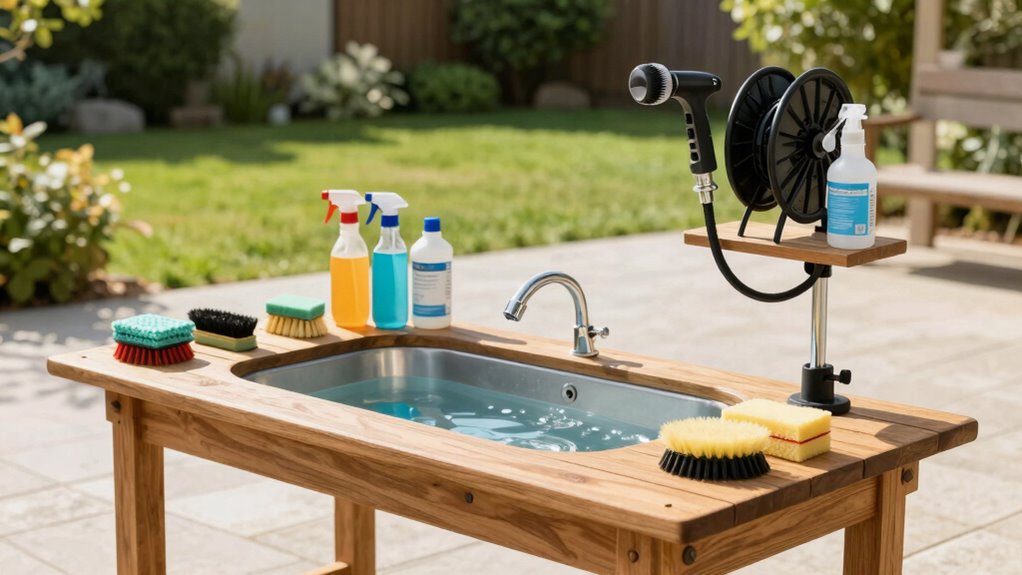
To build a bike cleaning station, choose an outdoor or garage space with plenty of room, good ventilation, and protection from the elements. Set up a sturdy work surface, like a workbench, and organize your tools and supplies in labeled containers or pegboards. Install bright, adjustable lighting for clear visibility and keep a bin nearby for waste. Maintaining an orderly and eco-friendly setup helps you stay consistent—keep going to discover more tips to perfect your station.
Key Takeaways
- Select an outdoor or garage area with ample space and proper ventilation to set up your station.
- Gather essential cleaning supplies, tools, and organize them on a workbench or pegboard for easy access.
- Install bright, adjustable lighting to improve visibility of all bike components during cleaning.
- Use a sturdy bike stand to elevate the bike, simplifying access to different parts for thorough cleaning.
- Designate waste disposal bins and labeled storage containers to maintain an organized and eco-friendly workspace.

Creating a dedicated bike cleaning station makes maintaining your bike easier and more convenient. When you have a dedicated space, you’re more likely to stay organized and consistently care for your bike. Start by choosing a suitable area, preferably outdoors or in a garage, where water runoff won’t cause problems. Clear out enough space to comfortably work on your bike, and consider installing a sturdy work surface like a workbench or a flat table. This will give you a stable area to handle your bike and keep your tools within reach.
Next, gather your essential bike cleaning supplies. You want to have a variety of cleaning products, brushes, sponges, and rags designed specifically for bike maintenance. Opt for bike-specific cleaning solutions that are gentle yet effective in removing dirt, grease, and grime without damaging your bike’s finish. Keep a bucket of warm water nearby for rinsing brushes and cleaning tools. It’s also wise to have a spray bottle for applying cleaner evenly over the bike frame, chain, and components.
Having a set of maintenance tools is equally important. Invest in a basic toolkit that includes a bike stand, Allen wrenches, screwdrivers, a chain cleaner, lubricants, and tire levers. A bike stand is particularly useful because it elevates the bike and allows you to work more comfortably and thoroughly. Keep your maintenance tools organized in a toolbox or on a pegboard above your work surface so you can quickly find what you need without rummaging through clutter. Additionally, understanding the importance of biodiversity in your local environment can motivate you to adopt eco-friendly cleaning practices that minimize environmental impact. Incorporating environmentally friendly cleaning methods can also help protect the surrounding ecosystem from harmful chemicals. Using biodegradable cleaning products further supports this effort and emphasizes sustainable practices in bike maintenance.
Lighting plays an essential role in ensuring you can see all areas of your bike clearly. Install bright, adjustable lighting above your station. Good illumination helps you spot dirt, grease, and any damage that might need attention. You also want to keep cleaning towels and paper towels handy for drying off your bike after washing. Using appropriate lighting ensures you don’t miss small details that could affect your bike’s performance. Incorporating eco-friendly cleaning methods can further reduce your environmental footprint while maintaining your bike effectively.
Finally, establish a system for disposal and storage. Have a bin nearby for used cleaning supplies and dirty rags. Store your bike cleaning supplies and maintenance tools in labeled containers or shelves, so everything stays neat and accessible. Maintaining a clean, organized bike cleaning station encourages regular upkeep and makes your bike maintenance routine more efficient. When everything has its place, you’ll find it easier to keep your bike in top shape, whether you’re giving it a quick wash or performing more detailed repairs.
As an affiliate, we earn on qualifying purchases.
Frequently Asked Questions
What Safety Precautions Should I Take During Cleaning?
You should wear protective gloves to prevent skin irritation from cleaning chemicals and always prioritize chemical safety by working in a well-ventilated area. Keep cleaning products away from children and pets, and read labels carefully for proper handling instructions. Avoid mixing chemicals, as dangerous reactions can occur. Use appropriate tools, and dispose of waste properly to guarantee a safe and effective bike cleaning process.
Can I Build a Portable Cleaning Station?
Yes, you can build a portable cleaning station using DIY materials. Opt for a sturdy plastic bin or a wheeled cart to create a portable setup that’s easy to move around. Gather basic supplies like brushes, rags, and cleaning solutions, then organize them with compartments or small containers. This way, you’ll have a convenient, mobile bike cleaning station ready for use anywhere, saving space and making maintenance more flexible.
What Are the Best Cleaning Products for Bikes?
Think of your bike as a delicate instrument that deserves the best care. You should use bike cleaning tools like soft brushes and microfiber cloths to avoid scratches. For eco-friendly cleaning solutions, look for biodegradable bike-specific cleaners that cut through grease without harming the environment. These products keep your bike shining and functioning smoothly, all while respecting nature. Stay gentle and sustainable in your cleaning routine.
How Often Should I Clean My Bike?
You should clean your bike regularly, ideally after every few rides or weekly if you ride often. Use your bike cleaning tools to remove dirt and grime, preventing rust and wear. Incorporate cleaning into your maintenance schedules to keep components in top shape. Pay extra attention after muddy or rainy rides, and always dry your bike thoroughly to avoid corrosion. Regular cleaning guarantees a smoother, safer ride and extends your bike’s lifespan.
Do I Need a Drainage System for the Station?
No, you don’t *need* a drainage system—unless you enjoy turning your garage into a mini car wash disaster. Drainage options help with water disposal, preventing puddles and stains. Installing a drain or a simple gravel bed directs water away and keeps your workspace tidy. Without it, you’ll be mopping more than fixing bikes, transforming your station into a swamp, and possibly inviting unwanted critters.
Conclusion
Now that you’ve built your own bike cleaning station, maintaining your bike becomes quicker and more enjoyable. With everything organized and within reach, you’ll be more likely to keep up with regular cleaning and care. Don’t you want your bike to perform its best and last longer? A dedicated station makes all the difference—so why not make bike maintenance easier and more efficient today? Happy riding and cleaning!