
To build a better recovery corner at home, focus on creating a calming and organized space that supports your well-being. Use soothing lighting, natural decor, and sensory elements like candles or essential oils to promote relaxation. Choose ergonomic furniture for comfort and support, and keep the area clutter-free for mental clarity. Personalize your space with meaningful items to foster resilience. Want tips to transform your recovery spot into a true haven? Keep exploring to discover more.

Get sports gear delivered free with Prime
- Fast, free delivery on millions of items
- Prime Video, Amazon Music and more included
- Member-only deals all year
Key Takeaways
- Incorporate calming elements like candles, essential oils, and natural decor to create a tranquil environment.
- Select ergonomic furniture and supportive cushions to enhance comfort and promote proper posture during recovery.
- Use soft, natural lighting and air-purifying plants to improve mood and air quality.
- Keep the space organized with baskets and shelves to maintain mental clarity and accessibility.
- Personalize the area with meaningful objects and artwork to foster a sense of safety and emotional well-being.
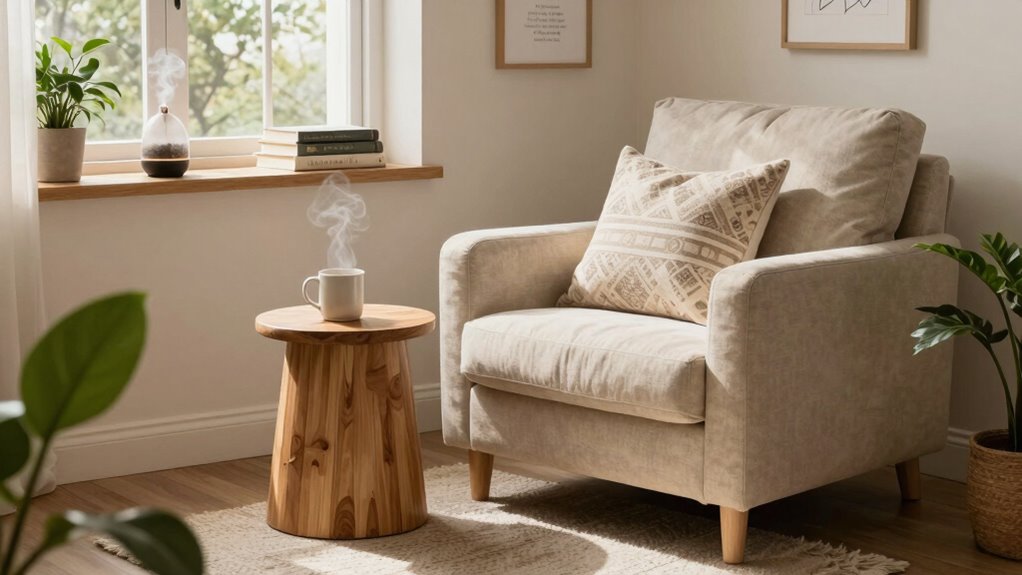
Have you ever wondered how to create a space in your home that truly supports your recovery and well-being? Building a recovery corner isn’t just about placing a chair in a quiet spot; it’s about designing a sanctuary where you can focus on healing and self-care. To start, think about incorporating mindfulness practices into your daily routine. This could mean adding a small table for candles or essential oils, which help create a calming atmosphere. You might also include a meditation cushion or a comfortable chair that invites you to breathe deeply and center yourself. The goal is to craft a space that encourages presence and tranquility, making it easier for you to engage in practices that reduce stress and promote mental clarity.
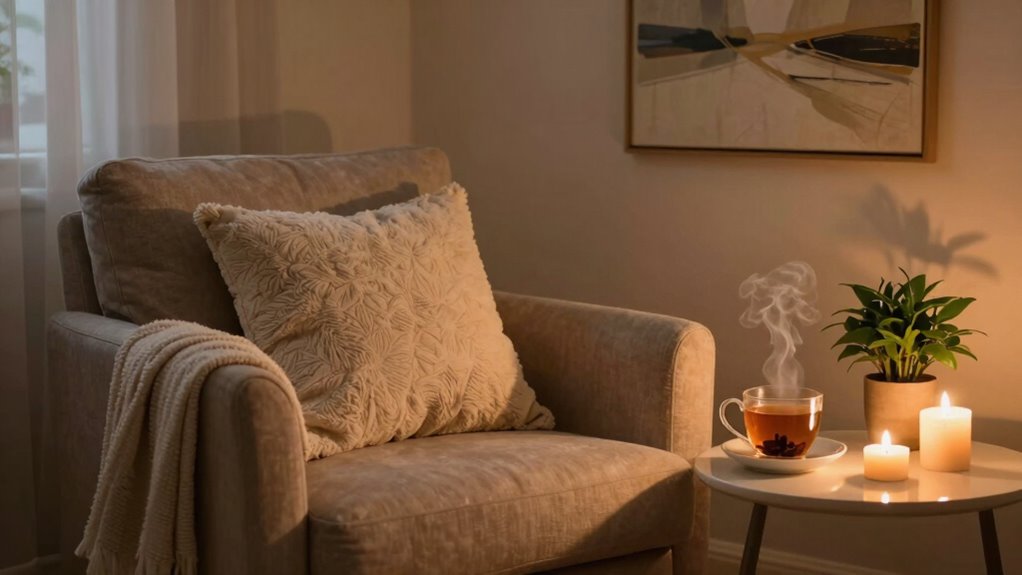
Create a calming space with candles, essential oils, and a comfortable chair to promote mindfulness and tranquility.
Next, pay attention to the furniture you select. Ergonomic furniture is essential because it supports your physical health during recovery. Invest in a chair that offers good lumbar support, adjustable height, and a comfortable seat to prevent strain or discomfort. If your recovery involves physical therapy or stretching, consider adding a supportive mattress or a cushioned mat that allows for gentle movement without risking injury. The right furniture makes a difference by ensuring you can spend extended periods in your recovery corner without pain or fatigue setting in. Keep in mind that ergonomic design prioritizes your body’s natural alignment and minimizes unnecessary stress, helping you maintain comfort and focus on your healing process. Additionally, incorporating elements that promote biodiversity and natural harmony can enhance your space, making it more soothing and connected to the environment. Creating a space with good air quality and natural elements can further support your wellbeing and recovery efforts. Including plants or natural decor can also improve air quality by filtering pollutants and increasing oxygen levels.
Lighting also plays a significant role in creating a healing environment. Opt for soft, natural light whenever possible—think about placing your recovery corner near a window or adding warm, adjustable lamps. Dimmable lighting allows you to set the mood depending on your activity, whether it’s meditation, reading, or simply relaxing. Utilizing natural light can positively impact your mood and energy levels, making your space more inviting. Clutter can impede your mental clarity, so incorporate smart storage options to keep your space organized. Use baskets or shelves to store mindfulness tools, books, or other essentials, ensuring your recovery corner remains a peaceful refuge rather than a chaotic corner of your home.
Finally, personalize your space with items that bring you comfort and inspiration. Photos, artwork, or meaningful objects can make your recovery corner feel inviting. Remember, this space should reflect your needs and preferences, making it easier to establish a routine that nurtures your mind and body. Creating a dedicated recovery corner is about intentional design—combining mindfulness practices, ergonomic furniture, and personal touches to support your healing journey. With these elements in place, you’ll find it easier to prioritize self-care and foster a sense of calm and resilience right at home.
As an affiliate, we earn on qualifying purchases.
Frequently Asked Questions
How Can I Personalize My Recovery Corner Effectively?
You can personalize your recovery corner effectively by incorporating personalized décor that reflects your style and interests, making the space more inviting. Focus on comfort customization by adding soft cushions, cozy blankets, and ergonomic furniture tailored to your needs. Use meaningful items like photos or inspirational quotes to create a soothing atmosphere. This way, your recovery corner becomes a sanctuary that encourages relaxation and healing, tailored specifically for you.
What Are Affordable Options for Creating a Recovery Space?
You can create an affordable recovery space by choosing budget-friendly furniture like comfy chairs or cushions from thrift stores. Incorporate DIY decoration ideas such as homemade candles, wall art, or cozy textiles to personalize the area without spending much. Use natural elements like plants or clips to hang inspiring quotes. These cost-effective options help you craft a relaxing, inviting recovery corner that fits your budget and style.
How Do I Maintain Cleanliness in My Recovery Area?
You keep your recovery area clean by establishing regular cleaning routines, like wiping down surfaces and vacuuming floors weekly. Use effective storage solutions to keep supplies organized and prevent clutter, making cleaning easier. Always wash linens and towels frequently to maintain hygiene. Guarantee trash bins are emptied regularly. By staying consistent with cleaning routines and using smart storage, you create a safe, inviting space that promotes healing and comfort.
Can Children Safely Use the Recovery Corner?
You shouldn’t let children use the recovery corner unsupervised, as it’s a place meant for healing, not play. Child safety comes first, so always keep medical supervision nearby to prevent accidents or misuse of medical supplies. Think of it as a delicate balance—allowing kids to learn about health safely while ensuring they don’t get hurt. With proper oversight, children can understand recovery without risking safety.
What Are the Best Plants or Decor for Relaxation?
You should choose indoor greenery like snake plants or pothos for a calming vibe, as they purify the air and add natural beauty. Incorporate aromatherapy plants such as lavender or jasmine to promote relaxation and reduce stress. Use soft, neutral decor like woven baskets, cozy cushions, and gentle lighting to create a peaceful atmosphere. These elements work together to make your recovery corner a soothing retreat for rest and healing.
Conclusion
Now, picture your recovery corner as a sanctuary so powerful, it transforms your entire well-being. Every time you step into this oasis, you’re stepping into a fortress of peace, strength, and rejuvenation—an unstoppable force that banishes stress and fatigue with a single breath. With your perfect recovery corner, you’ll feel invincible, ready to conquer anything life throws your way. It’s not just a space; it’s your secret weapon for unstoppable vitality and boundless energy!
NFL season / tailgating Picks
team gear
As an affiliate, we earn on qualifying purchases.