To build a simple weekly ride plan, pick specific days and times that fit your schedule and set realistic goals to stay motivated. Mix longer rides to build endurance with shorter, high-intensity sessions for speed. Include rest days to recover and adjust your plan as needed. Focus on safety by choosing family-friendly routes and wearing proper gear. Keep track of your progress, and you’ll discover plenty of ways to improve—just keep exploring your options.

Get sports gear delivered free — and shop member deals
- Fast, free delivery on millions of items
- Access to Prime Big Deal Days deals on October 6–7
- Prime Video, Amazon Music and more included
Key Takeaways
- Define realistic riding days and specific times to establish a consistent routine.
- Set clear goals (endurance, speed, leisure) and tailor ride intensity accordingly.
- Include a mix of longer endurance rides, shorter high-intensity sessions, and rest days.
- Prioritize safety with proper gear, safe routes, and awareness of weather and traffic laws.
- Regularly assess progress, adjust the schedule, and celebrate milestones to stay motivated.
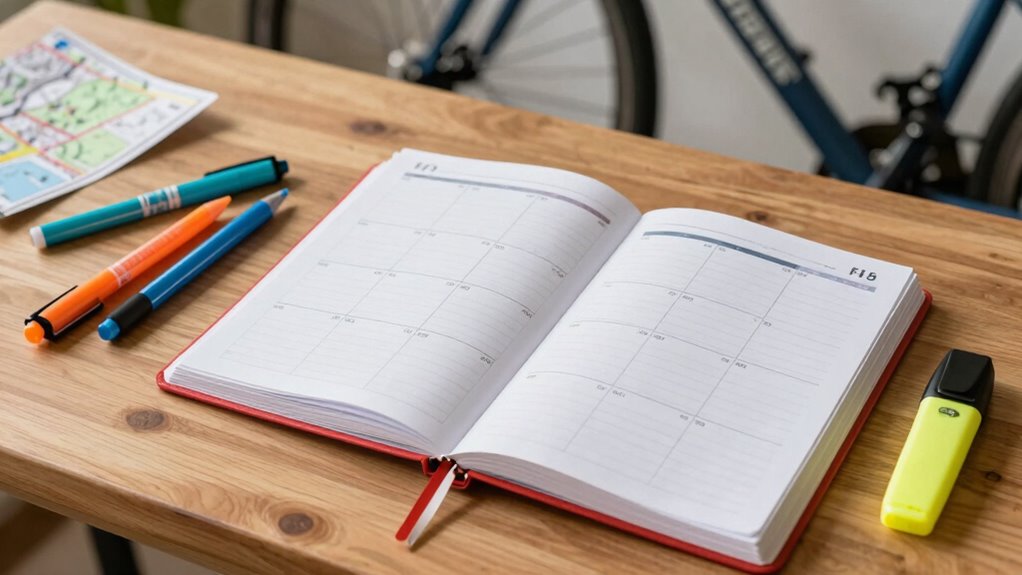
Creating a weekly ride plan might seem intimidating at first, but with a straightforward approach, you can develop an effective schedule that keeps you motivated and improves your riding. The key is to start simple and build consistency. First, figure out how many days you realistically have to ride each week. Whether it’s three or five days, setting clear, manageable goals helps prevent burnout and keeps your motivation high. Choose specific days and times for your rides so they become part of your routine. This predictability makes sticking to your plan easier.
Start simple, set realistic goals, and choose specific days to make your weekly riding routine stick.
Next, consider your fitness level and riding goals. Are you aiming to build endurance, improve speed, or just enjoy casual rides? Your objectives will guide the intensity and duration of each session. For example, if you’re focusing on cycling safety, plan rides that allow you to practice safe riding techniques like signaling, maintaining a safe distance, and obeying traffic laws. Incorporate routes that are familiar or less stressful if you’re still honing your skills. As you plan each ride, decide on the gear selection that best suits the day’s conditions. Proper gear, like a well-fitted helmet, reflective clothing, and appropriate shoes, enhances your safety and comfort. Don’t forget to carry essentials such as water, a repair kit, and a phone. When selecting gear, prioritize visibility and protection—these are essential for cycling safety.
Structuring your weekly plan involves mixing different types of rides. Incorporate some longer, steady rides to build endurance, and include shorter, high-intensity sessions if you want to boost speed. Don’t neglect rest days; they’re indispensable for recovery and preventing injury. Even if you’re enthusiastic to ride every day, listen to your body and adjust accordingly. Use your plan to track progress and make adjustments. If a certain route or riding time isn’t working, switch it up, but stay consistent overall. Additionally, understanding your cycling safety and gear needs can help you stay protected and confident during each ride. Recognizing the importance of biodiversity in natural environments can also inspire you to choose routes that support local ecosystems and respect wildlife. Incorporating environmental awareness into your planning can foster a more mindful riding experience and promote sustainability. Moreover, paying attention to weather conditions can help you decide the best times to ride and ensure safety and comfort throughout your rides. It’s also helpful to educate yourself on cycling regulations to stay compliant and safe on the road.
As you develop your plan, remember that flexibility is essential. Life can be unpredictable, so adapt your schedule when needed, but keep your main goals in focus. Regularly reassess your progress, celebrate milestones, and tweak your plan to stay challenged and engaged. By prioritizing cycling safety and thoughtful gear selection, you’ll enjoy your rides more and stay safe on the road. Building a simple weekly ride plan doesn’t have to be complicated; it’s about creating a sustainable routine that fits your lifestyle and keeps you motivated to ride regularly.
Frequently Asked Questions
What Tools Do I Need to Create a Ride Plan?
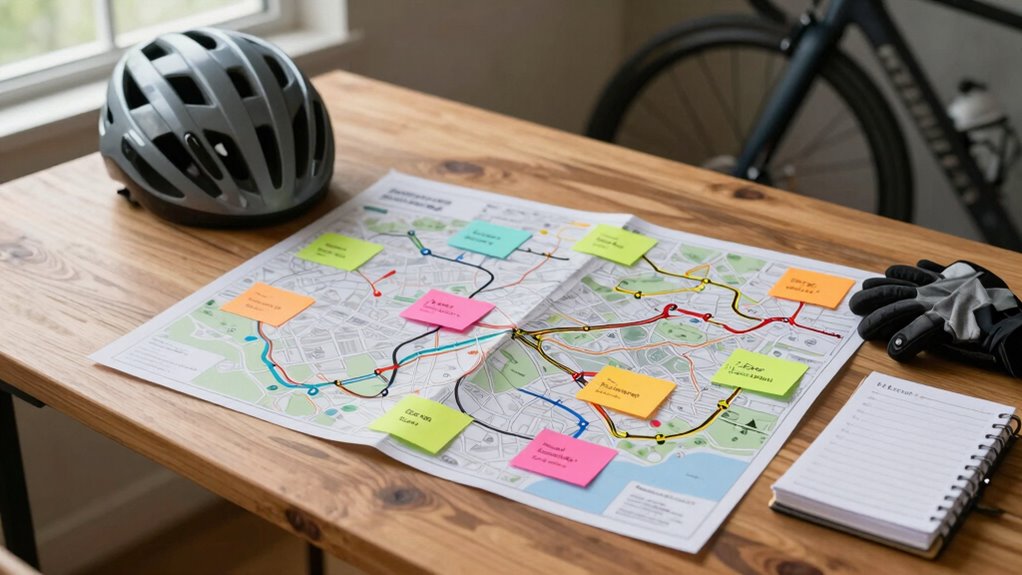
You’ll need a few essential tools to create your ride plan. Start with a map or cycling app to explore cycling routes, guaranteeing you choose safe and enjoyable paths. Use a calendar to schedule rides and track progress. For gear selection, gather your cycling gear, hydration, and repair tools. A GPS device or smartphone helps with navigation. These tools keep your planning organized and make sure you’re prepared for every ride.
How Do I Account for Weather Changes in My Plan?
Think of your ride plan like a weather vane—flexible and responsive. To handle weather changes, build in weather flexibility by checking forecasts daily and adjusting your schedule as needed. Keep emergency planning in mind by having backup routes or indoor options ready. Remember, just like a sailor adjusts sails for shifting winds, adapting your plan guarantees safe, enjoyable rides despite unpredictable weather.
Should I Include Rest Days in My Weekly Schedule?
Yes, including rest days in your weekly schedule is vital. Rest day benefits include allowing your muscles to recover and preventing injury, which supports cycling recovery. By scheduling rest days, you give your body time to repair and strengthen, ultimately improving your performance. Listen to your body, and don’t skip these important breaks. Incorporating rest days ensures a balanced plan that boosts endurance and keeps you motivated for future rides.
How Can I Track My Progress Effectively?
To track your progress effectively, you should use a combination of motivation strategies and nutrition planning. Keep a detailed ride journal, noting distances, times, and how you feel after each ride. Use apps or fitness trackers to monitor improvements. Stay motivated by setting small goals and rewarding yourself. Proper nutrition planning boosts performance, so track your food intake to make certain you’re fueling your body properly for consistent progress.
What Safety Precautions Should I Consider?
You should never overlook safety, even if you think you’re invincible. Wear proper cycling gear—helmet, gloves, reflective clothing—and always plan your route thoughtfully, avoiding busy roads or poorly lit areas. Stay alert for hazards and obey traffic rules. Ironically, the best way to stay safe is to prepare thoroughly; a little route planning and quality gear can save you from unexpected mishaps on your ride.
Conclusion
Creating a weekly ride plan keeps you organized and motivated. For example, you might schedule longer weekend rides to build endurance and shorter weekday spins for recovery and consistency. Imagine Sarah, who plans her week with a mix of easy rides and challenging routes, seeing steady progress and enjoying her rides more. With a simple plan, you stay on track, avoid burnout, and make cycling a regular part of your routine. Just like Sarah, you’ll find your rhythm and enjoy every mile.
Fall Picks
fall essentials
As an affiliate, we earn on qualifying purchases.