To build confidence while riding in traffic, focus on practicing smooth bike controls, maintaining awareness through constant scanning and mirror checks, and using proper positioning to stay visible and predictable. Stay calm, set small goals like maneuvering intersections, and celebrate your progress. Gaining experience and mastering defensive riding techniques will boost your safety and comfort. Keep exploring ways to enhance your skills, as steady progress makes urban riding more enjoyable and less stressful.
Key Takeaways
- Practice riding in low-traffic areas to develop skills before tackling busier streets.
- Maintain awareness by scanning ahead, using mirrors, and anticipating other drivers’ actions.
- Master bike controls through regular drills to react smoothly in complex traffic situations.
- Position yourself effectively for visibility and predictability, communicating intentions clearly to others.
- Build confidence gradually by setting achievable goals, celebrating progress, and staying positive.
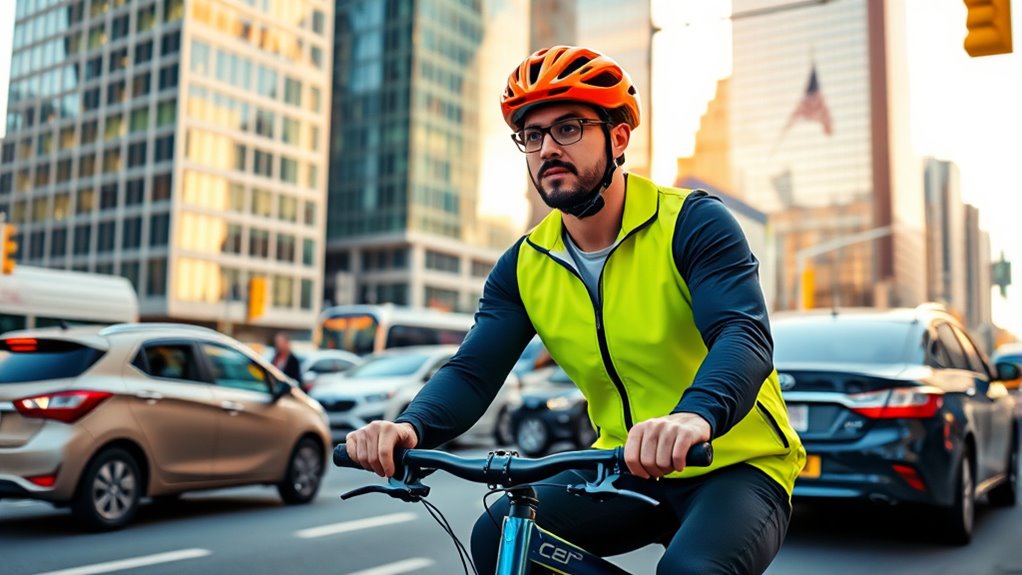
Riding in traffic can be intimidating, but building confidence is essential for your safety and enjoyment. When you’re maneuvering busy streets, your ability to stay calm and make quick decisions directly impacts your motorcycle safety. Urban cycling presents unique challenges — from unpredictable drivers to tight spaces — so feeling confident on your bike isn’t just about comfort; it’s about survival. The first step to achieving this confidence is understanding that every ride is a learning opportunity. Instead of fearing mistakes, see them as part of the process. With experience, you’ll develop a better sense of how traffic flows and how to position yourself to be visible and predictable.
One of the most effective ways to build confidence is by practicing proper riding techniques. Keep your eyes ahead, scanning constantly for potential hazards. Use your mirrors frequently to stay aware of what’s happening behind you, and avoid blind spots whenever possible. Maintaining a safe following distance gives you more time to react, reducing stress and increasing control. When you ride with a clear plan, you’ll find it easier to handle sudden stops or lane changes, which are common in urban settings. Remember, motorcycle safety isn’t just about wearing gear; it’s about actively applying safe riding habits every time you’re on the road. Developing a good understanding of traffic flow and how to adapt to it can significantly improve your riding confidence.
Another important aspect of urban cycling confidence is mastering your bike’s controls. Spend time in low-traffic areas practicing smooth acceleration, braking, and turning. The more familiar you are with how your motorcycle responds, the more natural your reactions will feel in complex traffic situations. This familiarity boosts your confidence and helps you stay composed, even in stressful moments. Additionally, consider taking a defensive riding course focused on city riding. These courses teach you how to anticipate other drivers’ actions, giving you an edge when maneuvering busy streets. Knowing how to position yourself in traffic and communicate your intentions helps you become more visible and reduces the chances of accidents.
Finally, don’t forget the importance of mental preparation. Stay calm, keep a positive attitude, and remind yourself that you’re capable. Confidence grows as you accumulate successful experiences, so set small, achievable goals for each ride. Whether it’s confidently merging into traffic or confidently navigating a tricky intersection, celebrate your progress. Over time, these small wins will translate into greater comfort and safety every time you hit the streets. Remember, urban cycling is a skill that improves with practice, patience, and persistence. The more you focus on safe motorcycle practices and building your confidence, the more enjoyable and secure your riding experience will become.
Frequently Asked Questions
How Can I Handle Aggressive Drivers Safely?
When facing aggressive drivers, stay calm and practice defensive riding by maintaining a safe distance and avoiding eye contact. Keep alert and enhance your road awareness to anticipate their moves. If someone acts aggressively, don’t engage; instead, slow down or change lanes safely. Trust your skills, stay visible, and always prioritize your safety. These steps help you handle aggressive drivers confidently and reduce the risk of confrontation or accidents.
What Gear Should I Wear for Maximum Safety?
Think of yourself as a knight preparing for battle; your gear is your armor. You should wear a helmet, gloves, jacket, and pants with protective padding for maximum safety. Add visibility accessories like reflective vests or strips to stand out in traffic. These items shield you from harm and make you visible to others, turning you into a confident rider ready to face any challenge on the road.
How Do I Choose the Best Route in Traffic?
When choosing the best route in traffic, pay attention to traffic signals and road markings to stay safe and efficient. Opt for routes with clear signals and well-marked lanes, which help you anticipate other drivers’ actions. Avoid busy intersections and choose roads with dedicated bike lanes if available. Planning your route ahead of time and staying alert to traffic signals and markings will boost your confidence and keep you safe on the road.
When Is It Best to Avoid Riding in Traffic?
You should avoid riding in traffic when road conditions are poor or weather considerations make riding unsafe. Heavy rain, snow, fog, or icy surfaces increase the risk of accidents, so it’s best to wait until conditions improve. Also, if traffic is extremely congested or drivers seem distracted, delaying your ride can help keep you safe. Prioritize your safety by choosing to ride only when conditions are favorable and manageable.
How Can I Improve My Reaction Time?
You can improve your reaction time by sharpening your mental focus and staying physically ready at all times. Keep your eyes peeled like a hawk for sudden movements, and stay alert so you can respond instantly. Practice quick decision-making and stay physically prepared with regular exercise to boost your reflexes. The more you train your mind and body to work together, the faster your reactions become, making you safer and more confident in traffic.
Conclusion
So, now you’re practically a traffic ninja, right? Just remember, confidence is key—unless you want to become a traffic statistic. Keep practicing, stay alert, and maybe invest in some shiny new gear to boost your ego. After all, nothing screams “I’ve got this” like confidently weaving through cars while secretly praying you don’t make a fool of yourself. Ride smart, stay fearless, and soon you’ll be the traffic legend you were born to be.