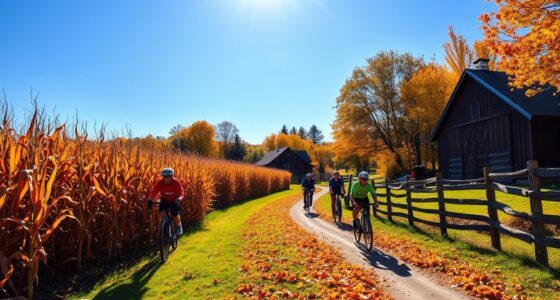
To carry more water on summer rides, consider using multi-bottle systems with 2-3 bottles that fit securely in your cages, and opt for insulated bottles to keep water cool longer. Carry lightweight hydration packs with hoses for quick sips and store essentials. Plan your route with refill stations or natural water sources with built-in filters. Using hydration apps can also help you track intake and plan stops, ensuring you’re always well-hydrated. Keep exploring for more tips to stay fully refreshed.

Get sports gear delivered free — and shop member deals
- Fast, free delivery on millions of items
- Access to Prime Big Deal Days deals on October 6–7
- Prime Video, Amazon Music and more included
Key Takeaways
- Use multi-bottle systems to increase water capacity for longer rides.
- Carry lightweight hydration packs with multiple compartments for extra water and essentials.
- Plan your route with access to refill stations or natural water sources.
- Opt for insulated bottles to keep water cool and prevent frequent refills.
- Incorporate bottles with built-in filters for safe refills from natural sources.
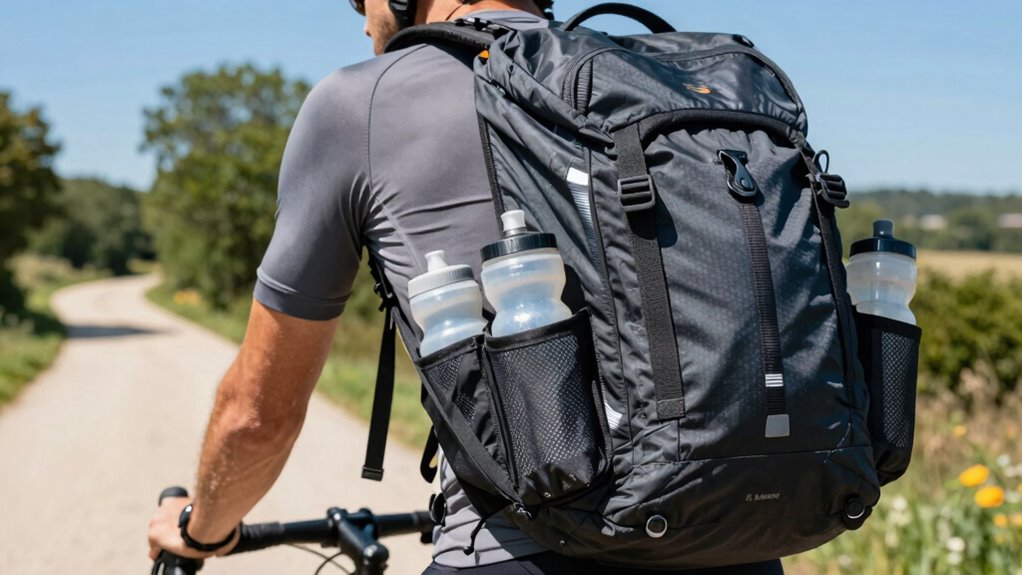
When riding in the heat of summer, staying hydrated is crucial, but carrying enough water can be challenging. You need to plan your hydration techniques carefully to guarantee you stay safe and energized throughout your ride. One of the best ways to do this is by choosing the right water bottle types. Not all bottles are created equal, so it’s worth exploring your options to find what works best for your ride.
For longer rides, consider multi-bottle systems. Using two or even three water bottles mounted on your bike frame allows you to carry a larger volume of water without sacrificing comfort or mobility. Look for bottles with wide mouths for easy filling and cleaning, and make sure they fit securely in bottle cages to prevent spills during bumpy stretches. Insulated bottles are a great choice—they help keep your water cool longer, especially in scorching heat, making each sip more invigorating.
Use multiple bottles with wide mouths and secure fit for longer, hotter rides to stay refreshed and comfortable.
Aside from bottle type, hydration techniques play a crucial role. Sip small amounts regularly rather than gulping large quantities at once; this helps your body absorb water more efficiently and prevents stomach discomfort. Carrying a small, lightweight hydration pack is another excellent option, especially if your bike setup limits bottle capacity. These packs often have a built-in hose, allowing you to hydrate without stopping, which is especially handy during intense climbs or fast-paced segments. Plus, they provide extra storage for snacks or other essentials. Staying aware of your hydration needs can help you avoid dehydration and maintain optimal performance. Additionally, practicing proper hydration timing can help you stay ahead of thirst and avoid overhydration. Incorporating hydration tracking with smart bottles or apps can further optimize your intake and prevent dehydration or overhydration.
Being prepared with the right hydration gear, such as bottles with easy-to-open caps, can make a significant difference in your ride experience. If you’re concerned about running out of water, plan your route to include water refill stations or shaded spots where you can pause and top off your bottles. Use a hydration app or map to identify these points beforehand. For added convenience, invest in bottles with easy-to-open caps, so you can hydrate on the go without fumbling. Some bottles even have built-in filters, allowing you to refill from natural sources safely if you’re in remote areas. Additionally, choosing bottles with smart hydration features can help you monitor your intake more effectively.
Frequently Asked Questions
What Is the Best Type of Water Container for Cycling?
The best water container for cycling is a lightweight, durable bottle made from BPA-free plastic or stainless steel. These materials keep your water fresh and resist odors. Opt for a bottle with a secure, leak-proof cap for easy access during rides. To stay hydrated, plan your hydration schedule, and choose a water bottle that’s easy to carry and refill, ensuring you stay refreshed and energized throughout your summer rides.
How Often Should I Hydrate During a Summer Ride?
You should hydrate regularly during your summer ride, aiming to drink every 15-20 minutes to maintain your hydration schedule. Keep an eye on your electrolyte balance by including electrolyte drinks or tablets, especially during long or intense rides. Listen to your body—if you feel thirsty, it’s a sign to drink more. Proper hydration helps prevent dehydration and keeps your energy levels steady throughout your ride.
Can I Use Reusable Bottles for Long Rides?
Yes, reusable bottles are perfect for long rides. They fit well into hydration strategies and are eco-friendly. Just make sure you carry enough water and stay mindful of water bottle etiquette, such as not blocking others’ path or leaving bottles behind. Using a durable, insulated reusable bottle helps keep water cold longer. Always refill when you pass a hydration station, and stay consistent with your hydration to maintain energy and safety.
What Are Signs of Dehydration to Watch For?
You’ll notice dehydration signs when your electrolyte balance shifts and your thirst sensation intensifies. You might feel dizzy, experience dry mouth, or suffer from muscle cramps. Fatigue and dark urine also signal dehydration. Pay attention to these cues, stay hydrated, and replenish electrolytes regularly. Recognizing these signs early helps you maintain your energy and avoid serious health issues during hot summer rides.
How Do I Prevent Water Bottles From Leaking?
To prevent water bottles from leaking, always check for leak-proof caps before purchasing. Make certain the caps are tightly sealed after each use. Using bottles with high-quality insulation materials can also help, as they often come with secure, leak-proof designs. Avoid overfilling the bottles, which can cause spills. Regularly inspect your bottles for cracks or damage, and replace any faulty ones to keep your rides mess-free and hydrated.
Conclusion
As you push your limits on summer rides, remember that carrying more water isn’t just about hydration — it’s about staying cool in the heat and confident on the trail. Just like a sturdy water bottle keeps you refreshed, a well-packed hydration pack keeps your energy up. In the sweltering sun, your gear becomes your best teammate, turning a grueling ride into an enjoyable adventure. Stay prepared, stay hydrated, and enjoy every mile.
Halloween Picks
halloween
As an affiliate, we earn on qualifying purchases.