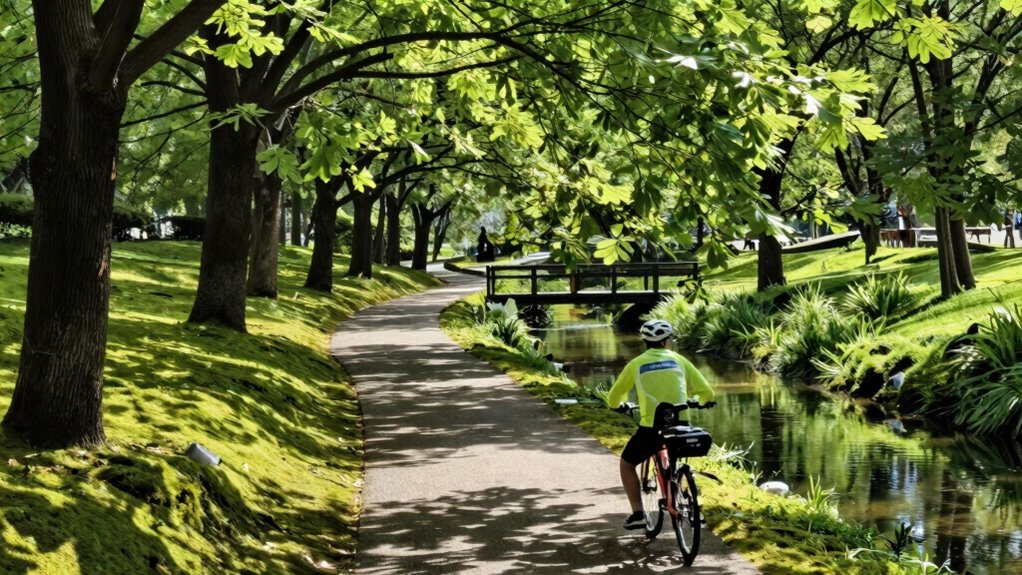
To choose better routes for recovery days, opt for flat, even terrains like grass or dirt trails that reduce joint impact. Prioritize scenic, shaded paths to promote mental relaxation and regulate temperature. Make sure routes are accessible, well-maintained, and familiar to avoid accidents and overexertion. Stay mindful of your body’s signals—shorten or simplify routes if you feel soreness or fatigue. Want to learn more about optimizing your recovery routes? Keep exploring for expert tips.

Get sports gear delivered free with Prime
- Fast, free delivery on millions of items
- Prime Video, Amazon Music and more included
- Member-only deals all year
Key Takeaways
- Select flat, even terrain on soft surfaces like grass or dirt to minimize joint impact and prevent injury.
- Choose scenic, shaded routes that promote relaxation and help regulate body temperature.
- Prioritize accessible, well-maintained paths to ensure consistency and safety during recovery walks.
- Incorporate gentle inclines if feeling good, or flat routes when dealing with soreness for optimal circulation.
- Avoid strenuous or unpredictable routes to reduce dehydration risk and support injury prevention.

Recovery days are essential for allowing your body to repair and strengthen, but choosing the right routes can make a significant difference in how effective they are. When you plan your recovery walks or gentle runs, focus on routes that promote ideal healing without risking further strain or injury. A key aspect to contemplate is hydration strategies. Opt for paths that are easily accessible to water sources or allow you to carry enough fluids comfortably. Staying well-hydrated helps flush out toxins, reduces muscle soreness, and supports tissue repair, making your recovery more efficient. Avoid overly strenuous or unpredictable routes that might tempt you to push beyond your limits, as dehydration combined with fatigue can increase your injury risk.
Choose gentle, accessible routes with water access to optimize hydration and support recovery.
Your route choice should also prioritize injury prevention. Select paths with even terrain, avoiding steep inclines or uneven surfaces that could cause missteps or overuse injuries. Soft surfaces, like grass or dirt trails, can be gentler on your joints and muscles, reducing the impact on your body during recovery. Wide, well-maintained paths allow for a more controlled movement, preventing accidental falls or awkward landings that might exacerbate existing issues or create new ones. Incorporating proper route selection can significantly enhance the safety and effectiveness of your recovery efforts. Additionally, choosing routes that are accessible and convenient can help ensure consistency and ease of use, which is vital for establishing a regular recovery routine.
Pay attention to the environment you’re in. A peaceful, scenic route can help you relax mentally, which is just as crucial as physical recovery. Stress reduction can lower cortisol levels, which in turn supports immune function and tissue healing. If possible, choose routes with shade or trees that provide shelter from harsh sunlight, helping you regulate body temperature and avoid overheating or dehydration. Make sure your route is familiar or well-mapped, so you don’t get lost or encounter obstacles that could cause you to rush or overexert yourself. Additionally, selecting routes that are eco-friendly and sustainable can contribute to the preservation of natural environments and promote biodiversity.
Finally, consider your personal recovery needs. If you’re dealing with soreness or minor injuries, opt for gentle, flat routes that encourage circulation without excessive impact. If you’re feeling good, a slightly varied route with gentle inclines can promote blood flow, aiding recovery without risking setbacks. Always listen to your body—if you feel discomfort or fatigue, stick to easier terrain or shorten your route. Remember, the goal is to support your body’s healing process, not to challenge it. With thoughtful route selection, hydration strategies, and injury prevention measures, you’ll maximize your recovery days and come back stronger.
Products Worth Considering

Garmin Forerunner 165 GPS Running Smartwatch, 43 mm, Black

Theragun Prime 6th Generation Deep Tissue Massage Gun – Black

Garmin vívoactive 5 GPS Smartwatch, 42mm, Black
As an affiliate, we earn on qualifying purchases.
Frequently Asked Questions
What Gear Should I Carry on Recovery Day Routes?
On recovery day routes, you should carry gear essentials like a water bottle, a small snack, a basic first aid kit, and a phone for navigation and emergencies. Route planning helps you choose safe, manageable paths that avoid strenuous terrain. Keep your gear minimal but sufficient, ensuring you’re prepared for minor issues without overloading yourself. This way, you can enjoy a relaxed recovery without unnecessary stress or risk.
How Do Weather Conditions Affect Route Choices?
Weather impact can turn your serene route into a treacherous trail, so you need to be flexible with your route planning. Rain can transform paths into slippery slides, while strong winds might push you off course. Sunny days call for shaded routes, and chilly weather demands warm, layered gear. Always check the forecast before setting out, and adapt your route to stay safe and comfortable, turning weather’s challenge into a well-planned adventure.
Can I Combine Multiple Recovery Routes in One Day?
Yes, you can combine multiple recovery routes in one day. Opt for routes with varied terrain to keep the experience interesting and avoid overexertion. Include scenic spots to make your recovery enjoyable and mentally invigorating. Plan your routes carefully, balancing easy terrains with gentle inclines, and incorporate breaks at picturesque locations. This approach helps you recover effectively while keeping your mood uplifted and your body gently active.
What Safety Tips Are Essential for Recovery Routes?
You should prioritize safety by paying attention to terrain variety and route difficulty. Always check the route beforehand to understand its challenges and select paths suited to your recovery level. Wear appropriate footwear, bring a map or GPS, and stay hydrated. Avoid risky areas like steep or uneven terrain, and inform someone about your plans. Listening to your body and adjusting pace accordingly helps prevent injury and guarantees a safe, effective recovery.
How Often Should I Change My Recovery Routes?
Think of your recovery routes like a garden; if you stick to the same path, it can lose its importance. You should change your routes every few weeks to include route variation and scenic routes, which keep your mind engaged and your body challenged gently. This variety prevents monotony, promotes healing, and keeps your recovery fresh. Regular change guarantees you stay motivated and your recovery journey remains balanced and effective.
Conclusion
Choosing the right route for your recovery day is like tending a delicate garden—you want to nurture and refresh, not strain. By selecting gentle, scenic paths that allow your body to recover, you give yourself the gift of renewal. Remember, the journey isn’t just about the destination but about restoring your strength and peace along the way. So, pick your routes wisely, and watch your resilience blossom like spring after a long winter.