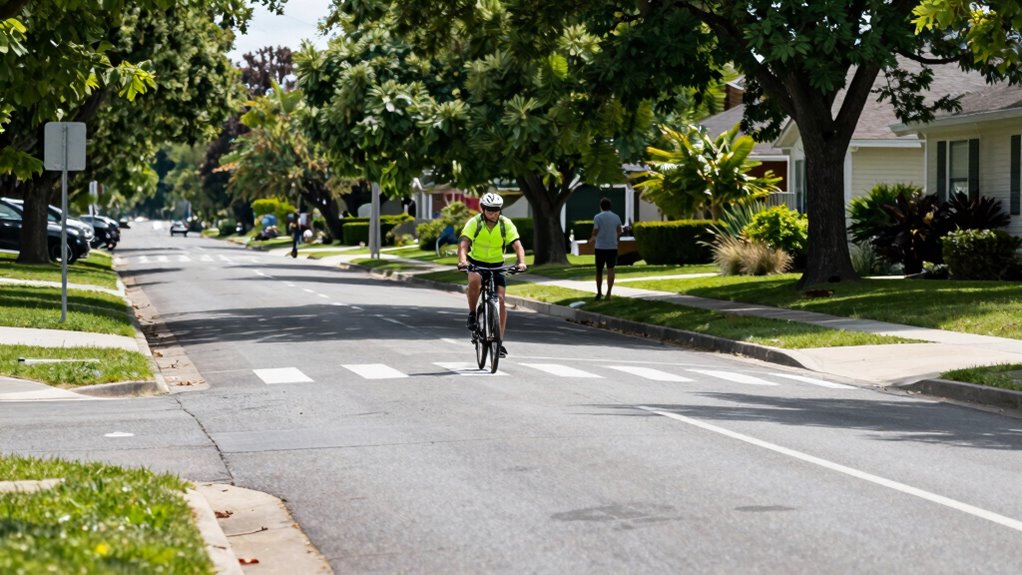

To choose safer roads for training, look for routes with functioning traffic signals and clear crosswalks to guide both you and drivers. Pick paths with well-marked lanes, good lighting, and minimal hazards like debris or construction. Avoid roads with poor maintenance or inconsistent traffic flow, as these increase risks. Prioritize routes that offer good visibility and are well-lit during early mornings or evenings. Keep these tips in mind to find the safest options and learn more details to enhance your safety.

Get sports gear delivered free — and shop member deals
- Fast, free delivery on millions of items
- Access to Prime Big Deal Days deals on October 6–7
- Prime Video, Amazon Music and more included
Key Takeaways
- Select roads with functioning traffic signals and clear pedestrian crossings to reduce unpredictable vehicle and pedestrian interactions.
- Prioritize routes with well-marked lanes, bike lanes, and visible crosswalks for better guidance and safety.
- Choose well-lit roads with consistent traffic flow and low vehicle speeds for improved visibility and reduced risk.
- Avoid construction zones, debris, and poorly maintained signs to minimize hazards during training.
- Opt for routes with proper maintenance, minimal hazards, and organized traffic management for a safer training environment.

Have you ever wondered how to make your training runs safer? Choosing the right roads can considerably reduce risks, and paying attention to traffic signals and road markings is a smart place to start. Traffic signals provide clear instructions for drivers and pedestrians alike, so running along roads with properly functioning lights helps you anticipate when vehicles will stop or go. Crosswalks equipped with pedestrian signals give you designated safe spots to cross, making it easier to stay visible and avoid sudden surprises. Avoid roads where signals are broken or missing, as this can create unpredictable situations that increase your chances of accidents.
Road markings are another essential factor in selecting a safe route. Well-marked lanes, bike lanes, and shoulder lines guide both drivers and runners, reducing confusion and improving safety. When you see clear lane divisions and directional arrows, it’s easier to stay within your designated space, minimizing interactions with vehicles. Look for roads with visible crosswalks and stop lines, which indicate where drivers are expected to halt, giving you a better chance to cross safely. Conversely, poorly marked roads or faded paint can be confusing, making it harder for drivers to anticipate your movements and increasing your risk of being overlooked.
As you choose your training routes, prioritize roads with consistent traffic flow and lower vehicle speeds. Roads with traffic signals and clear road markings tend to be more organized, helping control vehicle behavior and creating a safer environment for runners. Stick to routes that have sidewalks or designated running paths whenever possible, but if you’re sharing the road, ensure that the area is well-lit and visible. Bright lighting enhances your visibility, especially during early mornings or evenings, and combined with proper road markings, it helps drivers see you clearly. Paying attention to traffic management can further improve your safety by understanding how traffic signals and markings influence driver behavior.
Lastly, observe the overall maintenance of the roads you’re considering. Well-maintained roads with intact signals and markings usually indicate better traffic management and fewer hazards. Avoid roads with construction zones, excessive debris, or poorly maintained signs, as these can pose hidden dangers. Being aware of road conditions and their influence on safety is crucial for making informed decisions. By choosing routes that prioritize traffic signals, road markings, and proper maintenance, you set yourself up for a safer, more enjoyable training experience. Remember, your safety starts with making informed choices about your running environment, so stay alert, be aware of your surroundings, and always choose routes that promote safety and visibility.
As an affiliate, we earn on qualifying purchases.
Frequently Asked Questions
How Often Should I Reassess Road Safety for Training Routes?
You should reassess road safety for training routes at least every six months, or more often if you notice changes in driver behavior or new route signage. Regular checks help identify hazards, make certain signage remains clear, and adapt to any infrastructure updates. Keep an eye on how drivers navigate the route and address issues promptly, maintaining a safe environment for everyone involved in your training sessions.
Are There Specific Signs Indicating Unsafe Roads for Training?
Are you aware of signs that warn you about unsafe roads? Look for clear, visible signage indicating road hazards like sharp turns, uneven surfaces, or poor lighting. Poor signage clarity often signals an unsafe environment. Watch for debris, water accumulation, or fallen trees that can indicate hazards. If signs are ambiguous or obscured, it’s a red flag. Always prioritize routes with well-maintained signage to guarantee safety during training.
What Technology Can Assist in Selecting Safer Training Routes?
GPS mapping and safety apps can considerably help you select safer training routes. GPS mapping provides real-time traffic updates, road conditions, and alternative routes, making it easier to avoid hazards. Safety apps often include features like accident alerts, hazard warnings, and community reports, giving you valuable insights before you even hit the road. Using these technologies, you can plan your training routes more effectively and reduce the risk of accidents.
How Do Weather Conditions Impact Route Safety During Training?
Weather conditions considerably impact route safety during training. Weather hazards like rain, snow, or fog can reduce road visibility, making it harder to see hazards or other vehicles. Wet or icy surfaces increase the risk of slipping or losing control. Always check weather forecasts before heading out, and adjust your route if conditions are poor. Being aware of these factors helps you choose safer training routes and stay protected.
Can Local Authorities Provide Safety Recommendations for Training Roads?
Local authorities definitely can provide safety recommendations for training roads, and their guidance is often more vital than you think. They rely on community involvement and monitor infrastructure improvements to identify hazards and suggest safer routes. By collaborating with local officials, you gain access to expert insights, updated road conditions, and safety measures that could save your life. Trust their expertise to help you select training roads that prioritize your safety above all else.
Conclusion
By selecting safer roads for training, you steer clear of potential hazards and keep your journey smooth. Think of your route as a trusted friend guiding you through a safe harbor amid turbulent waters. Make mindful choices, stay alert, and prioritize well-lit, low-traffic areas. These steps help you navigate your training safely, transforming each run into a confident stride rather than a risky leap. Your safety is the anchor that keeps your progress steady and strong.
Fall Picks
fall essentials
As an affiliate, we earn on qualifying purchases.