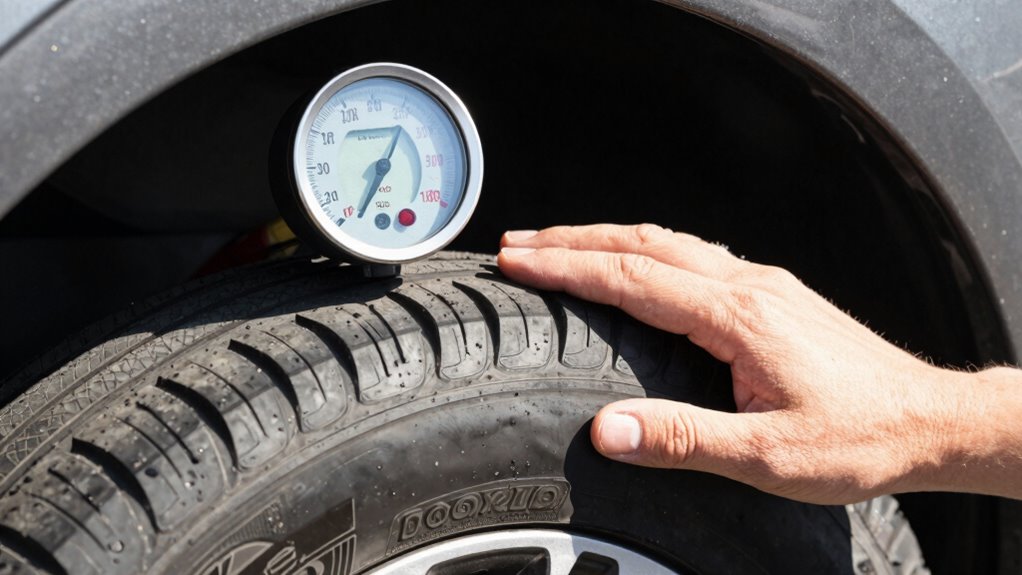
To select the right tire pressure for your weight, start by checking your vehicle’s recommended PSI in your owner’s manual or on the placard inside the driver’s door. Adjust the pressure slightly higher if you’re carrying extra passengers, cargo, or towing, but stay within safe limits. Proper inflation guarantees equal weight distribution, better handling, and safety, especially under heavier loads. Keep exploring to discover more tips on maintaining ideal tire pressure for your specific needs.

Get sports gear delivered free — and shop member deals
- Fast, free delivery on millions of items
- Access to Prime Big Deal Days deals on October 6–7
- Prime Video, Amazon Music and more included
Key Takeaways
- Refer to your vehicle’s owner’s manual for recommended tire pressure based on standard load conditions.
- Adjust tire pressure according to added weight, such as passengers or cargo, within manufacturer-specified limits.
- Use a reliable tire pressure gauge to measure when tires are cold for accurate readings.
- Monitor tire wear patterns; uneven wear can indicate incorrect pressure for your load.
- Consider installing a tire pressure monitoring system for real-time adjustments based on load changes.
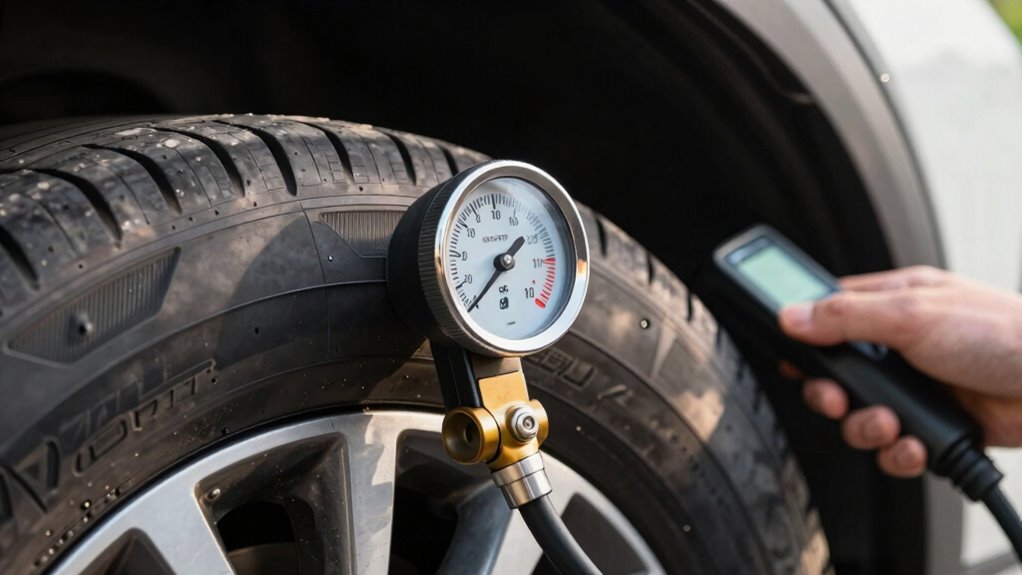
Maintaining the correct tire pressure is vital for safe and efficient driving, but many drivers overlook this simple task. Knowing how to choose the right tire pressure based on your weight is key to optimizing your vehicle’s performance and safety. Proper tire pressure maintenance isn’t just about filling your tires once; it’s about understanding how different factors, including your weight, influence the ideal pressure. When you keep your tires properly inflated, you improve fuel efficiency, extend tire life, and guarantee better handling. Conversely, neglecting tire pressure can lead to uneven tire wear and even dangerous blowouts.
Proper tire pressure is essential for safety, efficiency, and tire longevity—regular checks tailored to your load prevent hazards and wear.
Your weight directly impacts the amount of pressure your tires need to support. If you’re carrying more weight—whether it’s extra passengers, cargo, or towing a trailer—you’ll need to increase the tire pressure slightly to compensate. This adjustment helps maintain your tires’ shape and ensures even weight distribution across the tread. Most vehicle manufacturers specify a recommended tire pressure, often found on a sticker inside the driver’s door or in the owner’s manual. These guidelines are based on standard load conditions, so if you regularly carry heavy loads, you should consider increasing the pressure within safe limits to prevent underinflation.
Understanding the effects of underinflation is vital. When your tires aren’t inflated enough, it’s not just about feeling a little less responsive; it can seriously compromise safety. Underinflated tires have a larger contact patch with the road, which sounds good at first, but actually causes uneven wear and increases rolling resistance. This leads to higher fuel consumption and faster tire deterioration. More dangerously, underinflation causes the sidewalls to flex more, generating excessive heat and raising the risk of a blowout. The effects of underinflation are especially severe when you’re carrying extra weight, as your tires are already under stress from supporting more load.
To avoid these issues, check your tire pressure regularly—ideally once a month—and before long trips or when carrying heavier loads. Use a reliable tire pressure gauge and compare your readings against the manufacturer’s recommendations. Remember, tire pressure should be checked when the tires are cold for the most accurate reading. Adjust the pressure as needed, keeping in mind that your weight and load conditions might require slight modifications. Additionally, understanding essential pool maintenance tips can help you keep your vehicle in optimal condition, just like maintaining a pool requires regular care and attention. Regularly inspecting your tires and understanding how proper inflation relates to your specific load can prevent costly repairs and safety hazards. Being aware of vehicle load capacity can further assist you in maintaining the correct tire pressure for your driving conditions. Moreover, staying informed about tire pressure monitoring systems can help you maintain optimal inflation levels effortlessly. It’s also beneficial to learn about tire wear patterns, as they can give clues about whether your tires are properly inflated for your driving conditions.
Frequently Asked Questions
How Often Should I Check My Tire Pressure?
You should check your tire pressure at least once a month to maintain proper tire maintenance. Regular checks help you follow pressure guidelines and prevent uneven wear or blowouts. Additionally, check your tire pressure before long trips or when carrying extra weight, as this affects pressure requirements. Using a reliable gauge guarantees accurate readings, keeping your tires in ideal condition and improving safety and fuel efficiency.
Does Tire Pressure Affect Fuel Efficiency?
Tire pressure enhancement can dramatically boost your vehicle’s fuel efficiency, saving you a fortune on fuel bills. When your tires are properly inflated, they reduce rolling resistance, meaning your engine doesn’t have to work as hard. Poor tire pressure directly impacts fuel efficiency factors, causing increased fuel consumption. By maintaining ideal tire pressure, you guarantee your vehicle runs smoothly, efficiently, and saves you money every mile you drive.
Can Over-Inflating Damage My Tires?
Yes, over-inflating your tires can damage them by causing uneven tire wear and increasing the risk of blowouts. When you inflate beyond recommended levels, it weakens the tire’s structure, especially in the sidewalls. Always follow the inflation guidelines found in your vehicle’s manual or on the tire sidewall. Proper tire pressure guarantees even tire wear, extends tire life, and maintains safe handling.
What Tools Are Best for Measuring Tire Pressure?
Think of tire pressure tools as your tire’s best friends. Digital gauges offer quick, accurate readings, like a high-tech magnifying glass revealing precise details. Analog meters, on the other hand, give you a classic, reliable feel, much like turning the pages of a trusted book. Both tools are excellent for measuring tire pressure; choose the one that suits your style and keeps your ride safe and smooth.
How Does Terrain Impact Optimal Tire Pressure?
Terrain types greatly influence ideal tire pressure because different surfaces require tire adaptation. For rocky or uneven terrain, lower pressure helps absorb shocks and provides better traction, while higher pressure suits smooth, paved roads for efficiency. On loose or soft terrain like sand or mud, slightly lower pressure improves grip. Adjust your tire pressure based on the terrain to guarantee safety, comfort, and maximum performance during your ride.
Conclusion
Choosing the right tire pressure isn’t just about numbers; it’s about your safety and comfort. Think of it as balancing between a smooth ride and ideal fuel efficiency—too low, and you risk blowouts; too high, and your ride becomes harsh. Just like tuning an instrument, proper tire pressure hits the perfect note for your weight and riding style. Get it right, and every journey feels safer and smoother, turning ordinary trips into extraordinary adventures.
Fall Picks
fall essentials
As an affiliate, we earn on qualifying purchases.