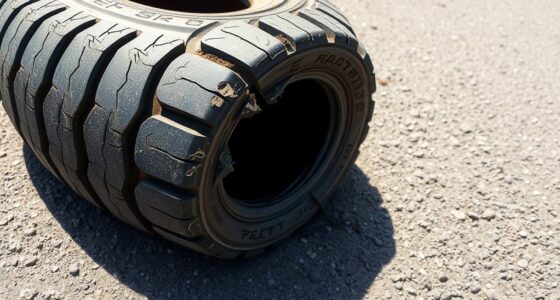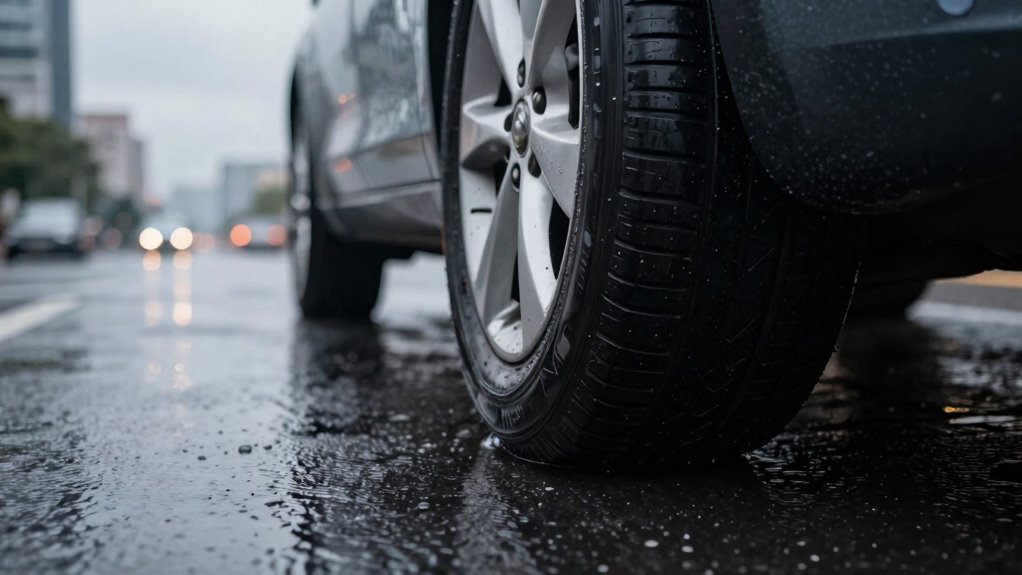

To choose better tires for wet commutes, look for tires with deep, circumferential grooves and lateral channels that channel water away effectively. Select a softer rubber compound with silica for improved wet grip, but balance it with durability. Consider tires with asymmetric or directional patterns for ideal water dispersion. Proper maintenance, like correct pressure and regular inspections, enhances performance. Keep these tips in mind, and you’ll be prepared to navigate rain-soaked streets safely—more helpful details are just ahead.

Get sports gear delivered free with Prime
- Fast, free delivery on millions of items
- Prime Video, Amazon Music and more included
- Member-only deals all year
Key Takeaways
- Select tires with deep, circumferential grooves and lateral channels for efficient water evacuation.
- Choose tires with softer rubber compounds and silica content for better wet grip.
- Prioritize asymmetric or directional tread patterns designed to channel water away from contact patches.
- Regularly inspect tires for wear, aging, and proper pressure to maintain optimal wet performance.
- Opt for tires specifically rated or labeled for wet conditions to reduce hydroplaning risks.
Have you ever wondered how the right tires can improve your driving experience? When it comes to wet commutes, choosing the best tires makes all the difference in safety and confidence on the road. Two critical factors to ascertain are tire tread patterns and rubber compound selection. These elements work together to guarantee your tires grip wet surfaces effectively, reducing the risk of hydroplaning and maintaining control.
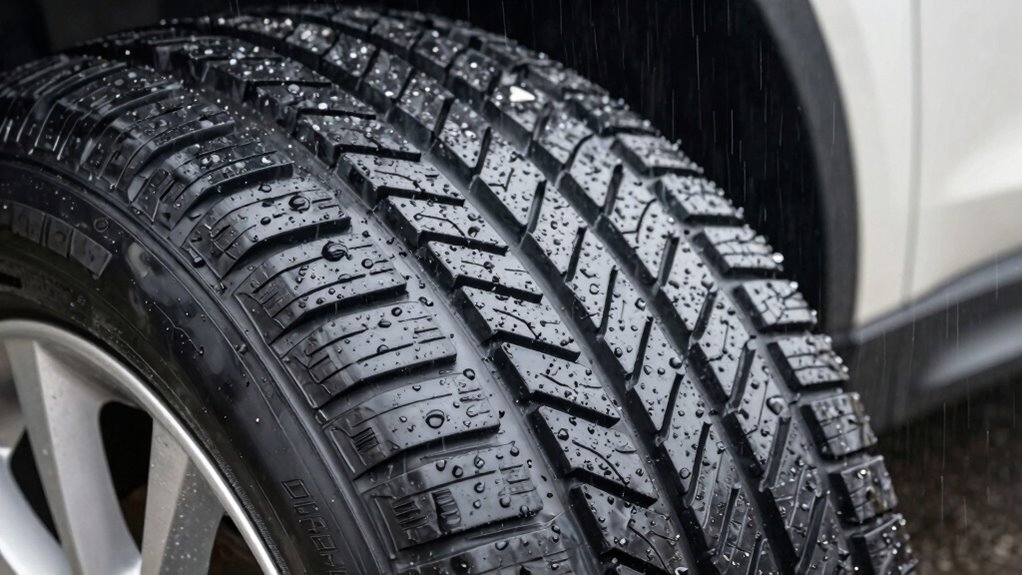
Tire tread patterns are designed to channel water away from the contact patch, helping you stay connected to the road. For wet conditions, look for tires with deep, circumferential grooves and lateral channels. These features enhance water evacuation, preventing water from pooling under the tire and decreasing hydroplaning risks. Some tires feature asymmetric or directional tread patterns, which are optimized for dispersing water efficiently. When shopping, examine the tread design closely—more aggressive patterns with multiple channels tend to perform better in rain, giving you added reassurance during heavy downpours.
Deep, water-channeling grooves and asymmetric patterns improve wet-road grip and reduce hydroplaning risks.
Alongside tread design, rubber compound selection plays a crucial role in wet traction. Tires with softer rubber compounds tend to grip wet surfaces more effectively because they can conform better to the road’s imperfections. However, softer compounds may wear faster, so balancing durability with wet grip is essential. High-quality tires often incorporate silica into their rubber compounds, which boosts wet traction without substantially sacrificing lifespan. When selecting tires, look for labels or specifications indicating the presence of silica or other advanced materials designed to enhance wet-weather performance. Additionally, understanding tire construction can further improve your choice by ensuring the overall durability and safety of your tires. Being aware of tire design elements can also help you select the most suitable tires for your specific driving needs. Moreover, considering tire maintenance practices can extend the lifespan and performance of your tires in wet conditions. Recognizing tire age can also be important, as older tires may lose their effectiveness regardless of tread pattern or compound. A good understanding of tire performance in different weather conditions can help you make more informed decisions and prepare for varying driving environments.
It’s also worth taking into account the tire’s overall construction and sidewall strength, as these factors influence how well the tire maintains contact with the road under various conditions. The combination of an appropriate tread pattern and a carefully chosen rubber compound ensures your tires can handle the unpredictability of wet roads, giving you peace of mind during your daily commute. Remember, investing in tires specifically designed for wet conditions not only improves safety but also enhances your driving comfort, allowing you to navigate rain-soaked streets with confidence.
As an affiliate, we earn on qualifying purchases.
Frequently Asked Questions
How Often Should I Replace Tires for Optimal Wet Weather Performance?
You should replace your tires every 6 to 10 years, or sooner if you notice signs of wear. Regular tire maintenance helps guarantee peak wet weather performance, especially during rainy commutes. Keep an eye on tread depth and look for uneven wear, which can reduce grip. Weather adaptation depends heavily on maintaining good tires; replacing them on time guarantees better traction and safety during wet conditions.
Are There Specific Tread Patterns Better for Wet Commutes?
Did you know that tires with asymmetric tread patterns perform 20% better on wet roads? For your wet commutes, look for tread pattern variations designed to channel water efficiently, reducing hydroplaning risks. Rubber compound differences also matter; tires with softer compounds provide better grip in wet conditions. Choose tires with deep, wide grooves and siping to enhance traction, ensuring safer, more confident driving through rainy or wet environments.
Do Tire Brands Differ Significantly in Wet Traction?
Yes, tire brand variations can considerably impact wet traction. Some brands invest heavily in wet traction technology, resulting in better grip and shorter stopping distances on wet roads. When choosing tires, look for brands known for advanced wet traction features, as this can improve safety during rainy commutes. Comparing reviews and testing data helps you identify which tire brands perform best in wet conditions, ensuring you pick tires that keep you safer on wet surfaces.
How Does Tire Pressure Affect Wet Grip?
Sure, because nothing says “safety first” like playing tire pressure roulette, right? When it comes to wet grip, maintaining the correct tire pressure is key. Too low, and you risk hydroplaning; too high, and your contact patch shrinks, reducing traction. Proper tire pressure maximizes wet grip, helping you stay in control. So, check your tire pressure regularly — it’s your best defense against slipping and sliding in rainy conditions.
Can Tire Aging Impact Wet Weather Safety?
Yes, tire aging can impact wet weather safety. Over time, tire material deteriorates, leading to reduced flexibility and diminished tread grip. This affects how well your tires handle slick road surfaces, increasing the risk of slipping or hydroplaning. As your tires age, their ability to channel water away diminishes, making it essential to inspect tread depth and replace them when necessary, especially for safe driving on wet roads.
Conclusion
By choosing better tires, you enhance your grip on the wet road, improve your safety in the rain, and boost your confidence with every turn. With tires that grip, tires that drain, and tires that last, you’ll face wet commutes with clarity and control. Embrace tires that protect, tires that perform, and tires that inspire. In every splash and every spray, let your tires be your steadfast partner—ready, reliable, and resilient.
Columbus Day / Indigenous Peoples' Day Picks
long weekend sales
As an affiliate, we earn on qualifying purchases.